
HELOC Explained: How a Home Equity Line of Credit Really Works (and When It Makes Sense)


Most people sit on a pile of home equity and treat it like a museum exhibit: nice to look at, but don't touch. A HELOC lets you actually put that equity to work, but only if you understand the mechanics, the risks, and whether it genuinely makes sense for your situation.
Quick HELOC Overview (Answer the Core Question Fast)
A HELOC, or home equity line of credit, is a revolving line of credit secured by the equity in your home. Think of it like a credit card, except the interest rates are dramatically lower because your house is the collateral. A HELOC generally sits as a second mortgage behind your primary mortgage.
You can typically borrow up to 80 to 85% of your home's value, minus what you still owe on your existing mortgage. That means you only access home equity you've actually built.
How does this compare to the other options?
- A home equity loan gives you a lump sum at a fixed rate. You get all the money at once, and payments start immediately.
- A cash out refinance replaces your current mortgage with a new loan for a larger amount, and you pocket the difference.
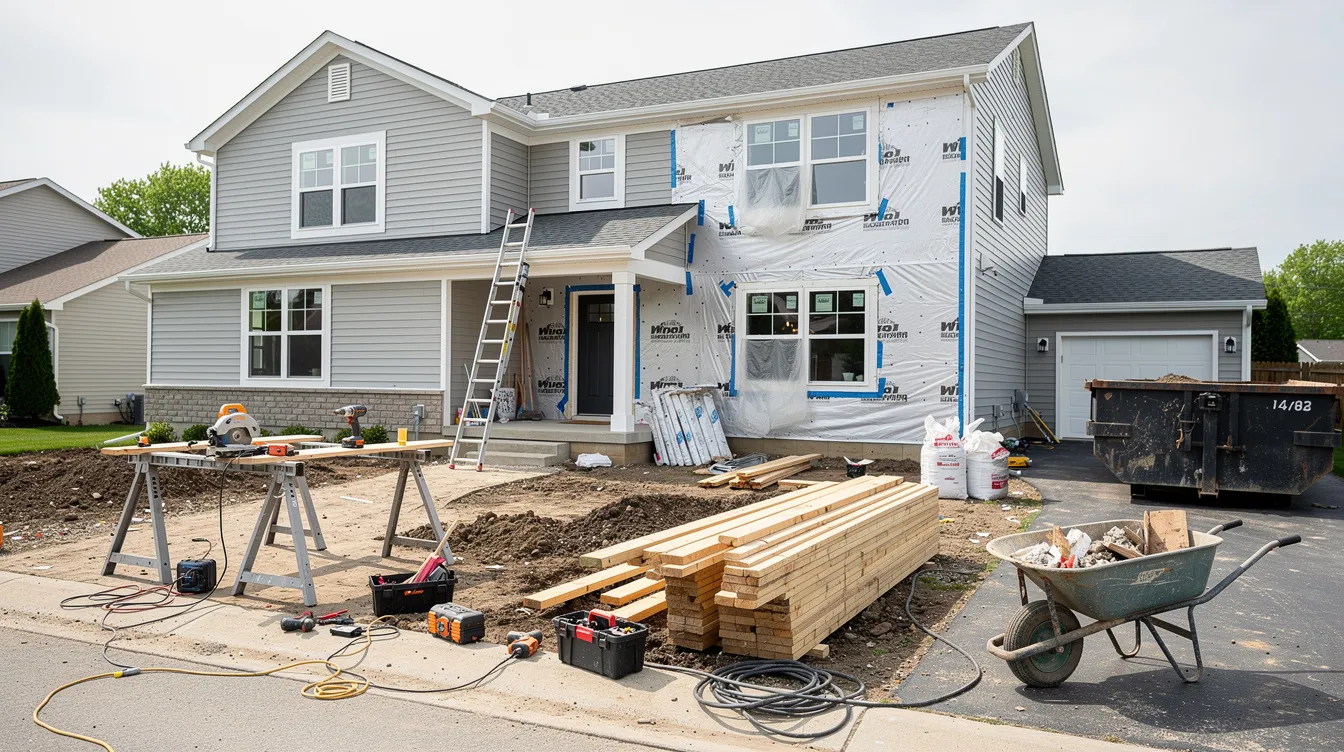
Many homeowners use HELOCs for home improvements, to consolidate debt, fund a new business, or cover the down payment and rehab on an investment property. At Gap Funded, we help homeowners and real estate investors figure out if a HELOC is the right tool or whether other gap funding solutions fit better.
What Is Home Equity and How Is It Calculated?
Home equity is the difference between a home's current market value and the mortgage balance you still owe. It's the portion of the property you actually own, free and clear of debt.
The formula is dead simple:
Home Equity = Current Home Value − Current Mortgage Balance
Say you own a home worth $450,000 in 2026 and your remaining mortgage is $230,000. That leaves you with $220,000 in equity.
Now, lenders won't let you borrow all of it. They use two ratios:
- Loan to value (LTV): your mortgage balance divided by your home's appraised value.
- Combined loan to value (CLTV): adds your mortgage plus the entire HELOC credit line, divided by your home's value.
Most lenders cap total housing debt at a CLTV of about 80 to 85% for primary residences, meaning you need at least 20% equity in your home. You can borrow up to 80 to 85% of your home's value, but not a cent more. The equity in your home is what makes products like HELOCs, home loans, and other equity line of credit options possible.
HELOC Basics: How a Home Equity Line of Credit Works
A home equity line, or line of credit HELOC, is a reusable credit line secured by your home. Unlike a standard loan, HELOCs allow flexibility since you can borrow, repay, and borrow again during the draw period, up to your approved credit limit.
There are two main phases:
- Draw period: typically lasts 5 to 10 years. During this set period, you can pull funds as needed. Monthly payments during the draw period are usually interest only payments on the amount borrowed. Most HELOCs require interest only payments during this phase, so you pay interest on only what you've actually drawn, not the entire credit line.
- Repayment period: typically lasts 10 to 20 years. Once the draw period ends, you can no longer borrow money. After the draw period, HELOC payments include both principal and interest, which means monthly payments often jump significantly.
HELOCs typically have variable interest rates tied to the prime rate, so your payments can move up or down over time. Some lenders and credit union options offer rate locks on portions of the balance, but standard HELOCs remain mostly variable.
Typical minimums start around $10,000, and maximums can reach mid six figures depending on home value, income, and credit. Additionally, closing costs and fees apply to HELOCs, similar to a standard mortgage, generally running $500 to $2,500 depending on the line amount and lender.
HELOC vs. Home Equity Loan vs. Cash Out Refinance
There are three main ways to access home equity: a HELOC, a home equity loan, or a cash out refinance. Here's how they stack up:
| Feature | HELOC | Home Equity Loan | Cash Out Refinance |
|---|---|---|---|
| How you get funds | Revolving line, draw as needed | Lump sum, all at once | New larger mortgage, difference in cash |
| Rate type | Variable interest rate (mostly) | Fixed interest rates | Fixed or adjustable |
| Payments during funding | Only interest during draw period | Full principal and interest from day one | New mortgage payments, may reset term |
| Best for | Ongoing or phased costs | One time known expenses | Lowering your existing mortgage rate |
A home equity loan is a second mortgage with fixed rate monthly installments, and home equity loans start full principal and interest payments immediately. That makes sense when you know exactly how much you need and want predictable payments.
A cash out refinance replaces your existing mortgage with a new loan. It works best when interest rates have dropped since your original mortgage and you want to lock in a favorable rate while pulling cash.
This financial tool, the HELOC, is particularly useful for ongoing expenses rather than one time expenses, like phased home renovations or staged rehab on an investment property. We help clients compare a HELOC to HELOC alternatives like personal term loans or 0% business credit card stacking depending on timeline and risk tolerance.
Pros and Cons of a HELOC (For Homeowners and Investors)
Pros:
- Lower interest rates than most unsecured debt. HELOC interest rates can be lower than credit cards (averaging around 8% versus 20%+ for cards).
- You pay interest on only what you actually draw, not the full credit line.
- Flexible access to HELOC funds during the draw period. A HELOC allows you to borrow as needed during the draw period.
- HELOC interest may be tax deductible for home improvements. Always consult a tax professional or tax advisor before claiming this.
- Many advantages over a personal loan or high interest debt for larger borrowing needs.
Cons:
- Some HELOCs have variable interest rates, adding uncertainty. Variable rates tied to the prime rate can shift your payments without warning.
- Failure to repay a HELOC puts your home at risk of foreclosure. Your home is the collateral, full stop.
- Temptation to overspend because of revolving access.
- Lenders can freeze or reduce your HELOC credit line if home values drop or your financial situation changes.
- Potential fees: annual fees, closing costs, early closure fees.
- Payment shock when the draw period ends: regular payments can double because you're now paying principal plus interest over the remaining repayment period.
Real estate investors use HELOCs to fund fix and flip projects, BRRRR deals, or short term rentals, but need discipline around variable rates and ballooning payments. I reckon many investors are better off keeping a HELOC smaller and combining it with other tools (business lines of credit, working capital, credit card stacking) to avoid overleveraging their home.

What Can You Use a HELOC For?
HELOCs can be used for various expenses including home renovations and debt consolidation, but they should be deployed strategically for high impact goals. Here are the most common:
- Home improvements and renovations: Remodel a kitchen, add a bathroom, or handle structural repairs that increase property value. A $40,000 kitchen renovation funded by a HELOC at 8% costs roughly $267/month in only interest during the draw period.
- Consolidate debt: Use a HELOC to consolidate high interest debt like credit cards or a personal loan into a single lower rate payment. If you're carrying existing debt at 20%+, moving it to an 8% HELOC saves a fair whack. Check out our debt consolidation approach for more on this.
- Real estate investing: Use a HELOC on your primary home or rental property for a down payment, earnest money deposit, or rehab budget on a flip or BRRRR deal.
- New business or education expenses: Address working capital, equipment, launch expenses, or even college tuition. Pairing a HELOC with unsecured term loans or stacked business credit cards can spread risk.
- Emergency or opportunity fund: Position your credit line as backup liquidity for unexpected medical bills, major repairs, a new car, or time sensitive investments. Just make sure you have a repayment plan before you draw.
HELOC Requirements: Will You Qualify?
Qualification for a HELOC depends on having enough equity in your home, a solid credit profile, stable income, and manageable debt.
Here's what most lenders look at:
- Equity: You need at least 20% equity to qualify for a HELOC. Lenders want you to retain an ownership stake after the line is fully drawn, so CLTV is usually capped around 80 to 85%. Borrowing limits for HELOCs are typically based on equity, income, and credit scores.
- Credit score: Most lenders require a minimum credit score of 620. Some lenders accept credit scores as low as 640, but most borrowers need a minimum score of 680 to qualify for the best terms. Good credit opens the door to lower rates and higher CLTV caps. How does credit work here? Better score equals a more favorable rate, plain and simple.
- Debt to income ratio: Your debt to income ratio must usually be 40% or less, though strong equity and credit can sometimes push that ceiling.
- Income verification: Lenders typically assess income and credit history when qualifying. Expect to provide W-2s, pay stubs, tax returns, or business financials.
- Property type: Banks and credit union lenders have different underwriting standards. Investment property HELOCs require stronger equity and carry higher rates. According to 2025 HMDA data, median rates on investment property HELOCs were about 8.5% versus 7.5% for owner occupied, and only 5.4% of investment HELOCs reached 80%+ CLTV.
If you don't qualify for the maximum HELOC you want, Gap Funded can layer other funding products on top to close the gap.
How to Apply for a HELOC
Applying for a HELOC is similar to applying for a mortgage or home equity loan. Preparation speeds things up.
The process:
- Research lenders (including whether they support investment property or rental property HELOCs).
- Complete a prequalification or soft credit check if available.
- Submit a full application with documentation.
Common documentation:
- Government ID
- Recent pay stubs, W-2s or 1099s
- Tax returns (typically 1 to 2 years)
- Bank statements and mortgage statements
- Homeowner's insurance
- Possibly a property appraisal
The lender will verify home value, confirm income and employment, and pull a full credit report. Closing involves signing loan documents, understanding any initial draw requirements, and learning how to access the revolving line (checks, transfers, or a linked card).
Borrowers typically have a three business day right of rescission on owner occupied HELOCs. Read the disclosure documents carefully before drawing money.
How a HELOC Fits Into the Real Estate Investor's Capital Stack
Many Gap Funded clients are investors using multiple funding layers to complete deals. A typical capital stack for a fix and flip or BRRRR project looks like this:
- Primary loan: hard money or DSCR loan covering 85 to 90% of purchase plus rehab.
- Gap funding: down payment, closing costs, holding costs, contingency reserves.
A HELOC can cover earnest money deposits, part of the down payment, or early rehab draws while waiting for construction draws from a hard money lender.
Example: You use a $75,000 equity line of credit on your home to secure a $250,000 fix and flip, alongside a hard money loan. The HELOC covers your 10 to 15% down payment and initial rehab costs. Once the project sells, you repay the HELOC and recycle those funds into the next deal.
We combine HELOCs (where appropriate) with unsecured term loans, business credit card stacking, and business lines of credit to minimise the investor's cash out of pocket. But here's the thing, mate: keep a margin of safety in your home's equity. Factor in rate resets, and never rely on a single funding source for every stage of a project.
HELOC Alternatives: When Another Option Might Be Better
HELOCs are powerful, but they aren't always the best or safest choice. Here are the main HELOC alternatives:
- Unsecured personal term loans: Fast funding that doesn't put your home at risk. Shorter terms and higher rates than home loans, but no lien on your property. A great alternative when speed matters more than rate.
- 0% credit card stacking: Finance startup costs, working capital, or smaller rehab budgets using 0% introductory APR business and personal cards, with no liens on real estate. Learn more about credit card stacking here.
- Business lines of credit: For established businesses (2+ years, $20k+/month revenue), these work like a revolving line similar to a HELOC but secured by business strength, not your house.
- Home equity loan: When you want fixed rate certainty in a rising rate environment and know exactly what you need as a lump sum.
- Cash out refinance: When you can beat your current mortgage rate and want one clean payment.
If you're equity rich but cash light, use our HELOC resource page and HELOC calculator to compare scenarios before committing.
How Gap Funded Closes Your Funding Gap
Here's what I see constantly: borrowers discover a gap between what traditional lenders will finance and the total cash they actually need. That gap shows up as:
- Down payment shortfall
- Closing costs
- Rehab overages
- Working capital
- Contingency reserves
- Earnest money deposits for competitive offers
Gap Funded uses a prioritised toolkit to fill that shortfall. The order matters because applying out of sequence can knock out later approvals:
- Unsecured term loans (rapid gap funding, no lien on your property)
- 0% business credit card stacking (interest free capital for 12 to 18 months)
- HELOCs or other lines of credit (when sufficient equity exists)
No equity splits. No liens on the deal property. Soft credit pulls to check options, so no impact to your score.
Qualification usually requires at least a mid 600s credit score, verifiable income, or strong equity. I'll be straight with you: HELOCs may be slower to close than unsecured tools, they're subject to appraisal, and they're not ideal for extremely time sensitive deals where same week funding is needed. That's exactly why stacking multiple tools often makes more sense than relying on a single one.
If you've got equity sitting there doing nothing, or a deal that needs funding yesterday, start a no obligation funding review. We'll map out what combination of tools actually fits your financial situation and get you to the closing table.
Related Reading
This article is for educational purposes only and isn't financial, legal, tax, or investment advice. Credit and financing outcomes depend on your own situation. Talk to a licensed financial professional before making funding decisions for your business.