
Hard Money Loans in NYC: Fast Capital for Real Estate Investors (and How Gap Funding Fills the Shortfall)

Hard Money Loans in NYC: Fast Capital for Real Estate Investors (and How Gap Funding Fills the Shortfall)
NYC Hard Money Loans Overview
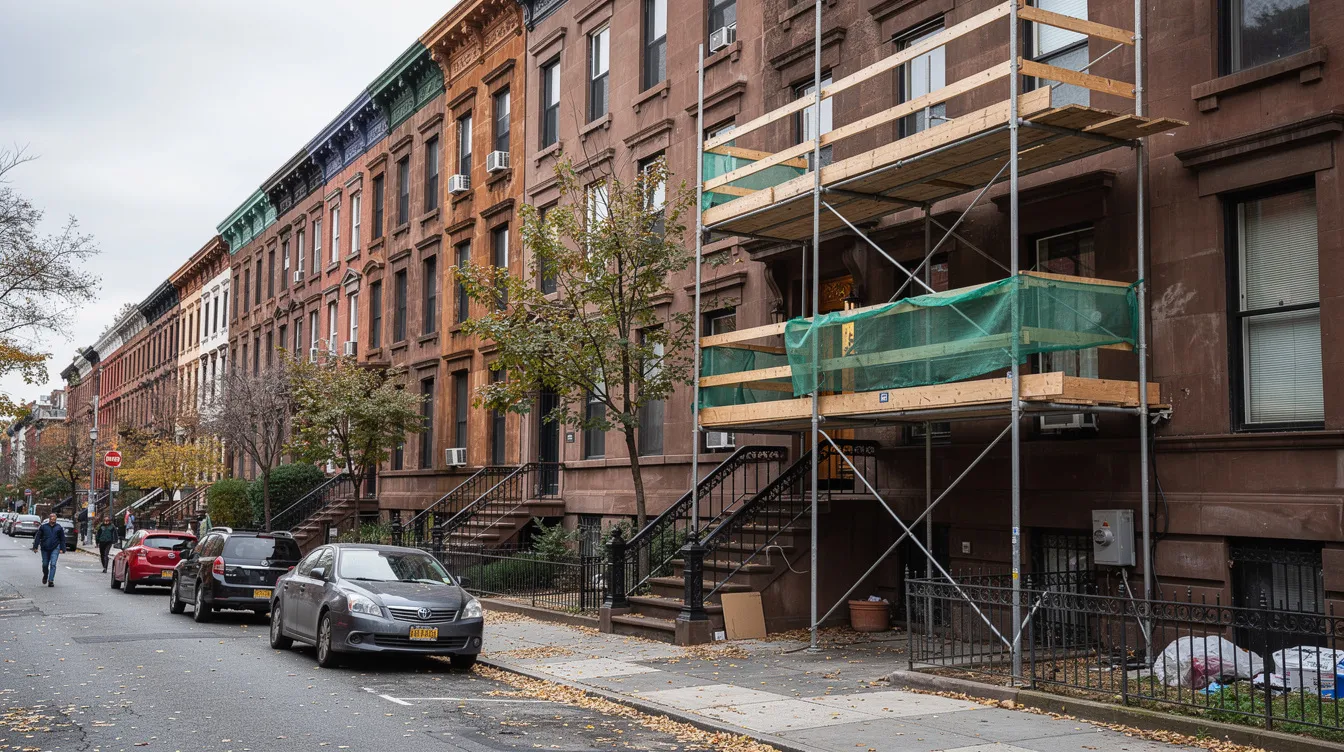
A hard money loan is a short-term, asset-backed financing method secured by real estate. In New York City, these loans let real estate investors move fast on properties that banks won't touch, whether that's a gutted brownstone in Bed-Stuy or a small multifamily in the Bronx that needs a full renovation before it qualifies for conventional financing.
Hard money loans focus on the asset's value, not the borrower's creditworthiness. The lender cares about what the property is worth now, what it will be worth after rehab, and how you plan to exit. Your W-2 or tax return? Secondary at best. That's the core reason investors choose hard money over a traditional bank; speed and flexibility beat paperwork every time.
As of Q3 2026, New York hard money loans average a 9.91% interest rate. Most deals fall in the 9.5% to 12.5% range, with origination fees of 1.5 to 3.5 points and terms of 6 to 18 months. Interest rates for hard money loans typically range from 9% to 15% depending on deal risk and borrower experience. Most hard money loans carry short repayment terms of 6 to 24 months, structured as interest only with a balloon payment at maturity. Loan to value ratios for hard money loans typically cap at 60% to 75%, which means lenders commonly fund 65% to 80% of the property value or purchase price. That gap between what the lender funds and what you need at the closing table is real money you need to find somewhere.
Gap Funded is not a hard money lender. We help investors stack additional unsecured or asset-based capital on top of their New York hard money loan to cover the down payment, rehab costs, closing costs, and working capital that the primary lender won't touch.
How Hard Money Loans Work for New York Real Estate Investors
Across Manhattan, Brooklyn, Queens, the Bronx, and Staten Island, real estate investors use hard money for fix and flip projects, BRRRR strategy deals, and rental property acquisitions that need heavy rehab before they produce income. The mechanics are straightforward. Approval depends primarily on the property's value rather than personal financial history. The lender sizes the loan using the as-is value and the after repair value (ARV), then structures a draw schedule for the rehab budget.
The typical capital stack looks like this: the hard money lender covers 70% to 80% of the purchase price plus up to 100% of the rehab budget. A typical hard money loan requires a 10% to 20% down payment, and borrowers must provide that cash along with closing costs, holding costs, and reserves. None of that comes from the lender.
Here's what that looks like on a real deal. Say you're buying a Brooklyn brownstone for $900,000 with a $200,000 rehab budget. The lender offers 75% of purchase ($675,000) plus 100% of rehab ($200,000), totalling $875,000 in financing. You still need roughly $225,000 for the down payment alone, plus another $20,000 to $30,000 in closing costs, insurance, taxes during the hold, and a contingency reserve. That's north of $250,000 in cash before the lender wires a dollar.
Hard money is bridge financing. It's designed to be held for 6 to 24 months until you either sell the property or refinance into a longer term product like a DSCR loan or conventional mortgage.
Typical NYC Hard Money Loan Terms and Pricing (With Current New York Benchmarks)
NYC is a data-driven market where terms shift with interest rates, local comps, and borough-level risk. The numbers below reflect 2025 to 2026 benchmarks from HMDA reporting and private lending platforms.
Hard money loan rates in New York range from 10.5% to 11.5% on most fix and flip loans. Lightning Docs data for Q2 2026 shows an average interest rate of 10.17%, average loan size of roughly $989,262, and an average loan to value of about 61%. The average loan amount in New York is $1,115,432, though that figure spans everything from single family homes to larger new construction loans. Hard money loans in New York typically start at $250,000, and average loan amounts can reach up to $3,000,000 for construction projects.
In Brooklyn specifically, the average interest rate is 11.1%, average loan term is 20 months, average origination fee is 2.7 points, and the average loan amount is about $442,945. Average loan to value in Brooklyn is 69%.
High costs associated with hard money loans include origination fees and interest rates, but also underwriting fees, legal and title work, draw inspection fees, and sometimes interest reserves or extension fees. Pricing differs by product type: fix and flip loans run 10.5% to 12%, ground up construction loans in NYC sit at 11% to 13%, and rental or DSCR loans for the refinance exit range from 6.5% to 8.5% with up to roughly 80% loan to value.
Here's a quick example. An investor buys a two family property in East Flatbush, Brooklyn for $520,000 with a $125,000 rehab budget. The lender offers a $600,000 loan at 13% interest only, 3 points, with a 9 month hold. Interest cost runs about $58,500, points add $18,000, attorney and transfer fees another $25,000, and selling costs at 5% add roughly $42,500. With an ARV of $850,000, the estimated net profit after everything is about $89,000 on roughly $150,000 of invested cash. The competition among hard money lenders in NYC for the title of best hard money lender often centres on speed, leverage, and flexibility rather than rate alone.
What NYC Hard Money Loans Are Used For (Fix and Flip, Rentals, and More)
These loans support several strategies across New York real estate, not just quick flips. The main use cases include:
- Fix and flip projects in Brooklyn and Queens, where investors buy distressed properties, renovate, and resell within 6 to 12 months
- BRRRR and rental property acquisitions in outer boroughs, where the exit is a refinance into a DSCR loan based on rental income
- Condo conversions in Manhattan, turning older buildings into individual sellable units
- Small mixed-use building acquisitions in the Bronx, where ground floor retail plus upper floor residential creates value
- Single family homes and 1 to 4 family properties in Staten Island, often the most accessible price points for newer investors
Hard money loans finance fix and flip properties where speed of acquisition is everything. Rental properties can be financed with hard money loans as bridge capital before stabilisation. Hard money loans cover ground up construction projects for investors building from scratch, and loans for multifamily properties are available through hard money lenders across all five boroughs.
Some NYC investors also use hard money for transactional funding, auction purchases, and quick bridge loans on time-sensitive deals. The "York fix" style heavy rehab, where properties are in such poor condition they won't qualify for any traditional financing, is another common use case. These are the deals where hard money earns its keep.
NYC Hard Money Loan Requirements, LTV, and Qualification
Approvals hinge on deal strength, collateral quality, and borrower profile. The property matters more than the person, but lenders still want to see a borrower who can execute.
Most lenders require a credit score of at least 660. New York has stringent laws regarding hard money loans that require business entities to borrow, so expect to close through an LLC or corporation for investment properties. You'll need verifiable funds for the down payment and reserves, a signed purchase contract, and a clear exit strategy (sale or refinance with timeline).
Standard NYC loan to value caps run 65% to 80% of purchase price or ARV. On ground up construction or higher risk deals, LTV drops to 55% to 65%. The average loan to value in New York is 61%, which tells you most lenders are conservative. Experienced investors with a proven track record and good credit often unlock higher leverage and lower points. First time investors typically start around 70% LTV with higher pricing.
Short example: an investor buying a $600,000 Queens rental property with 75% LTV financing gets $450,000 from the lender. That leaves $150,000 for equity plus closing costs, holding costs, and any minor rehab. From the lenders' viewpoint, risk comes from price volatility, ARV projections, New York's judicial foreclosure timeline (often 12 to 24 months), and property condition. That's why reliable financing at 100% LTV basically doesn't exist in this market.
The NYC Hard Money Loan Process Step by Step
NYC hard money lenders emphasise speed, but timelines depend on appraisal scheduling, title search complexity, and entity documentation. Here's how the loan process typically runs.
Loan applications can be completed online in about 2 minutes for a pre-qualification submission. The lender reviews your deal details (address, purchase price, property condition, rehab scope, exit plan) and your borrower credentials (credit score, entity documents, proof of funds). Pre-approval or a term sheet usually arrives within 24 to 48 hours. The average loan processing time is 1 to 7 days for documentation including appraisal, title search, contractor estimates, and underwriting.
Hard money loans can be approved in as little as 3 to 10 days. For repeat borrowers with clean title and a simple fix and flip, some lenders close in as few as 3 days. Most deals close in 7 to 14 business days. Ground up construction or deals with complex title, HPD violations, or permit issues take longer.
What you should prepare before applying: signed purchase contract, renovation scope and budget with contractor bids, exit strategy document, LLC or entity formation docs, recent bank statements, and a list of previous projects if you have them. Fast closing speeds make hard money loans advantageous for competitive real estate markets like NYC where off-market deals and auctions reward the investor who can close quickly.
Even when the hard money loan process is smooth and the lender moves fast, you still need separate funds ready for cash to close. That's the gap.

Where Hard Money Falls Short in NYC: The Real Funding Gap
Hard money lenders in New York City rarely finance 100% of the capital stack. The gap categories are consistent across most deals: down payment (typically 10% to 30% of purchase), closing costs and lender fees, rehab overages beyond the approved budget, interest reserves for carrying costs, working capital during renovations, and earnest money deposits for competitive offers.
Here's a concrete example. On an $800,000 Brooklyn fix and flip with $150,000 in rehab, a lender funds 80% of purchase ($640,000) plus 100% of rehab ($150,000), totalling $790,000. The investor still needs roughly $160,000 for the 20% down payment, plus $20,000 to $30,000 in closing and title fees, holding costs during the renovation, and a contingency reserve of 5% to 10% of rehab. Total cash required can exceed $200,000.
Many investors try to solve this with joint venture partners or private loans, giving up 30% to 50% of profits or control. Others approach a direct lender for a second position loan, which most hard money lenders prohibit. Banks usually can't fill the shortfall either because of property condition, income verification requirements, or speed. This is where gap funding comes in.
How Gap Funded Complements NYC Hard Money Loans (Without Equity Splits)
Gap Funded is a funding intermediary. We provide capital stacking solutions that layer on top of your NYC hard money loan, not a competing money lender or DSCR lender. We don't take a lien on the deal property.
We help cover the down payment, closing costs, early rehab draws before reimbursement, carrying costs, furniture for short term rentals, and working capital for your business. The specific tools we pair with New York hard money loans include unsecured personal term loans, 0% business credit card stacking, business lines of credit, and HELOCs on primary or investment property when appropriate.
Realistic qualification: generally 650+ FICO, stable income or business revenue, and enough overall debt capacity to responsibly layer additional capital. We run soft credit pulls to review your options with no impact to your score. No equity splits. No liens on your New York deal property. Fast execution designed for investors under contract. You can see our full gap funding services overview for details.
Gap Funding Tools That Work Best With NYC Hard Money Loans
The order you apply for these tools matters. Applying out of sequence can knock out later approvals. Here's the sequencing we use and why it works for New York real estate investors.
0% business credit card stacking: Best for short term gaps; earnest money deposits, initial materials, and early rehab expenses. You get 6 to 18 months of 0% APR, but you need discipline and a clear repayment plan before the promotional rate expires.
Unsecured personal term loans (via gap funding): Fixed repayment over 3 to 7 years. Good for covering a portion of the down payment or closing costs when the project's spread supports the extra monthly payment.
HELOCs on primary or investment property: When you have meaningful equity in a home or another rental, a HELOC gives you revolving capital to draw on across multiple NYC deals. Use our HELOC calculator to estimate available equity.
Business lines of credit and business term loans: For active investors or contractors doing multiple flips per year, recurring revenue can support these products. They finance ongoing costs across projects rather than one gap at a time.
Debt consolidation: A strategic move before or between deals. Lowering your monthly obligations improves qualification for new gap funding and reduces your overall risk profile.
We start with unsecured options (cards and term loans) because they execute fastest and don't tie up real estate collateral. HELOCs and lines of credit layer on for investors scaling to concurrent projects.
Designing a Solid Exit Strategy for NYC Hard Money and Gap Funding
In New York, exit strategy is critical. High property values, shifting interest rates, and long judicial foreclosure timelines (12 to 24 months) mean both the hard money lender and Gap Funded care about your plan. If your exit doesn't pencil out, neither should your deal.
Common exits: fix and flip resale within 6 to 12 months, refinance into a DSCR loan for long term rental hold, or portfolio refinance to pay off both the hard money and gap funding simultaneously.
Build the numbers honestly. Purchase price plus rehab plus closing plus soft costs plus gap funding interest must still leave a healthy profit margin (15% to 25% minimum on flips) or positive cash flow cushion on rentals.
BRRRR example in Queens: buy a small multifamily for $700,000, rehab $200,000, ARV $1,200,000. Hard money funds 75% of purchase ($525,000) plus 100% of rehab ($200,000), totalling $725,000. Gap funding covers roughly $175,000 in equity, closing, holding, and contingency. After rehab, the property rents and generates enough NOI for a DSCR lender to refinance at 80% LTV on the $1,200,000 value ($960,000 refinance), paying off the $725,000 hard money plus $175,000 in gap funding with room to spare.
Risks are real: ARV coming in low, longer days on market, rehab cost overruns, permit delays. I reckon the biggest mistake I see is investors running projections with zero contingency. Build 5% to 10% into your rehab budget and add two to three buffer months past your ideal timeline.
We review exit strategy with borrowers during the funding review so that stacked capital remains sustainable and doesn't over-leverage the deal.
NYC Neighbourhood Examples: Brooklyn, Manhattan, Queens, Bronx, and Staten Island
Each borough behaves differently for hard money and gap funding. What works in Bed-Stuy won't pencil the same way in Great Neck or Westchester County, and the lending dynamics shift accordingly.
Brooklyn is the hottest market for hard money loans in New York City. With 50 hard money lenders found in Brooklyn alone and strong investor demand for brownstone rehabs and small multifamily value add projects, loan sizes typically range from $500,000 to $1.5 million or more. LTVs tend to sit tighter (around 69% average), and lenders scrutinise ARV comps carefully. Top lenders in New York are ranked by loan count quarterly, and Brooklyn consistently dominates volume.
Manhattan means higher entry costs and lower LTVs. Deals focus on condo conversions, boutique rental portfolios, and small commercial property acquisitions. Lenders want airtight exit plans because the buyer pool at Manhattan price points is narrower.
Queens and the Bronx are popular for BRRRR and rental deal strategies on 1 to 4 family properties and small multifamily buildings. Moderate price points mean DSCR takeout loans are common exits. Gap funding frequently covers the down payment and renovation reserves in these boroughs.
Staten Island offers relatively lower prices and solid single family or 2 to 4 unit opportunities. Hard money lenders, private investors, and even some Long Island based lenders service this market. Gap funding helps local investors compete without giving up equity, allowing investors to move at the same speed as all cash buyers.
Putting It All Together: Funding Your Next NYC Deal With Hard Money and Gap Funded
The reality of New York hard money loans is simple: lenders provide fast, asset-based financing on investment properties, but they rarely cover 100% of the capital you need. The funding gap; your down payment, closing costs, reserves, and working capital; is your problem to solve.
Gap Funded fills that gap with unsecured term loans, 0% business credit card stacking, HELOCs, and business credit facilities. No liens on your deal property. No equity splits. Just capital stacking tools for borrowers with 650+ FICO and a solid deal, whether you're working on a fix and flip in Brooklyn, a rental in Queens, or your first small multifamily in the Bronx.
Review your current or upcoming NYC deal. Look at where your numbers fall short of closing. If the deal makes sense but the cash doesn't quite stretch, that's what we built this for.
Start a no obligation funding review at gapfunded.com/apply. Soft pull pre-qualification, fast responses, and tools tailored to New York real estate investors. No games, mate.
Related Reading
This article is for educational purposes only and isn't financial, legal, tax, or investment advice. Credit and financing outcomes depend on your own situation. Talk to a licensed financial professional before making funding decisions for your business.