
Hard Money Lending Terms: What Real Estate Investors Need to Know in 2026

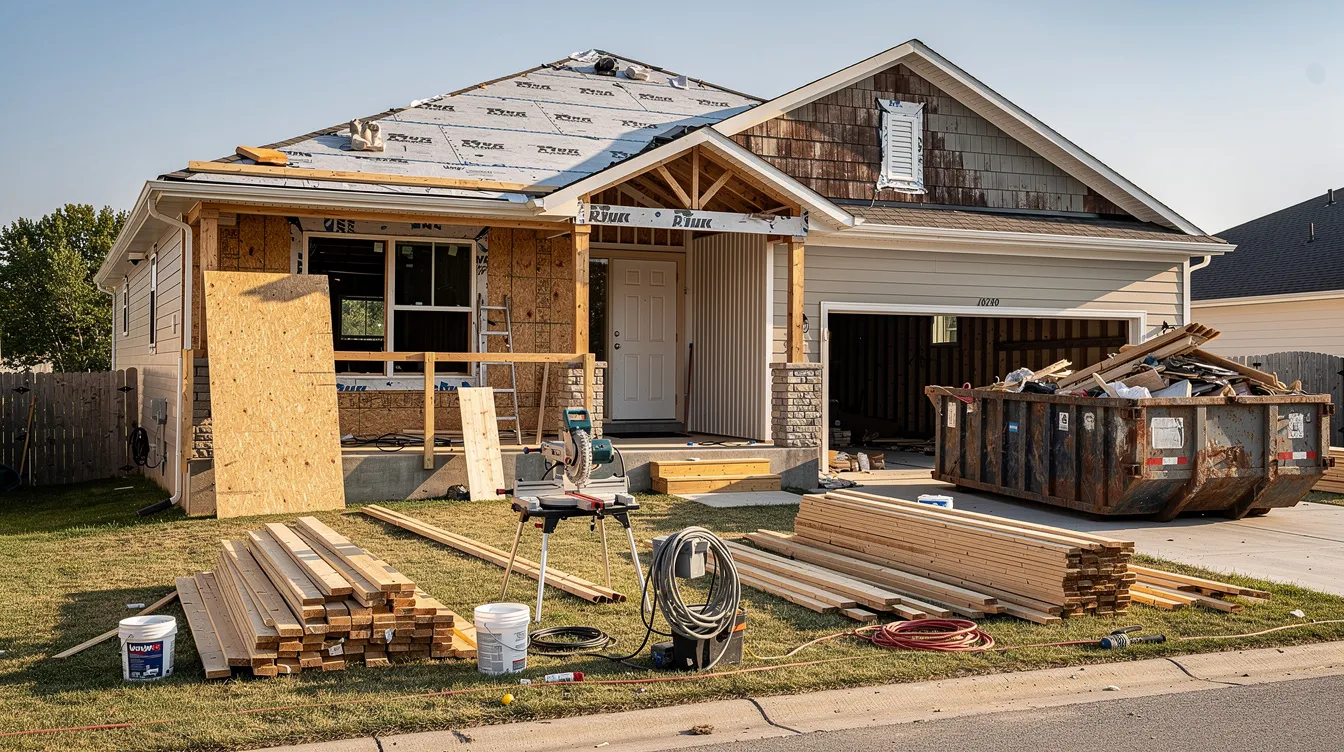
Hard Money Lending Terms: What Real Estate Investors Need to Know in 2026
Most real estate investors lose money on hard money not because they picked the wrong lender, but because they never fully understood the terms before signing. A hard money loan is short term, asset based financing secured by real property, designed for investment property deals where speed and flexibility matter more than a rock bottom rate. In 2026, typical hard money lending terms look like this: 6 to 18 month terms, 8% to 15% interest rates, 2 to 4 origination points, and 60% to 80% LTV. Those numbers alone don't tell the full story.
Here is the real problem: most hard money lenders will not cover 100% of your purchase price, rehab, closing costs, or earnest money deposit. That leaves a funding gap that kills deals, especially for investors trying to scale. That gap is exactly where we come in at Gap Funded. We do not replace your hard money lender. We stack unsecured and asset based capital on top so you can close more deals without giving up equity splits.
If you are doing fix and flip projects, running a BRRRR strategy, buying short term rentals, or picking up small commercial property, and your credit score is 650 or above, this article will walk you through every hard money term that matters and show you how to fill the gaps your lender will not.
Core Hard Money Loan Terms in 2026 (The Quick Answer)
Here is what a typical hard money loan structure looks like for investment properties in mid 2026, based on current lender data from HardMoneyFacts and HardMoneyScout:
| Term Category | Typical Range |
|---|---|
| Loan term | 6 to 18 months (up to 24 for ground up construction or heavy rehab) |
| Interest rates | 8% to 15% annually; stronger borrowers and markets may see 8.5% to 11.25% |
| LTV / LTC | 60% to 80% of purchase price; ARV based loans often 65% to 75% of after repair value |
| Origination points | 2 to 5 points (2% to 5% of the loan amount) charged upfront |
| Payments | Interest only payments monthly, with a balloon payment of full principal due at maturity |
| Additional fees | $500 to $1,500 in underwriting, doc prep, appraisal, and admin fees |
So on a $250,000 loan with 3 points, you are paying $7,500 upfront before a cent of interest accrues.
These are investor focused loans only. Not for a primary residence. Not for a home purchase you plan to live in. And terms vary by hard money lender, state, and project risk. A first time investor typically pays 1 to 2 points more than experienced borrowers with a track record.
Rule of thumb: if you are not planning to exit (sell or refinance) within 6 to 18 months, a hard money loan is probably the wrong tool.
Interest Rates, Points, and All In Cost of Hard Money
Focusing only on the nominal interest rate is like judging a rehab by the paint colour. You need to combine interest rates, origination fees, and additional fees over your expected hold period to see the total cost.
Hard money interest rates in 2026 typically range from 8% to 15%, though riskier deals (rural markets, heavy rehab, lower personal credit score) can push toward 18%. Compare that to conventional loans sitting around 6% to 7% for a 30 year fixed. You are paying a premium for speed and flexibility, and that premium is real.
On the fee side:
- Origination points range from 1% to 5% of the loan amount. Standard is 2 to 4 points.
- Flat fees include underwriting, document prep, appraisal or BPO, and "junk" fees like admin or funding charges.
Here is a worked example. Say you borrow $300,000 for a 12 month fix and flip at 11% interest with 3 points and $1,500 in other fees:
- Upfront costs: $9,000 (points) + $1,500 (fees) = $10,500 at closing
- Monthly interest only payments: $2,750/month
- Exit at 9 months: $10,500 + $24,750 interest = roughly $35,250 total
- Exit at 12 months: $10,500 + $33,000 interest = roughly $43,500 total
That $43,500 on a $300,000 loan works out to about 14.5% all in when you factor in the upfront costs. If you exit earlier, your effective rate is actually higher because you still paid full points over fewer months. This is why comparing headline interest rates between private lenders is misleading.
Loan Term Length, Balloon Payments, and Extension Clauses
Loan terms for hard money loans last from six to 24 months. Most hard money loans for fix and flip projects sit at 12 months. Ground up construction or large commercial property repositioning might stretch to 24.
The repayment schedule is straightforward: monthly interest only payments during the term, then a balloon payment of the full principal at the end. Most lenders allow early payoff, but prepayment penalties may apply if borrowers pay off hard money loans early. Always verify this in the note and deed of trust before you sign.
Extension clauses are common. If your project runs over, many lenders offer a 3 to 6 month extension for an extra 0.5 to 2 points plus legal fees. That sounds reasonable until you do the maths.
Say you have a 9 month rehab financed with a 12 month loan at 11% on $250,000. Your contractor delays push you to month 15, triggering a 3 month extension at 1.5 points. That is $3,750 in extension fees plus three extra months of interest at roughly $2,292 each ($6,876). Your projected $40,000 profit just shrank to about $29,400. Not great.
Default provisions in hard money loans outline triggers like missed payments and tax issues. Exit strategies are essential for hard money loans, and borrowers must have a clear plan to repay, whether that is sale or refinance. If your timeline does not realistically fit inside the loan term with buffer for permitting, contractor delays, and market softening, reconsider the deal.
Collateral, LTV, ARV, and How Asset Based Underwriting Really Works
Asset based underwriting means the hard money lender underwrites primarily the value of the property (location, condition, resale liquidity, after repair value) rather than your W2 income or credit history. Approval for hard money loans focuses on property value, not borrower creditworthiness in the traditional sense. Hard money loans are primarily secured by real estate collateral, and lenders assess risk based on potential resale value after repairs.
The collateral property is the subject of the loan. Most hard money lenders require first position lien; some cross collateralise with other investment properties on higher risk deals.
In practical terms:
- Purchase LTV: hard money lenders typically fund 60% to 80% of a property's value
- ARV based loans: 65% to 75% of after repair value is the standard ceiling
- Hard money loans usually require a down payment of 20% to 40%, which means you need cash or other capital for the rest
After repair value is often used to determine maximum loan limits for hard money financing. Draw schedules for rehabilitation funds require funds to be released in stages, not all upfront, tied to rehab progress and inspections by a licensed appraiser or inspector.
While hard money is more flexible than a traditional bank, most lenders still look at a minimum FICO (commonly 620 to 660+), basic liquidity, and your experience with similar projects. A borrower's credit score still matters, it just is not the only thing that matters.
If conservative LTV limits leave you short, gap funding and HELOCs on other properties can fill that equity gap without giving up a share of your deal.

Common Hard Money Use Cases and Matching Terms to Your Strategy
Hard money lending terms shift depending on your strategy. Here is how the main use cases line up:
- Fix and flip: 6 to 12 month loans with flexible rehab draws. Hard money loans are often used for flipping residential homes that cannot pass a conventional appraisal due to condition. Critical negotiables: draw release schedule, rehab budget approval speed, and prepayment policies.
- BRRRR strategy: 9 to 18 month terms to cover rehab, lease up, and seasoning before refinancing into a DSCR loan. Your exit plan here is the refi, so accuracy on rehab budget and rental income projections is everything.
- Short term rentals: Hard money or bridge loans to acquire and rehab, then refinance once Airbnb or VRBO revenue is stabilised over 6 to 12 months. Lenders scrutinise market demand and income projections harder here.
- Bridge financing: 3 to 12 month bridge loans used when buying the next property before selling an existing one, or before long term financing is ready. Key terms: speed to close, early payoff flexibility, and extension options.
For each strategy, the most critical loan terms to negotiate are draw schedule, extension costs, and whether there are prepayment penalties. Do not assume these are standard across all private lenders.
Soft Money, Traditional Financing, and When Hard Money Is (and Isn't) the Right Tool
Traditional financing (conventional loans, DSCR loans, HELOCs) offers longer terms of 15 to 30 years and lower interest rates around 6% to 8%. Traditional mortgages from a conventional lender or credit unions come with a slower approval process (30 to 60 days), heavier documentation, and strict requirements around income, borrower's credit score, and property condition.
Hard money financing closes in 5 to 15 business days. Approval for hard money loans can occur in as little as 5 days. That faster approval process is the trade off for higher rates and short repayment periods.
Hard money usually makes sense when:
- You are buying auction properties or uninhabitable homes
- Conventional financing would take too long for the contract deadline
- The property cannot qualify for traditional loan standards
- You need to avoid foreclosure on a deal (hard money loans can be a last resort for borrowers facing foreclosure on investment property)
Hard money usually does not make sense for:
- Long term holds on stabilised rentals that qualify for DSCR or conventional loans
- A primary residence purchase
- Property owners with ample time and clean credit to secure cheaper long term financing
Many investors use hard money to acquire and rehab, then refinance into DSCR loans, a cash out refinance, or a home equity line product for the long term. That sequencing reduces holding cost once the property stabilises.
Negotiable vs. Non Negotiable Terms with Hard Money Lenders
Hard money is not fully standardised. Each lender has its own risk appetite, which means some terms bend and others do not.
Typically non negotiable:
- Maximum LTV or ARV caps (most lenders will not budge past 70% to 75% ARV)
- Requirement that the property be non owner occupied investment property
- First position lien and insurance requirements
- A clear exit strategy (sale, refinance, or payoff)
Often negotiable:
- Interest rate within a band, especially for experienced borrowers or repeat business
- Points and certain lender fees, particularly origination fees on larger or multiple deals
- Rehab draw schedule and holdback percentages
- Extension terms and prepayment penalties
I reckon the best move is to get competing term sheets from at least two or three hard money lenders and compare not just the headline rate but points, additional fees, and flexibility on construction draws. Having gap funding lined up for your down payment and rehab can make you a stronger borrower and sometimes help you negotiate better loan terms, because lenders know you can close.
The Real Funding Gap: Down Payments, Rehab, Closing Costs, and Working Capital
Here is where most real estate investors get stuck. Hard money covers 60% to 80% of purchase or ARV. That leaves 20% to 40% in equity required. Most hard money lenders will not finance 100% of rehab, closing costs, reserves, or your earnest money deposit.
Concrete example: purchase price $300,000, rehab budget $80,000, total project cost $380,000. Your lender offers 75% of the $500,000 ARV, which is $375,000. Sounds generous. But after closing costs, interest reserves, contractor deposits before draws begin, insurance, taxes, and contingency, the actual cash gap often balloons to $90,000 to $150,000.
Common pain points:
- Strong deals falling through because the higher down payment cannot be covered
- Being overexposed on one deal and missing the next opportunity
- Using expensive merchant cash advances from lenders who do not understand project timelines
- Private investors or partners demanding equity splits that eat your profit
This is where Gap Funded specialises: stacking additional unsecured and asset based capital on top of a primary hard money loan so you can close without giving up ownership.

How Gap Funded Complements Hard Money Lenders (Not Competes with Them)
Gap Funded is not a hard money lender. We do not offer hard money loans or take a lien on your deal property. We are a funding intermediary that fills the space between what your primary lender covers and the total cost your project actually requires.
Here are the tools we use, in the order they should be deployed (sequence matters because applying out of order can knock out later approvals):
- Debt consolidation and rapid gap funding (unsecured personal term loans) for fast, flexible working capital
- 0% credit card stacking for materials, soft costs, staging, and short term capital needs
- HELOC on your primary residence or investment property to tap existing equity efficiently
- Business lines of credit and business term loans for seasoned businesses with at least 2 years operating and $20k+ monthly revenue
- Specialised solutions for earnest money deposits, transactional lending, and gator lending style short holds
Most unsecured programs work best with FICO 650 to 700+ and verifiable income. HELOC and DSCR backed solutions depend more on property equity and rental income coverage. Use our HELOC calculator to see what you might access.
No equity splits. No liens on your flip property when unsecured gap funding is used. Soft credit pull to check options, so it will not impact your credit score.
Choosing Between Hard Money, HELOCs, DSCR Loans, and Unsecured Gap Funding
Here is a simple decision framework so you are on the same page with your capital stack:
- Distressed property, need to close fast: Hard money is step one. It is an attractive option when no conventional lender will touch the deal and you need to get a loan quickly.
- Own property with strong equity: A home equity line or cash out refinance may be a cheaper source for rehab or down payments than stacking more expensive short term loans.
- Stabilised rental, long term hold: DSCR loans are the better permanent financing option after you exit the hard money loan. They are long term financing built for property owners with rental income.
- Solid credit but limited cash: Unsecured gap funding (term loans + business card stacking) provides the initial capital to meet the down payment and rehab thresholds hard money lenders require. Think of it as the personal loan alternative that is actually designed for real estate investors.
The order of operations matters: hard money first to secure the asset, Gap Funded unsecured capital and HELOCs to fill the gap, then DSCR or conventional loans to retire the hard money and lock in manageable payments. Run "whole capital stack" scenarios so you see how layering tools reduces your blended cost and lets you take on more deals safely.
How to Evaluate a Hard Money Term Sheet and Plan Your Capital Stack
Before you sign anything, review these items on every term sheet:
- Interest rate and how it accrues (simple interest, monthly interest only)
- Upfront points and all listed fees (origination, underwriting, doc prep, junk fees)
- LTV and LTC limits, including required cash to close and reserve requirements
- Draw schedule details for rehab and inspection requirements
- Term length, extension fees, repayment schedule, and whether there are hidden balloons or step ups
Model your deal: purchase price, rehab cost, repair value (ARV), hard money amount and terms, your available cash, and the resulting gap. Then plug that gap with the right tools in the right order. That is the difference between house flippers who close one deal a year and investors who build a real business model.
You can start with a soft pull prequalification at Gap Funded to see how much additional capital you can stack on top of what your hard money lender offers.
Next Steps: Align Your Deal, Lender, and Gap Funding Before You Write an Offer
Key takeaways: hard money lending terms are predictable if you know the common ranges for term length, interest rates, LTV, and fees. The true challenge is not qualifying for the loan. It is having enough cash to satisfy those terms and still profit from the deal.
Here is what I would do:
- Analyse at least one real deal you are considering using the numbers from this article
- Get indicative quotes from two or three hard money lenders and compare total cost, not just the headline rate
- Request a capital stack review from Gap Funded to see how unsecured and asset based gap funding can cover your down payment, rehab, closing costs, and working capital without equity splits
Spend 60 seconds completing the application at gapfunded.com/apply for a no obligation, soft credit pull review of your funding options. With the right combination of hard money terms and smart gap funding, investors with 650+ credit and a clear plan can reliably move from good deals on paper to closed, profitable projects.
Related Reading
This article is for educational purposes only and isn't financial, legal, tax, or investment advice. Credit and financing outcomes depend on your own situation. Talk to a licensed financial professional before making funding decisions for your business.