
Hard Money Lenders Jacksonville: How Gap Funding Turns Good Deals Into Closed Deals


Hard Money Lenders Jacksonville: How Gap Funding Turns Good Deals Into Closed Deals
Fast Answer: How to Secure Hard Money Loans in Jacksonville Right Now
You found a deal in Jacksonville FL that pencils out beautifully. The hard money lender loves it. Then you tally up what you actually need out of pocket, and that number makes your stomach drop. Sound familiar?
Hard money loans are short term, asset based loans secured by real estate. They exist because conventional lenders move too slowly, reject distressed properties, and drown borrowers in income verification paperwork. Real estate investors across Jacksonville use them for fix and flip projects, BRRRR strategies, rental property acquisitions, and ground up construction. Private money loans can close in as little as 10 days, and with roughly 50 private money lenders available in Jacksonville alone, deal financing is rarely the hard part.
The hard part is the cash you still need. Most hard money lenders in Jacksonville fund the bulk of purchase and rehab, but they still require 10% to 25% down, closing costs, and reserves. The average interest rate for Jacksonville hard money loans sits around 10.2%, with origination fees on top. That capital gap is where deals die.
Gap Funded helps real estate investors and small business owners cover that missing piece of the capital stack, including down payment, rehab gap, closing costs, and working capital, so you can say yes to more deals. You can check your options with a soft credit pull and no obligation at gapfunded.com/apply. Generally suited for borrowers with 650+ FICO and verifiable income or strong assets.
How Hard Money Lending Works in Jacksonville, FL
Jacksonville has dozens of private money lenders and hard money lenders providing investment property loans for residential and commercial properties. Borrowers can choose between local private lenders, regional lenders, or national platforms for hard money services in Jacksonville.
Here's what matters: hard money lending is largely based on collateral value and project viability rather than your borrower's credit score or debt to income ratio. Private money lenders focus on asset value, not credit scores, and private money loans often require no appraisals or credit checks in the traditional sense. Hard money lenders focus on the property's value rather than personal financial details. Lenders evaluate the loan to value (LTV), loan to cost (LTC), and after repair value (ARV) to determine loan amounts.
Typical Jacksonville hard money loan terms:
| Feature | Hard Money | Conventional Bank Loan |
|---|---|---|
| Speed to close | 5 to 15 business days | 30 to 60+ days |
| Interest rates | 8% to 15% annually (Jacksonville average 10.2%) | 6% to 8% |
| Terms | 6 months to 3 years (Jacksonville average 25 months) | 15 to 30 years |
| Origination fees | Average 3.1 points in Jacksonville | 0.5 to 1 point |
| Median loan amount | $308,824 in Jacksonville | Varies widely |
| LTV requirement | Typically 69% in Jacksonville | Up to 97% with PMI |
| Documentation | Deal details and financial statement | Full income verification, bank statements, tax returns |
| Property condition | Distressed OK | Must meet habitability standards |
Hard money lenders require a clear exit strategy before funding is approved. Most loan programs are for non owner occupied investment properties. Owner occupied hard money exists but is heavily regulated and slower. Hard money loans cannot be used for primary residences; they are strictly for investment purposes.
The application process for hard money loans typically involves submitting the deal details and financial information. Hard money loans are typically more expensive than conventional mortgages due to their speed and flexible financing, but that premium buys you something banks can't offer: the ability to close before someone else does.
Jacksonville Real Estate Market: Why Investors Use Hard Money Loans Here
Jacksonville isn't just big. It's growing fast. The metro area has surpassed 1.7 million people, and Jacksonville's population is expected to double in ten years. Workforce growth recently hit 5.6%, the highest among large US metros. That's not a typo.
Jacksonville's real estate market benefits from a diverse economy. Major employers include Mayo Clinic, Baptist Health, Naval Air Station Jacksonville, CSX, and Bank of America. Jacksonville has a strong military presence driving housing demand, with multiple naval installations creating consistent rental need in north Florida and northeast Florida.
The numbers back up the activity. Home sales in Jacksonville increased by 13.5% year on year in July, and median home sale prices rose by 9.1% recently. Jacksonville's average interest rate for hard money loans is 9.46% for well qualified borrowers.
Where Jacksonville investors are active:
- Urban infill flips in Springfield, Riverside, and Murray Hill
- Suburban rentals in Mandarin, Southside, and near St. Johns Town Center
- Coastal short term rentals around Jacksonville Beach and Atlantic Beach
- Rental portfolio building near NAS Jacksonville and Naval Station Mayport
- New builds and small multifamily in central Florida adjacent corridors and areas near St Augustine
Real estate investing here rewards speed. Jacksonville investors rely on hard money loans and private money to move quickly on distressed properties, short sales, and competitive MLS deals before conventional lenders can even schedule an appraisal. But while market conditions create opportunity, they also expose the funding gap problem: you can find deals, but often lack the full cash for down payments, rehab, and holding costs.
Typical Hard Money Loan Structures for Jacksonville Investors
Not all hard money is the same. Here are the most common loan products Jacksonville investors use:
Fix and flip loans cover both purchase and renovation costs. Jacksonville's fix and flip loans are based on after repair value (ARV), usually funding 80% to 90% of purchase and up to 100% of rehab if the numbers support it. Fix and flip loans typically require a down payment of 15% to 20%. Jacksonville fix and flip loans can close in as little as 10 days. Approval and loan amounts depend on the property's ARV. Florida hard money loans are often capped at 65% to 75% of the ARV to mitigate risks. Draw schedules for renovation projects allow funds to be released in phases as milestones are achieved.
Rental property loans and DSCR loans suit investors holding long term rentals or finishing BRRRR projects. These rely on property cash flow rather than personal income, making them ideal for self employed borrowers or those with complex tax situations.
Bridge loans provide interim financing for time sensitive opportunities. Bridge loans can close in as little as 10 days, help acquire properties before qualifying for permanent financing, and are often used for buy fix sell or buy and hold strategies. Bridge loans are a type of gap financing for real estate investors.
Construction loans for ground up construction and infill development typically offer up to 70% to 75% of total project costs for builders with construction lending experience.
Hard money lending in Jacksonville supports various project types including fix and flip, bridge loans, and ground up construction. Funding from hard money lenders can close in as little as 5 to 15 business days. But even at high leverage, most money lenders still want 10% to 25% of the capital stack as cash or equity. That's where the gap lives.
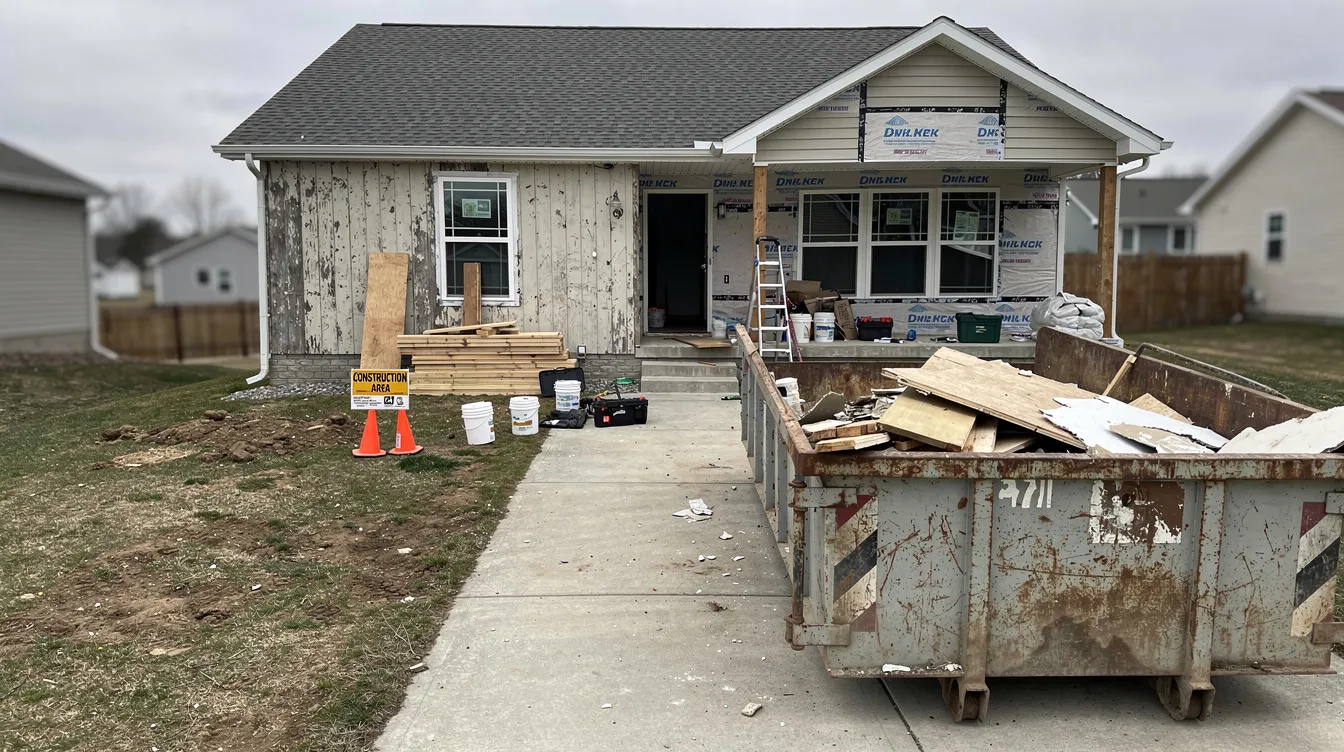
The Real Problem: The Funding Gap Hard Money Lenders Don't Cover
Let me walk you through a real scenario. An investor finds a $300,000 property in Arlington needing $60,000 in rehab. A trusted hard money lender in Jacksonville agrees to cover 85% LTC, which works out to roughly $306,000. That leaves $54,000 the investor needs to bring.
But wait. Add closing costs at about 3% ($9,000), origination points ($11,000 at 3.1 points), earnest money deposit ($5,000), initial rehab materials before the first draw ($15,000 to $20,000), plus insurance, taxes, and a few months of interest only payments. The real out of pocket figure is closer to $70,000 or more.
Costs creating the gap:
- Down payment (difference between purchase price and total loan funded)
- Origination points and closing costs
- Earnest money deposit (often non refundable)
- Initial rehab draw (lenders reimburse after work is done, so materials and labour come out of pocket first)
- Holding costs and reserves (taxes, insurance, utilities, interest payments)
- Financial statement requirements showing proof of reserves
Real estate investors targeting fix and flip or rental properties are the primary audience for hard money lenders, but many of those investors lack the liquid capital to cover every upfront cost, especially when running multiple deals. Some bring in equity partners and give up a fair whack of their profits. Others simply walk away from deals that would have made them money.
Gap Funded's role is to fill these specific gaps without taking equity or putting liens on the subject property, keeping the hard money lender comfortable in first lien position.
How Gap Funded Complements Jacksonville Hard Money Lenders
Gap Funded is not a direct hard money lender or a private lender. We don't compete with other hard money lenders for first position on the real property. Instead, we provide funding to cover what primary lenders won't fund.
Key use cases:
- Down payment shortfall when a lender covers 85% LTC but you need the remaining 15%
- Closing costs not rolled into the loan amount
- Rehab gaps between the draw process milestones and what you need to pay upfront
- Earnest money deposit financing to secure funding and lock a deal
- Reserves and holding costs that strengthen your loan approval odds
The model is simple: no equity splits, no profit share, no liens on the deal property. You keep the full upside from your Jacksonville flips or rental properties. Qualification generally requires a 650+ FICO, clean recent credit history, and stable income or strong assets. Both newer and experienced real estate professionals can qualify.
You can see all our gap funding services for a full picture of what's available.
Unsecured Gap Funding Tools for Jacksonville Investors
Many Jacksonville investors prefer unsecured options that don't tie up collateral. Here's what we offer:
- Unsecured personal term loans: Cover down payments, rehab overages, or closing costs. Based on credit and income rather than collateral. Funding typically happens in days, not weeks. Ideal when you need to provide funding fast alongside a hard money deal.
- Business credit card stacking at 0% introductory interest: Flexible capital for materials, labour, and short term working capital on flips and small rehabs. Especially useful for costs that come before your first rehab draw.
- Debt consolidation: For investors carrying high interest personal debt that limits borrowing capacity. Consolidating can lower monthly payments, improve cash flow, and free up credit availability for new deals.
Unsecured gap funding is usually the first step for newer investors with 650 to 700+ FICO who don't yet have large equity positions but want to fund projects alongside a primary hard money lender. Sequencing matters here. Applying in the right order (consolidation first, then gap funding, then credit stacking) protects your approval odds for each subsequent tool.
Asset Based Capital: HELOCs and Rental Focused Loans
If you own a primary residence or investment property in Florida with equity, asset based lending opens additional doors.
A home equity line of credit (HELOC) on your home or rental property functions as flexible, revolving capital for earnest money deposits, construction draws, or BRRRR rehab costs. HELOCs sit behind a first mortgage and typically offer lower rates than unsecured debt. You can estimate your available equity with our HELOC calculator.
DSCR loans are the common take out financing for stabilised rental properties, relying on the property's debt service coverage ratio rather than personal income verification. They're how most BRRRR investors exit their hard money loans into long term holds.
Example stack: Use a Jacksonville hard money loan to acquire and rehab a duplex near downtown. Gap Funded provides unsecured capital to cover the down payment and closing costs. A HELOC covers early rehab materials. After stabilisation, refinance into a DSCR loan to hold as a long term rental. The investor keeps full control without bringing in an equity partner.
Revenue Based Capital for Local Small Businesses and Investor Borrowers
I reckon about half the real estate entrepreneurs I talk to also own construction companies, property management firms, or other cash flowing businesses. That revenue can provide funding through additional channels.
- Business lines of credit and business term loans support materials, payroll, and expansion while primary hard money loans finance the properties
- Merchant cash advance style financing works for businesses with strong, consistent revenue, but should be used carefully due to higher effective costs
These revenue based options are generally more appropriate for established businesses with 2+ years in operation and $20,000+ per month in revenue. Combining revenue based capital with Jacksonville hard money loans helps investor contractors float project costs, pay subcontractors on time, and keep multiple jobs moving simultaneously.

Comparing Local Jacksonville Hard Money vs National Lenders vs Gap Funded
| Factor | Local Jacksonville Lenders | National Lenders | Gap Funded |
|---|---|---|---|
| Market knowledge | Deep (micro market nuances, flip properties, ARV accuracy) | General (consistent guidelines) | N/A (not a primary lender) |
| Speed | Fast (5 to 10 days for clean deals) | Moderate (appraisals, documentation) | Fast (days for unsecured tools) |
| Loan size | Varies, sometimes capped | Large loan amounts, portfolio scale | $20K to $120K+ (gap only) |
| What they cover | Purchase + rehab (70% to 90% LTC) | Purchase + rehab or stabilised rentals | Down payment, closing, rehab gap, reserves |
| What they don't cover | Down payment, earnest money, carry costs | Same gaps, plus stricter documentation | Not a first lien provider |
| Equity required from you | Yes, 10% to 25%+ | Yes, similar or higher | No equity split, no lien on deal property |
Jacksonville hard money lenders focus on local market understanding and micro market nuances that national platforms sometimes miss. National lenders excel with consistent underwriting for rental portfolio scale and larger commercial real estate deals. Neither is designed to handle every part of the capital stack. Gap Funded sits behind both, filling the actual cash shortfall with multiple capital tools.
Who Qualifies for Gap Funding to Pair With Jacksonville Hard Money Loans?
The ideal profile: Jacksonville or north Florida real estate investors, contractors, and small business owners with 650+ FICO, stable income or business revenue, and at least one solid deal in hand. Both newer and experienced investors qualify. Experience helps with hard money terms, but Gap Funded's tools are accessible if credit and income support it.
Documentation to have ready:
- ID and recent bank statements
- Credit card and loan details (for consolidation review)
- Basic deal summary: purchase price, rehab budget, ARV
- Any term sheet or pre approval from a hard money lender
- Business financials if using revenue based tools
We use soft credit pulls in the initial review, so checking options won't impact your credit. Loans are available to both individuals and business entities (LLCs, corporations), though entity structures are generally recommended when pairing gap funding with hard money and DSCR loans.
How to Stack Your Jacksonville Deal: From Offer to Exit
Here's the step by step for Jacksonville investors to secure funding and build a complete capital stack:
- Source a deal and run comps. Know your ARV, rehab costs, and purchase price.
- Get a term sheet from a trusted hard money lender. Understand what percent of purchase and rehab they'll cover.
- Identify your funding gap. Add up down payment, closing costs, earnest money, initial draws, and reserves.
- Apply at gapfunded.com/apply. Soft pull, no obligation, faster funding than you'd expect.
- Close with both primary and gap financing in place.
- Execute rehab or stabilisation. Use your draw process and stacked tools to keep the project moving.
- Exit. Sell for a flip profit or refinance into a DSCR or conventional loan to hold.
Jacksonville scenario: A fix and flip in Northside. Purchase price $280,000, rehab $50,000, ARV $390,000. A local asset based lender covers 85% LTC ($280,500). Gap Funded provides an unsecured term loan covering the remaining down payment and closing costs, roughly $55,000. Credit stacking handles upfront material purchases. After rehab, the investor sells into a market where median home sale prices are rising and population growth is fuelling buyer demand.
Risk management matters. Use conservative ARVs. Build holding cost buffers. Respect the clear title and draw process timelines. And make sure your exit strategy is defined before you commit capital.
Apply for Gap Funding to Boost Your Next Jacksonville Deal
Jacksonville's competitive real estate market rewards investors who combine local hard money, DSCR loans, and flexible gap funding into a clean, executable capital stack. Whether you already work with a trusted hard money lender or you're evaluating financing options for your first deal, additional funding capacity could be the difference between watching a deal and closing it.
The application at gapfunded.com/apply uses a quick form and soft credit pull, providing options for unsecured gap funding, business credit card stacking, HELOCs, and revenue based products. We don't take equity or require liens on the subject property. Your Jacksonville projects, your profits.
Related Reading
This article is for educational purposes only and isn't financial, legal, tax, or investment advice. Credit and financing outcomes depend on your own situation. Talk to a licensed financial professional before making funding decisions for your business.