
Hard Money Lender for Rental Property: Fast Financing, Smart Capital Stacking & Gap Funding

Hard Money Lender for Rental Property: Fast Financing, Smart Capital Stacking & Gap Funding
Introduction: How Hard Money Fits Into Rental Property Investing
Most real estate investors hit the same wall. You find a rental property with killer numbers, maybe a distressed duplex or a tired three bedroom that needs a full gut, and the seller wants to close in two weeks. Your bank laughs. Your DSCR lender says "come back when it's rented." So you turn to a hard money lender for rental property, and suddenly the deal is alive again.
Hard money lending exists to solve that exact timing and condition problem. Real estate investors use hard money loans to acquire and stabilise rental properties that conventional financing won't touch, especially in BRRRR (Buy, Rehab, Rent, Refinance, Repeat) and short term rental strategies. The loan covers the purchase and often the rehab, then you refinance into permanent debt once the property is producing rental income.
I'm Mick, founder of Gap Funded. We're not a hard money lender or a DSCR lender. We're the funding intermediary that helps investors bridge the shortfall between what a primary lender will fund and what it actually costs to close and complete a deal. Think down payment gaps, closing costs, rehab overruns, and carrying costs, covered through unsecured loans, business credit card stacking, HELOCs, and business lines of credit. No equity splits, no liens on your deal property.
This guide covers how hard money works for rentals, what LTV, ARV, and loan to cost really mean in practice, how to qualify, and where the funding gaps show up that can kill your deal if you're not prepared.
What Is a Hard Money Loan for Rental Property?
Hard money loans are short term, asset based financing options provided by private lenders. They're secured by investment real estate (not your primary residence) and built for speed. Here's the short version:
- Hard money loans are not meant to be permanent financing. They're bridge tools, typically with a loan term of 6 to 24 months, designed to get you into a property fast and fund the rehab before you exit into longer term debt.
- Interest rates for hard money loans range from 8% to 15%, depending on the deal, the market, and your experience. Compare that to conventional mortgages or DSCR loans, which sit lower but come with heavier paperwork and longer timelines.
- Hard money loans can close in as little as 5 business days. Traditional bank loans and conventional lenders typically need 30 to 45 days. When you're bidding on an auction property or competing with cash buyers, that speed matters.
- Approval for hard money loans is based on property value, not credit score. The lender cares about the collateral property, the after repair value, and your exit strategy. Income verification is lighter than with traditional lenders, though your borrower's credit score still influences pricing.
- These loans are often used for short term projects like house flipping, but they're equally common in rental property acquisitions where the property needs work before it can produce cash flow.
Hard money loans work as a stepping stone. You buy, you fix, you stabilise, and then you refinance into a DSCR loan or conventional loan for the long haul.
Key Metrics: Loan to Value (LTV), After Repair Value (ARV), and Loan to Cost (LTC)
If you're going to use hard money for a rental property, you need to speak the lender's language. Three numbers drive every term sheet.
Loan to Value (LTV) is the ratio of loan amount to property value. LTV is the ratio of loan amount to property value. Hard money lenders cap loans at 60% to 80% LTV. Example: you're buying a rental valued at $200,000 as is. At a 70% LTV limit, the maximum loan amount is $140,000. You bring the rest.
After Repair Value (ARV) is the estimated value after renovations are complete. Lenders use a BPO or appraisal to project what the property will be worth once the rehab is done. Example: you buy for $160,000, spend $40,000 on renovation costs, and the projected ARV is $280,000. Lenders often cap loans at 70% to 75% of ARV, so your maximum loan on that deal would be around $196,000 to $210,000.
Loan to Cost (LTC) divides the loan amount by the total project cost (purchase price plus rehab). If your total cost is $200,000 and a lender offers 85% LTC, you'd get $170,000. But most hard money lenders for rental properties still cap the total loan by ARV, so even a generous LTC offer can be limited by the ARV ceiling.
In practice, many hard money lenders cap the loan at about 70% to 75% of ARV and 80% to 90% of total cost. Understanding these caps helps you calculate exactly how much cash you'll need at closing and whether you'll need gap funding to complete the capital stack.
How Hard Money Lending Works for Rental Properties (Step by Step)
Here's the process from finding a deal to paying off the loan.
Step 1: Submit the deal. The application process includes submitting property details and borrower information. You'll provide the address, purchase price, estimated ARV, a detailed rehab budget with scope of work, rent projections, and your intended strategy (BRRRR, long term hold, Airbnb, mid term rental). Lenders also want to see your track record, entity structure, and exit plan.
Step 2: Underwriting. The lender reviews ARV, runs LTC and LTV calculations, checks title, evaluates your reserves, reviews your experience, and pulls credit. Hard money lenders focus on the deal math and your exit strategy rather than your tax returns. Exit strategies such as refinancing must be clear when using hard money loans.
Step 3: Term sheet. You'll receive proposed terms: interest rate, origination fees (points), maximum loan amount, leverage limits, loan term, rehab draw schedule, repayment schedule, and any prepayment penalties.
Step 4: Closing. Once you accept terms, closing can happen in under a week when title is clean. Funds cover the acquisition and, in many cases, the initial construction loan portion for rehab.
Step 5: Rehab draws and inspections. Hard money loans often include a rehabilitation budget that is disbursed in draws as milestones are completed. The lender holds back rehab funds and releases them after inspections confirm work is done. You draw funds in stages, not all at once.
Step 6: Exit. For rental properties, the most common exit is refinancing into a DSCR or conventional loan after stabilisation. The refinance pays off the hard money lender, and you hold the property long term with cheaper, permanent financing. Some investors sell if the numbers favour a flip.
Common Uses of Hard Money for Rental Properties
Hard money isn't a one trick pony. Here are the most common rental property use cases:
- BRRRR strategy. Hard money can be used in the BRRRR strategy, allowing investors to buy, rehab, rent, refinance, and repeat. Typical timeline: 9 to 12 month hard money term, rehab in months 1 to 4, lease up in months 4 to 6, refinance into DSCR by month 9 or 10. Works well on single family homes and 2 to 4 unit deals.
- Short term rentals (Airbnb/VRBO). Properties often financed by hard money lenders require repairs or may not qualify for traditional financing. Hard money gets you in, you renovate and furnish, then refinance once you have booking history and income data.
- Bridge financing. Bridge financing can be achieved through hard money loans. You're buying a new rental before selling or refinancing another asset. A 6 to 12 month bridge loan covers the gap.
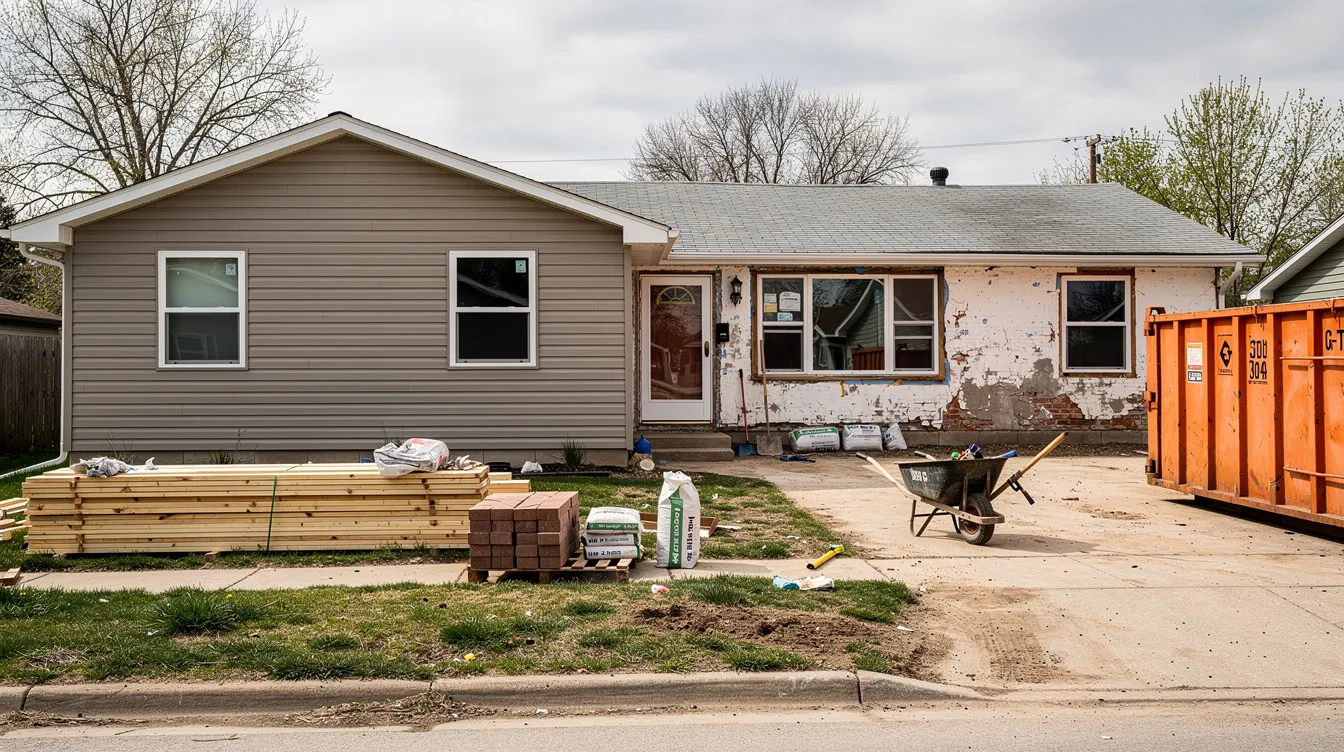
- Distressed or uninhabitable properties. Hard money loans can finance uninhabitable properties needing renovation. Traditional banks won't touch a property with no working plumbing or a caved in roof. A hard money lender will, as long as the ARV and rehab plan stack up.
- Small commercial property or mixed use buildings. Five plus unit buildings or storefronts with apartments above often need stabilisation before permanent financing is available. Hard money bridges the income gap.
Hard money financing can help investors acquire more properties quickly while managing cash flow, especially when multiple deals are running in parallel.

Typical Terms from a Hard Money Lender for Rental Property
It is essential to understand the true costs of hard money loans, including fees and interest charges beyond the headline rate. Here's what to expect in 2026:
- Interest rates: Hard money loans typically have interest rates between 8% and 15%. Experienced borrowers with strong deals in competitive markets often land toward the lower end (9% to 11%). Higher risk deals, thinner margins, or less experience push rates up.
- Points and fees: Lenders typically charge 2% to 5% in points at closing, plus underwriting and document prep fees. Hard money loans often involve additional costs such as origination and processing fees. On a $250,000 loan at 3 points, that's $7,500 out of your pocket before you've swung a hammer.
- Loan terms: Hard money loans typically have terms lasting from six to 24 months. Many BRRRR focused lenders offer 12 to 18 month terms with optional extensions (usually at a cost).
- Maximum loan and leverage: Hard money loans typically fund 60% to 80% of property value. On a $300,000 ARV duplex at 75% ARV cap, your maximum loan is $225,000. If total project cost is $260,000, you need $35,000 plus closing and carrying costs from somewhere else.
- Prepayment penalties: Some hard money lenders set a minimum loan amount of interest (3 to 6 months) even if you refinance early. For BRRRR deals where the goal is a fast exit, confirm prepayment penalties before signing. Getting surprised by a 6 month interest floor when you planned to refi in month 4 is not a fun conversation.
Pros and Cons of Using Hard Money for Rental Properties
No financing tool is perfect. Here's an honest look.
Advantages:
- Speed. Hard money loans can close in as little as 5 business days. That lets you act on auction deals, off market opportunities, and time sensitive situations where traditional mortgages would be too slow.
- Flexible underwriting for distressed rentals. Hard money loans are asset based, focusing on property value, not your W2 or tax returns.
- ARV based lending. You can borrow against the future value of the property, not just what it's worth today in rough shape.
- Enables value add. Fix and flip projects and BRRRR strategies that would be impossible under conventional loan requirements become executable.
Disadvantages:
- Higher hard money loan costs. Rates, points, and origination fees add up fast. A 12 month hold at 11% with 3 points on a $200,000 loan costs roughly $25,000 in interest plus $6,000 in points before you factor in any other fees.
- Short repayment periods. If your rehab runs long or your lease up stalls, you're staring down a maturity date with limited options. Extensions cost money.
- Tighter caps force cash contributions. A down payment of 20% to 40% is usually required, plus closing costs and reserves. That's a fair whack of capital to tie up.
- Exit risk. If your ARV appraisal comes in low or market rents don't support the DSCR refinance, you may not be able to exit cleanly. Buy and hold investors need to model this scenario.
- Carrying costs. During rehab and vacancy, you're covering interest only payments, property taxes, insurance, and utilities out of pocket. Budget for it or risk losing your margin.
Qualifying for a Hard Money Rental Property Loan
Hard money lenders focus on the asset, but they still want to know who they're lending to. Here's what most reputable lenders look for:
- Experience. Prior fix and flip projects or rental properties improve your terms. New investors should start with simpler deals to build a track record. Experienced borrowers often get lower rates and higher leverage.
- Credit profile. Approval for hard money loans focuses on property value, not credit score, but a good credit score (650 or higher) still helps. Investors with lower credit scores may face higher rates, more points, or reduced leverage. Most hard money lenders still review credit to gauge financial risk.
- Reserves and liquidity. Borrowers usually need a substantial down payment of 20% to 35% plus cash reserves for costs. Lenders typically want to see 3 to 6 months of carrying costs in reserve.
- Deal quality. A clear, realistic exit strategy and conservative ARV assumptions are critical. Weak comps or inflated projections will get your deal declined.
- Documentation. Common docs include the purchase contract, rehab budget with scope of work, rent comps, LLC or entity documents, and contractor bids. Hard money loans are primarily used for real estate investments, so lenders expect you to present a coherent investment thesis.
Understanding What "100% Financing" Really Means
I reckon this is the most misunderstood claim in real estate investing. When a direct private lender or marketing ad says "100% financing," they usually mean 100% of purchase and rehab (loan to cost). That's not the same as 100% of everything you'll spend.
Here's what typically isn't covered even with 100% LTC:
- Closing costs (title, escrow, appraisal)
- Origination points
- Interest reserves or prepaid interest
- Carrying costs during rehab and lease up
- Contingency for overruns
Even on a 100% LTC offer, the lender might still require money at closing because the total loan still caps at 75% of ARV. Example: your project costs $220,000 (purchase plus rehab), and ARV is $250,000. At 75% ARV, the max loan is $187,500. That means you need $32,500 just for the cost gap, plus another $10,000 to $15,000 for closing, points, and carrying. "100% financing" left you $45,000 short.
Before signing any term sheet, ask exactly which line items are funded: purchase, rehab, points, interest reserves, and closing costs. If the answer is vague, that's your cue to dig deeper.
Where the Gap Usually Appears: Down Payment, Closing Costs, and Rehab Overruns
This is where most deals get wobbly. The hard money term sheet looks great, but the investor doesn't have enough cash to cover what the lender won't fund.
Common gaps include:
- Down payment. Hard money loans require larger down payments of 20% to 40%. On a $200,000 purchase, that's $40,000 to $80,000 in cash.
- Closing costs and fees. Points, title, escrow, appraisal, and document fees can easily run $8,000 to $15,000.
- Upfront rehab before first draw. Some lenders don't release rehab funds until milestones are hit, so you front the first round of materials and labour.
- Cost overruns and contingencies. Renovation costs blow past estimates more often than anyone likes to admit. A 10% to 20% contingency buffer is smart but rarely funded by the primary lender.
- Refinance gaps. When you exit into a DSCR or conventional loan, the appraisal may come in lower than projected. If the refi proceeds don't fully cover the hard money payoff, you need cash to bridge.
Concrete example: a rental with an ARV of $250,000. The hard money lender offers 75% ARV, so $187,500. Total project cost (purchase plus rehab) is $220,000. Closing and points add $5,000. Carrying costs during rehab and lease up run $7,000. Your total gap is roughly $44,500. Without a plan to cover that, the deal dies.

How Gap Funded Completes the Capital Stack for Hard Money Rental Deals
This is exactly why we built Gap Funded. We specialise in unsecured gap funding and capital stacking for real estate investors who already have or are pursuing hard money lending or DSCR loans.
Here's what we cover:
- Down payments required by ARV and LTV caps
- Closing costs and origination points
- Early rehab expenses before first draw
- Reserves for carrying costs and unexpected expenses
- Earnest money deposits
- Working capital for contractors and suppliers
Gap Funded does not take equity in your deal. We don't record a lien on the rental property itself. We use soft credit pulls with no impact to check your options. Qualification typically starts at a 650 or higher FICO, verifiable income or business revenue, and a clear rental or BRRRR strategy.
We're not replacing your hard money lender. We're making sure you can actually close the deal they approved.
Gap Funding Tools That Pair Well With Hard Money Rental Loans
Not every gap is the same size or shape. Here are the tools we use, and the order matters because applying out of sequence can knock out later approvals.
- Debt consolidation. Before you stack anything, consolidating existing high interest debt can improve your monthly cash flow and borrowing capacity. Cleaning up your debt profile first gives you better terms on everything that follows.
- Unsecured personal term loans (rapid gap funding). Fixed term, lump sum capital for down payments, closing costs, or earnest money. These personal loan options provide fast access to cash without requiring collateral from your deal property.
- Business credit card stacking. 0% intro APR cards stacked strategically for 9 to 18 months, ideal for smaller rehab costs, materials, and short term project expenses. Best for amounts under $50,000 where interest free terms apply.
- HELOC on primary or investment property. A home equity line of credit creates a flexible, revolving line for repeated deals. Great for investors with equity sitting in a property doing nothing. You draw what you need, repay, and reuse for the next deal.
- Business line of credit. Revenue based or hybrid lines smooth cash flow between draws or during vacancy. Useful when you need to pay contractors before the next hard money draw funds arrive.
The typical sequence: secure your primary hard money approval first (so you know the gap), then layer in Gap Funded tools to fill what's left.
Hard Money vs. DSCR Loans for Rental Properties
These aren't competing products. They serve different phases of the same deal.
Hard money is an entry and bridge tool. You use hard money loans to acquire a property fast, renovate it, and stabilise it. The loan term is short (6 to 24 months), interest rates are higher (8% to 15%), and the lender underwrites off the asset and your exit plan.
DSCR loans are long term rental financing based on the property's rental income, not your personal income. The debt service coverage ratio measures whether the property's cash flow covers the mortgage payment. DSCR rates in 2026 sit around 6.375% to 9.5% for qualified deals, with 30 year amortisation available.
A typical timeline looks like this: 9 month hard money phase for acquisition and rehab, 2 to 3 months of lease up and rent seasoning, then a cash out refinance into a 30 year DSCR loan once the property is stabilised and producing consistent rental income. The DSCR payoff covers the hard money balance, and you hold the asset long term with cheaper, permanent debt.
Gap Funded can help on both sides. On the front end, we cover gaps in the hard money deal (down payment, closing costs, rehab draws). On the back end, we can help cover costs tied to refinancing into DSCR (appraisal fees, required repairs, reserve requirements).
Traditional financing and conventional lenders offer lower rates but require full income documentation, longer timelines, and properties in good condition. Multiple lenders may need to be consulted. They work well when the property is already rent ready and you have the documentation. They fall short when speed, condition, or documentation flexibility matter.
Risk Management: Avoiding Common Hard Money Pitfalls on Rental Deals
Hard money is a powerful tool, but it can cut both ways. Here's a practical checklist for rental property investors:
- Don't overestimate ARV or market rents. Use multiple comp sources and be conservative. One optimistic appraisal can wreck your exit. If the after repair value comes in 10% lower than expected, your refinance proceeds may not cover the hard money payoff.
- Build timeline buffers. Permits, contractor delays, and supply chain hiccups are real. If your loan term is 12 months, plan your rehab to finish by month 7 or 8. That gives you breathing room for lease up and refinance processing.
- Model your carrying costs honestly. Interest only payments, insurance, property taxes, utilities, and vacancy all stack up. If you're combining hard money with unsecured gap funding, model your total monthly outlay and make sure it's sustainable.
- Have a backup exit. What happens if the market softens or your DSCR appraisal comes in light? Private investors and buy and hold investors should have a plan B: selling, refinancing at a lower valuation, or extending the hard money term.
- Due diligence on lender reputation and track record is critical in real estate investing with hard money loans. Check references, read reviews, and confirm that the lender actually has the capital to fund and won't pull terms at the last minute.
- Lock down your rehab scope. Written scopes of work, fixed bid contracts where possible, and a clear understanding of the lender's draw requirements prevent surprises. Scope creep is the silent killer of profitable rental deals.
Next Steps: Structuring Your Rental Property Deal and Applying With Gap Funded
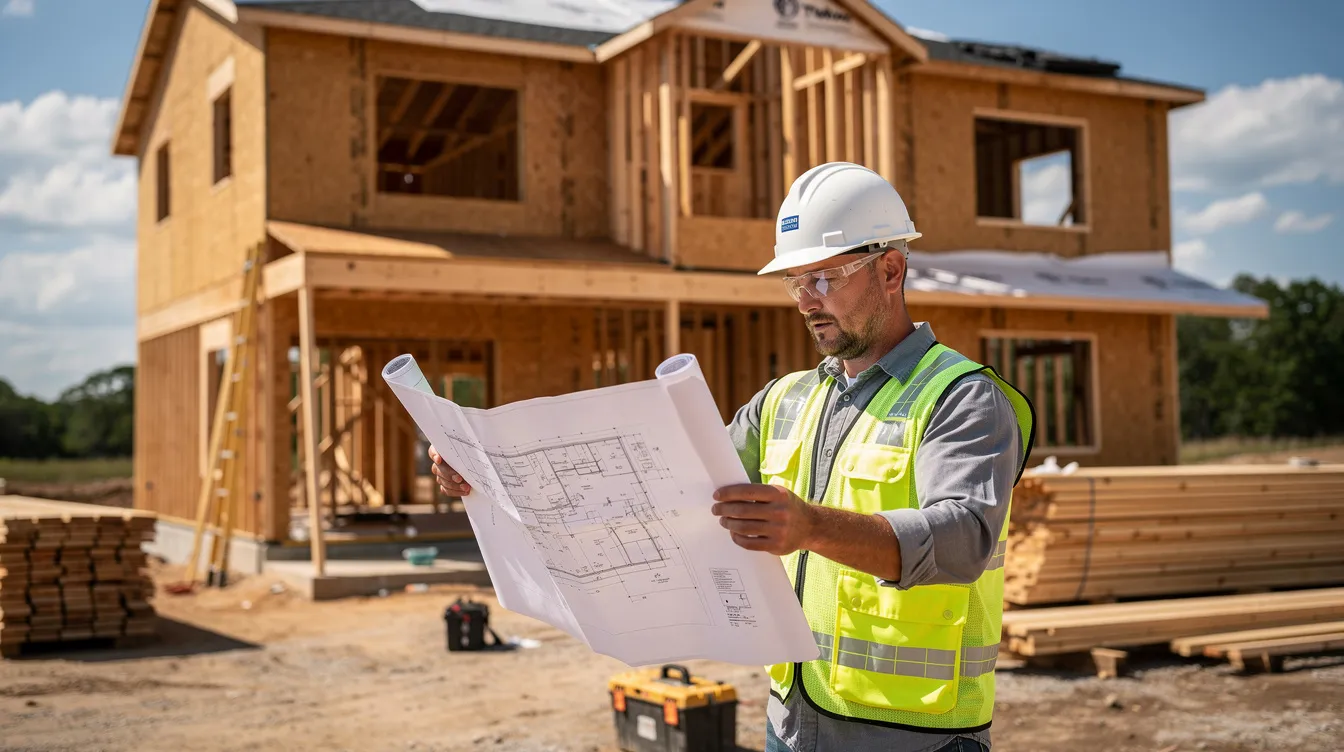
If you've made it this far, you're serious about purchasing investment property quickly and doing it right. Here's your action plan:
- Define your strategy. BRRRR, long term hold, short term rental, or bridge? Your strategy drives everything else.
- Run the numbers. Calculate realistic LTV, ARV, and LTC. Model your total loan cost including interest, points, and carrying costs. Be conservative on rents and ARV.
- Identify your primary lender. Shop hard money or DSCR lenders based on your deal type. Get a term sheet so you know your minimum loan, maximum loan, loan structure, and the total loan amount they'll provide.
- Map the gap. Subtract the primary loan from your total capital need. That difference is your gap: down payment, closing costs, rehab carry, reserves.
- Apply with Gap Funded. We'll review your deal, run a soft credit pull (no impact to your score), and match you with the right combination of gap funding tools.
Gather your credit info, income or revenue documentation, property details, and preliminary rehab budget, then apply here. No obligation, no hard pull, and you'll know your options fast.
If you're a hard money broker, wholesaler, or business loan broker, we'd love to work with you. Check out our partner programme and see how we help your clients close deals that would otherwise fall apart.
Combining hard money lending with strategic gap funding is how serious real estate investors scale portfolios without giving up equity or running out of cash between deals. You can see how that plays out in practice on our results page.
The deal that falls apart isn't usually the one with bad numbers. It's the one where the investor ran out of cash between the term sheet and the closing table. Don't be that investor.
Related Reading
This article is for educational purposes only and isn't financial, legal, tax, or investment advice. Credit and financing outcomes depend on your own situation. Talk to a licensed financial professional before making funding decisions for your business.