
Hard Money Land Loans: Fast Financing for Land Acquisition & Development

Hard Money Land Loans: Fast Financing for Land Acquisition & Development
How Hard Money Land Loans Help You Close Land Deals Fast
Most banks want nothing to do with land. Raw acreage, vacant lots, unentitled parcels: these make traditional lenders nervous because there is no income, no existing structure, and no guaranteed timeline. Traditional bank loans often take weeks to approve, and that is the optimistic scenario. For land, many banks simply say no.
That is where hard money land loans come in. These are short term, asset based loans from private lenders who care more about the collateral value of the dirt and your plan for it than your tax returns from three years ago. Hard money lenders can fund loans within days, not weeks. If you are a real estate investor trying to lock up a 10 acre infill parcel before another buyer swoops in, or a developer chasing shovel ready subdivision lots in a growth corridor, quick financing through hard money is often the only realistic path.
Hard money loans allow financing for properties that banks may avoid. They can facilitate short term real estate strategies like flipping entitled land to a builder, or bridging into a construction loan once permits are in hand.
At Gap Funded, we do not originate the hard money loan itself. We help investors stack the capital around it: down payments, closing costs, entitlement soft costs, and working capital. No equity splits, no lien on your deal property. This article covers how hard money land loans work, what they cost, and how to fill the gaps that most lenders leave behind.
What Is a Hard Money Land Loan?
A hard money land loan is a short term loan secured by the land itself as collateral, funded by private hard money lenders or investor funds rather than banks. These loans are commonly used to acquire raw or undeveloped land. They are typically used by real estate investors and developers for land acquisition, pre development, entitlement work, and bridge financing before construction or a property sale.
Here is how they differ from the alternatives:
- Hard money loans focus on property value, not credit scores. A borrower's creditworthiness still matters, but the as is value of the land and the strength of your plans drive the approval.
- Unlike a construction loan, there is no draw schedule tied to vertical building. The loan is about holding or improving the land.
- These loans serve as a bridge for buyers before obtaining permanent financing or a takeout through sale or refinance.
- Loan terms for hard money loans usually range from 6 to 24 months, though complex entitlement projects can stretch to 36 months.
- Loan amounts are based on as is land value or a conservative loan to value ratio, not on income from the property.
Types of Land Hard Money Lenders Will Finance
Land type and location matter enormously. Most lenders underwrite based on demand, resale risk, and how quickly the collateral could be liquidated in a foreclosure scenario. The local market and access to utilities are front of mind.
Hard money loans can finance vacant residential and commercial lots, infill parcels in urban and suburban areas, small subdivisions with multiple lots, and covered land (properties with an existing structure planned for demolition and commercial development or residential redevelopment). A vacant land loan on a residential infill lot in Phoenix is a very different risk profile to 200 acres of timber country with no road access, and lenders price accordingly.
Most hard money lenders prefer parcels where demand is obvious: near employment centres, in path of growth corridors, or adjacent to existing infrastructure. Rural, agricultural, or specialty recreational parcels are harder to finance and attract higher interest rates and lower leverage. A real estate investor buying an entitled 20 lot subdivision in Texas will find lenders far more willing than someone chasing speculative raw acreage two hours from the nearest town.
Land Status: Raw, Entitled, and Shovel-Ready Explained
Land status is a major driver of whether a hard money land loan gets approved and on what terms. Financing terms can vary significantly among hard money lenders depending on where the parcel sits in the development pipeline.
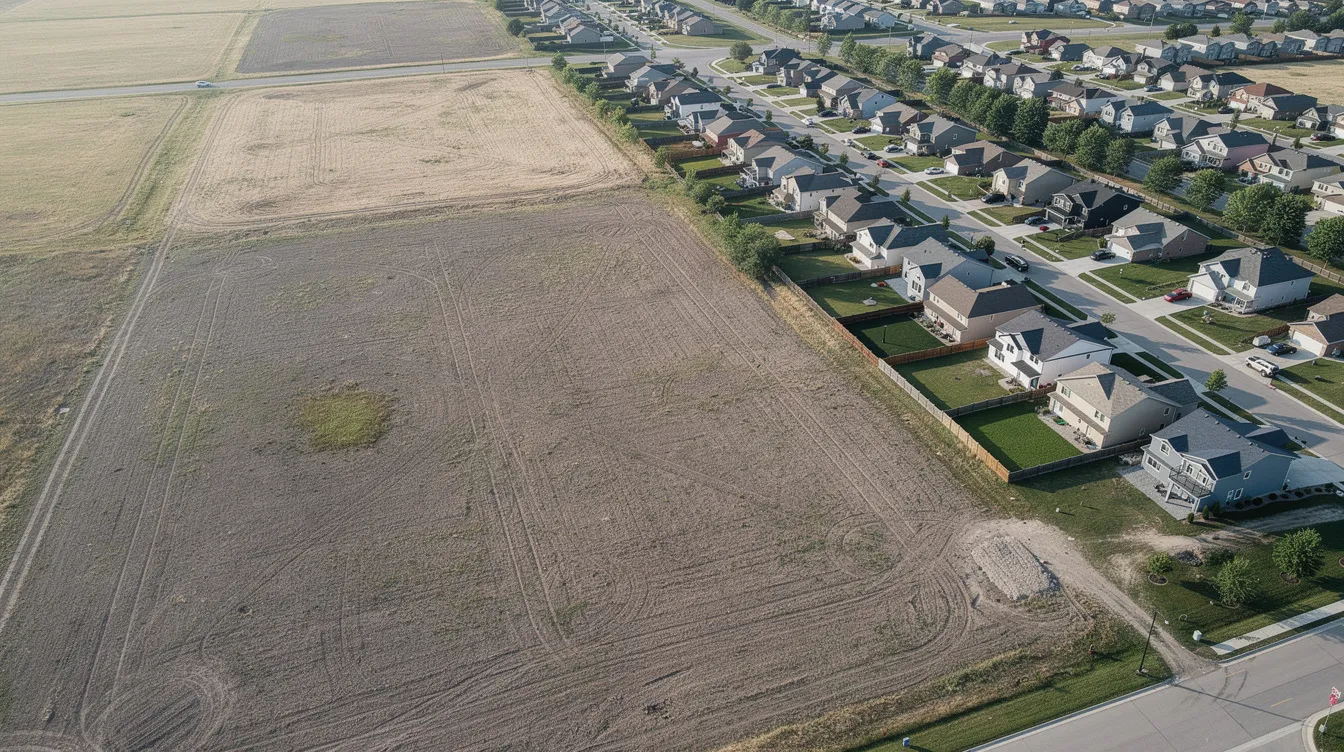
Raw land lacks connected utilities or road service. It is often outside city cores, with uncertain zoning. This is the hardest to finance. A typical loan here is a 24 to 36 month bridge to fund entitlement and early horizontal work. In one example, a private lender funded a $9.5M bridge loan on 15.7 raw acres based almost entirely on the sponsor's track record and the parcel's location in a growth corridor.
Entitled land has city approval for specific uses: zoning confirmed, subdivision maps recorded, environmental and engineering work partly or fully complete. This is far more appealing to lenders and can support higher LTV. A 127 acre entitled parcel in Carlsbad, CA secured a $6.5M bridge at just 18% LTV against a $37M appraised value. Even with entitlements, lenders stay conservative on non income producing land.
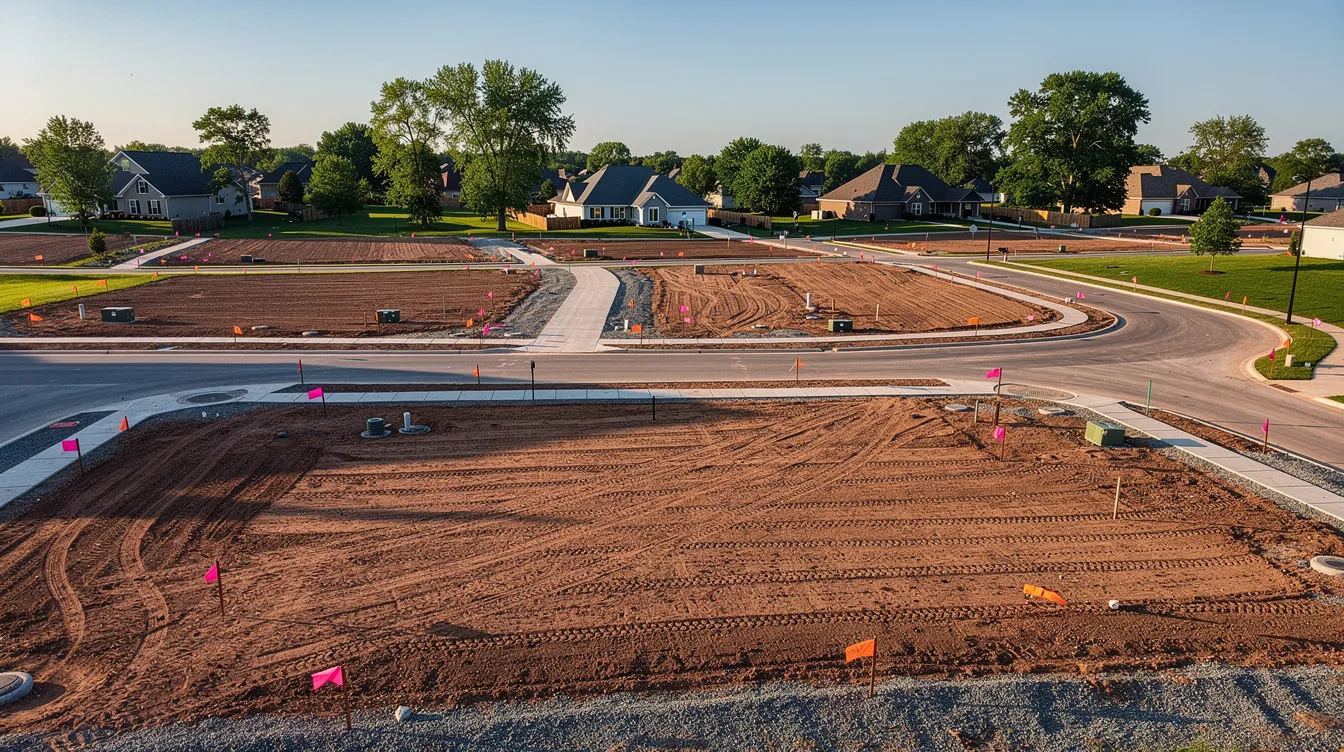
Shovel ready land has building approvals and permits pulled, with plans approved and infrastructure in place. These parcels are closest in risk to a construction loan and are often financed with a short hard money bridge before transitioning to vertical construction financing. Some hard money lenders only want shovel ready deals; others will take entitlement risk if the developer is experienced.
Typical Hard Money Land Loan Terms, LTV, and Interest Rates
Hard money land loans trade higher costs for speed and flexibility. Here is the typical pricing and structure you should expect:
- Interest rates for hard money land loans range from 10% to 15%, with some lenders pushing to 18% on riskier raw land. Typical pricing also includes 2 to 5 points in origination fees. Advertised rates as of mid 2026 confirm this range across most markets.
- Maximum loan to value for vacant land is typically 50%. Raw or unentitled parcels often cap at 35% to 45% LTV. Well located entitled or shovel ready parcels with a strong sponsor can push to 60% to 65%. A $550K raw land deal in Southlake, Texas closed at 63% LTV, but that is the exception rather than the rule.
- Hard money land loans typically have terms of 6 to 24 months. More complex entitlement and subdivision projects may extend to 36 months with extension options.
- Repayment is almost always structured as interest only payments with a balloon payment required at the end of the hard money loan term. Some lenders build an interest reserve into the loan amount for pre development phases where the land generates zero income.
- A down payment of 20% to 30% is often required. Hard money loans usually come with higher interest rates compared to traditional loans, and LTV ratios for hard money loans are often capped lower than traditional loans. That gap between the purchase price and what the money lender will fund is your responsibility to fill.
- Beyond the advertised rate, expect additional fees for title, escrow, appraisals, legal, surveys, and environmental reports.
Exit Strategy: How You Actually Get Out of a Hard Money Land Loan
A clear exit strategy is crucial for loan approval. No private lender will fund a land deal without understanding exactly how they get repaid. A logical exit strategy is what separates a deal that closes from a loan request that gets ignored.
Common exit strategies include resale or refinancing the property. Selling the entitled land to a builder or end user is the most straightforward path. Developers often refinance after securing a construction loan once entitlements are complete. For projects that eventually produce rental income, refinancing into a DSCR loan is another viable exit once structures are built or pre leased.
Timing risk is real. Permit delays, zoning pushbacks, or a shift in the local market can blow up your timeline. Most lenders offer extension options, but those come with additional fees and higher costs. I reckon the smartest move is to budget an extra 6 to 12 months of carry costs beyond your optimistic schedule. If you need extra working capital or contingency funds midstream, unsecured gap funding can provide that cushion without adding a lien to your land.
Funding the Gap: Down Payments, Closing Costs, and Pre-Development Capital
Here is the maths that catches people off guard. If a hard money lender offers 50% LTV on a $1M parcel, you need $500K of your own capital before you even factor in closing costs, surveys, engineering, environmental reports, and carrying costs. Hard money loans typically require a 20% to 30% down payment, and soft costs stack on top. You need to gather property details like zoning and intended use for approval, and all of that due diligence costs money.
The most common funding gaps on land deals:
- Down payment and skin in the game
- Closing costs (title, escrow, legal)
- Pre development and entitlement expenses (surveys, engineering, environmental)
- Interest reserves for the loan term
- Working capital to keep the rest of your business running
At Gap Funded, we help bridge these gaps with tools that do not interfere with the deal collateral. In order:
- Unsecured gap funding and personal term loans for borrowers with strong credit (typically 650+ FICO) to cover down payments and soft costs.
- 0% business credit card stacking to finance entitlement work, design, and vendor invoices during the first 9 to 15 months.
- HELOCs on a primary or investment property for investors with equity who want a reusable line across multiple deals.
- Business lines of credit or revenue based working capital for established businesses that need liquidity while a large land deal ties up cash.
We do not replace your core hard money land lender. We layer non dilutive capital around that primary loan so you can close without equity partners or gator lenders taking a slice. Ready to see your options? Start with a single application for a funding review at gapfunded.com/apply.
How to Find Hard Money Lenders for Land Loans (and Where Gap Funded Fits In)
Plenty of lenders advertise "land loans" but have strict limits you will only discover after submitting a full package. Hard money lenders may offer more flexible underwriting than traditional banks, but that does not mean every private money shop will touch your deal. Hard money loans can be secured within days, unlike banks, but only if you are talking to the right lender for your land status and location.
To find lenders efficiently:
- Search for "hard money land loans" plus your city or state. Filter for lenders who explicitly mention vacant, raw, or entitled land and commercial property.
- Ask directly about maximum LTV, acceptable land status, minimum and maximum loan sizes, geographic focus, and whether they will consider a spec home exit or subdivision sale.
- Prepare a clear summary with parcel details, zoning, maps, entitlement status, and your solid exit strategy. Send it with your first email or call. Lenders who get a complete package upfront respond faster and more favourably.
Gap Funded simplifies this. We maintain relationships with hard money and DSCR lenders that actively consider land deals, and we match your project profile to the right lender. You get feedback quickly on whether your deal is financeable, see options for both the primary loan and the funding gap around it, and avoid wasting weeks with lenders who ultimately will not fund your land type.
Best Practices and Risk Management for Hard Money Land Loans
Hard money land loans can unlock lucrative deals, but land is inherently higher risk than stabilised income properties. A small percentage of land deals go sideways not because the land was bad, but because the borrower underestimated costs, timelines, or both.
Best practices worth following:
- Perform rigorous due diligence on zoning, environmental issues, access, and utility availability before removing contingencies. Plans that look approved on paper can still hit snags at council.
- Build conservative timelines for entitlements and permits, and match your loan term plus extension options to those timelines. If your lender offers 12 months and you reckon entitlements will take 10, you are cutting it too close.
- Stress test the exit strategy for higher interest rates, slower sales, or delayed construction financing. Use recent comps and broker opinions, not your best case scenario.
On the funding side, keep personal and business credit strong so you qualify for gap funding if the project needs extra capital midstream. Use credit tools strategically: do not max every card on day one. If you end up carrying high interest unsecured debt after the project stabilises, debt consolidation can bring that under control.
Be transparent with lenders about your experience level and any credit challenges. Most lenders will still fund if the collateral and plan are strong. Choose partners who know land use nuances in your market.
Land investing rewards the prepared. The best solution is rarely cash alone or a single loan. It is the right mix of hard money, gap capital, and disciplined planning. If you want to see what you qualify for across all of these tools, start your free funding review here.
Related Reading
This article is for educational purposes only and isn't financial, legal, tax, or investment advice. Credit and financing outcomes depend on your own situation. Talk to a licensed financial professional before making funding decisions for your business.