
Hard Money Asset Based Lenders: How They Work, When to Use Them, and How Gap Funded Fills the Funding Gap

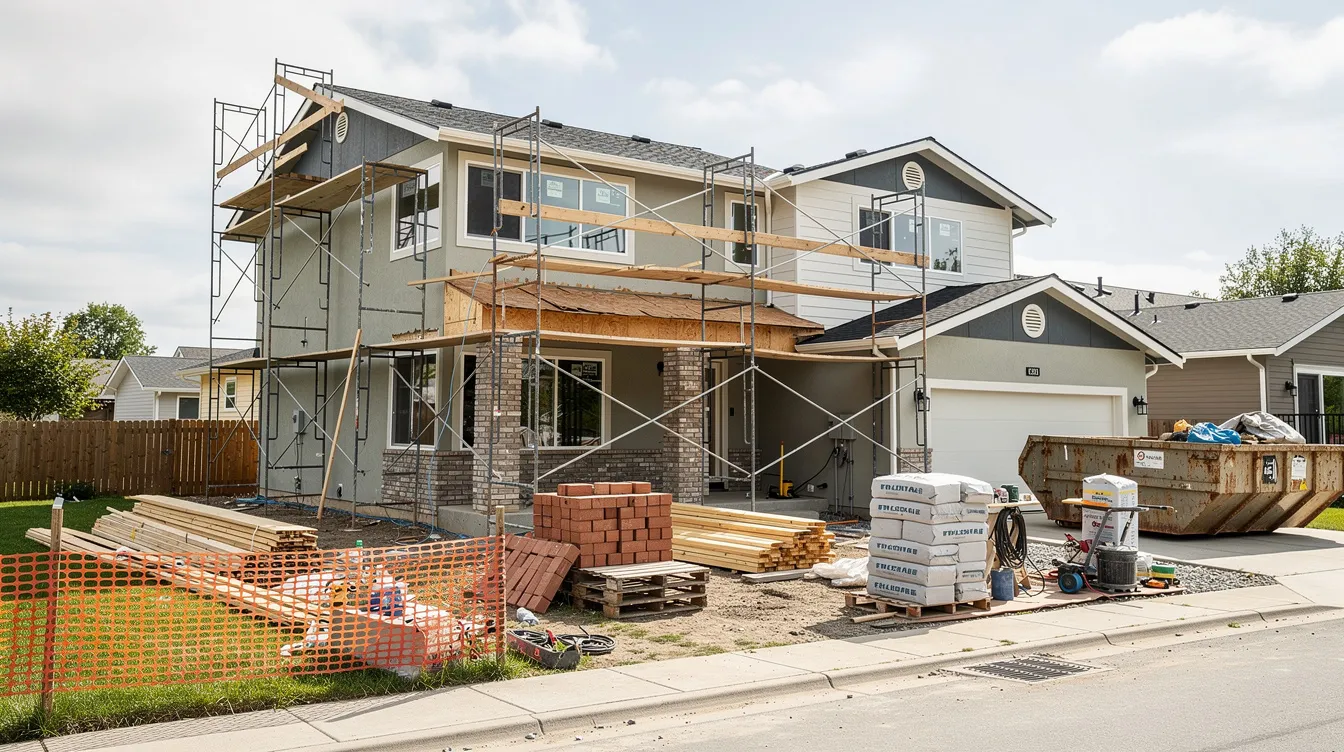
Hard Money Asset Based Lenders: How They Work, When to Use Them, and How Gap Funded Fills the Funding Gap
Why Real Estate Investors Turn to Hard Money and Asset Based Lending First
Here's a scenario I see every week. An investor finds a cracking deal, lines up a hard money loan for the property, and then realises they're still $50,000 to $80,000 short once you add up the down payment, closing costs, and the cash needed before rehab draws kick in. The hard money lender said yes. The deal is solid. But the investor can't actually close.
That gap is where most real estate deals die quietly.
Hard money lending and asset based lending are simply loans secured primarily by the value of the asset (usually real estate) rather than your tax returns, pay stubs, or a mountain of bank paperwork. They exist because traditional bank financing moves too slowly and asks too many questions when you're trying to buy a distressed duplex at auction next Tuesday.
This article will do three things:
- Explain exactly how hard money lenders and asset based loans work, with real numbers
- Show you where the typical funding gap appears, even after your hard money loan is approved
- Walk through how Gap Funded bridges that gap without taking equity in your deal or putting a lien on the property
Let's get into it.
What Is a Hard Money Loan and How Hard Money Lenders Actually Operate
A hard money loan is a short term, real estate backed loan from a private or non bank lender. Approval for hard money loans focuses on property value, not credit. The lender cares about the purchase price, your rehab budget, the after repair value (ARV), and your exit strategy. Your credit profile matters less than what the property is worth and what it will be worth once you're done with it.
Hard money loans are secured by real estate assets and are often used for investment properties only. That said, the range of eligible property types is broad. Hard money loans can finance single family homes, multi family properties are eligible for hard money loans, commercial property deals qualify, mixed use properties qualify for hard money financing, and hard money loans are available for construction projects.
Here are the mechanics that matter:
- Interest rates: Hard money loans often have interest rates between 9% and 15%, with many starting at 9.99%. Interest rates for hard money loans generally range from 8% to 18% depending on risk, deal structure, and borrower experience.
- Loan term: Hard money loans typically provide short term financing ranging from 6 to 24 months. Short loan terms typically last 12 months or less for straightforward flips.
- Payments: Hard money loans often require interest only payments initially, with a balloon payment structured at the end of the term.
- LTV limits: Loan to value ratios typically range from 50% to 80% of the property's value.
- Upfront fees: Origination fees for hard money loans can be as high as 2% to 5% of the loan amount.
- Speed: Speed of execution is a primary advantage of hard money lending, with funding often in days. Hard money loans can close in as few as 5 to 7 days in urgent situations, with typical closings landing at 21 to 25 days. Compare that to traditional mortgages, which can take 45 to 90 days to close. Some lenders can even provide preliminary funding decisions in as little as five minutes.
- Collateral: Hard money loans are secured by the property value, not credit. Traditional mortgages require strict credit checks and income verification. Hard money lending flips that model on its head.
Hard money lenders finance distressed properties that traditional lenders often reject. That's the whole point. These loans are often used for fix and flip investments, bridge loan scenarios, BRRRR plays, and fast closings on off market deals. Hard money loans allow for flexible terms, including interest only payments and rapid funding, which is exactly why real estate investors keep coming back to them.
Hard Money Lending vs. Asset Based Lending: Closely Related but Not the Same
People use "hard money" and "asset based" interchangeably, and I get why. They're cousins. But they're not identical.
Hard money lending is almost always backed by real estate. The property itself is the collateral. Asset based lending is the broader category. It covers any financing where the lender underwrites against tangible assets, including receivables, inventory, equipment, or property. The OCC's handbook on asset based lending defines it as advancing capital against a "borrowing base" of eligible collateral.
Here's a quick comparison:
| Feature | Hard Money Lending | Asset Based Lending (Broader) |
|---|---|---|
| Collateral | Real estate only | Real estate, equipment, receivables, inventory |
| Typical borrower | Real estate investors | Operating businesses and investors |
| Term length | 6 to 24 months | Revolving or 1 to 5+ years |
| Common use | Fix and flip, bridge loan, BRRRR | Working capital, growth, acquisitions |
A contractor might use an asset based business line secured by equipment, while an investor uses a hard money loan secured by a 3 unit rental. Both are asset based financing. Some commercial investors combine both: a hard money bridge loan on the property plus an asset based working capital facility for operations.
For most borrowers reading this, "hard money asset based lenders" means one thing: real estate loans secured by the deal property.
Pros and Cons of Hard Money Asset Based Lenders for Real Estate Deals
What works well:
- Fast funding. Hard money loans typically close in 10 to 21 days in California, and often within three weeks nationally. That speed lets you close deals that would evaporate waiting on a bank.
- Flexible underwriting. Most borrowers don't need perfect credit. Hard money lenders focus on property value, not borrower credit.
- Distressed and off market properties are fair game. Banks run from these. Hard money lenders lean in.
- Loan programs exist for nearly every property type: single family homes, multi family, commercial, mixed use, and construction.
What doesn't:
- Higher interest rates. Hard money loans have high interest rates, often starting at 9.99%, and the all in cost climbs when you add points.
- Borrowers must provide significant down payments when securing hard money loans, typically 20% to 35%. California hard money lenders typically offer 60 to 75% LTV, which means you're bringing a fair whack of cash. Most California hard money lenders offer 60 to 75% LTV, and California requires hard money lenders to be licensed, adding another layer of compliance. California hard money loans require no income verification, but you still need that down payment.
- Short payoff windows create pressure. LTV ratios for hard money loans range from 60 to 75% in many markets, and they typically close in 21 to 25 days, faster than traditional loans, but the clock starts ticking immediately.
- You need a clear exit strategy. No exit, no deal.
Most investors accept these trade offs because buying at a discount or grabbing an off market property often offsets the added cost of capital. The maths works when the deal is right.

Where Traditional Hard Money Lending Falls Short: The Real Funding Gap
Here's the part nobody talks about at the real estate meetup.
Even when hard money lenders approve your loan, they usually won't cover 100% of the purchase price, rehab, closing costs, or reserves. Many borrowers assume loan approval means the deal is funded. It doesn't.
Let me walk through a real scenario. You find a single family property at $300,000. Rehab costs are $70,000. ARV is $500,000. Your hard money lender offers 85% of purchase ($255,000) and funds 100% of rehab draws. Sounds great until you list what's left:
- Down payment: 15% of purchase = $45,000
- Closing costs and points: ~$8,000 to $12,000
- Earnest money deposit: $5,000
- Initial rehab float (materials before first draw): $8,000
- Carrying costs and reserves: $7,000 to $10,000
Total cash needed from you: $73,000 to $80,000.
That's the funding gap. Default on a hard money loan can lead to foreclosure since the loan is secured by real estate, so you can't just wing it and hope for the best. Borrowers risk foreclosure if they cannot repay the loan. And if the project runs long, fees for extending repayment terms can outweigh potential returns.
Many otherwise qualified investors walk away from profitable deals right here. Not because the deal was bad, but because traditional lenders and most hard money lenders won't finance this "last mile" capital.
This is the exact problem Gap Funded was built to solve.
How Gap Funded Complements Hard Money Lenders, Not Competes with Them
I want to be clear about something: Gap Funded is not a hard money lender. We're not a DSCR lender. We don't compete with the people funding your property.
We fill the gap between what your primary lender funds and what you actually need to close. Think of us as the capital stack layer that sits alongside the hard money loan, covering down payments, closing costs, rehab draws, reserves, and working capital.
Here's how that relationship works in practice:
- Your hard money lender or DSCR lender provides the bulk of the real estate purchase and rehab financing
- Gap Funded supplies unsecured or separately secured capital to cover the shortfall
- No equity splits. No liens on the deal property. No second lien position complicating your title
- Soft credit pulls to see your options, so there's no impact to your credit score just for checking
If you've got a term sheet from a hard money lender and a deal under contract, you can apply for a no obligation funding review to see exactly what your capital stack could look like.
Asset Based Tools We Use Most Often with Hard Money Loans (and Why the Order Matters)
Sequencing matters. I reckon this is the part most investors get wrong. Applying for the wrong tool first can knock out your eligibility for better options later. Here's the order we use and why.
1. Unsecured Personal Term Loans (Rapid Gap Funding)
Fixed rate, fixed term loans ranging from $20,000 to $400,000+ for borrowers with strong credit. These cover down payments, closing costs, or early rehab expenses. They don't touch the deal property, keeping your hard money lender's first lien clean. We often start here with debt consolidation to optimise your credit utilisation first, then deploy rapid gap funding for the actual deal capital.
2. 0% Business Credit Card Stacking
We stack multiple business and personal credit cards at 0% intro APR, creating $50,000 to $150,000+ in interest free capital for 9 to 18 months. Ideal for rehab materials, carrying costs, and short term working capital. This tool needs a stronger credit profile (generally 700+). More detail on how this works at our credit card stacking page.
3. HELOC on Existing Property
If you own a primary residence or investment property with equity, a HELOC creates a revolving line up to $750,000. Draw periods can start within days. Use our HELOC calculator to estimate what you might access. This is asset based capital at its most practical: your existing equity funds your next deal.
4. Business Lines of Credit and Revenue Based Tools
For investors with active businesses generating $20,000+ monthly revenue and at least 2 years of operations, a business line of credit or business term loan provides revolving capacity for multiple deals. A merchant cash advance can serve as a faster, shorter term option for revenue based capital.
Each tool is best suited for specific gap costs. Term loans cover big ticket items like down payments. Card stacking handles rehab float. HELOCs provide a reusable war chest. Business lines keep repeat borrowers liquid across multiple deals simultaneously.
Qualifying for Gap Funding to Pair with Hard Money: Credit, Income, and Deal Profile
Let me be straight about who this works for and who it doesn't.
- Credit score: Most tools need a FICO of around 650+. Higher scores (700+) unlock more favourable rates, larger approvals, and 0% card stacking eligibility.
- New businesses: If your business has less than 2 years of operations or under $20,000/month in revenue, you won't qualify for business funding products. But you can still access personal unsecured gap funding and card stacking if your personal credit is solid.
- Established businesses: Business term loans and revenue based lines typically want 2+ years in business and $20,000+ monthly gross revenue.
- Soft pulls first: We use soft credit pulls initially so you can see your options without any impact to your score.
- Documentation: Purchase contract, basic rehab scope, estimated ARV comps, recent bank statements, and a simple exit strategy summary.
The ideal client is an investor or new business owner with a deal or contract in place, decent personal credit, and a gap between what the lender covers and what the deal actually costs.
This is not bank underwriting. No income verification requirements, no 90 day wait. Think of it as: can you service the debt, and is there enough margin in the deal?
Using Hard Money Loans Plus Gap Funding Across Popular Real Estate Strategies
Fix and Flip
Hard money lender funds 85% of the $200,000 purchase ($170,000) plus rehab draws. Gap Funded covers the $30,000 down payment via unsecured term loan and $20,000 in initial rehab materials via 0% card stacking. Total investor cash outlay at closing: nearly zero.
BRRRR Strategy
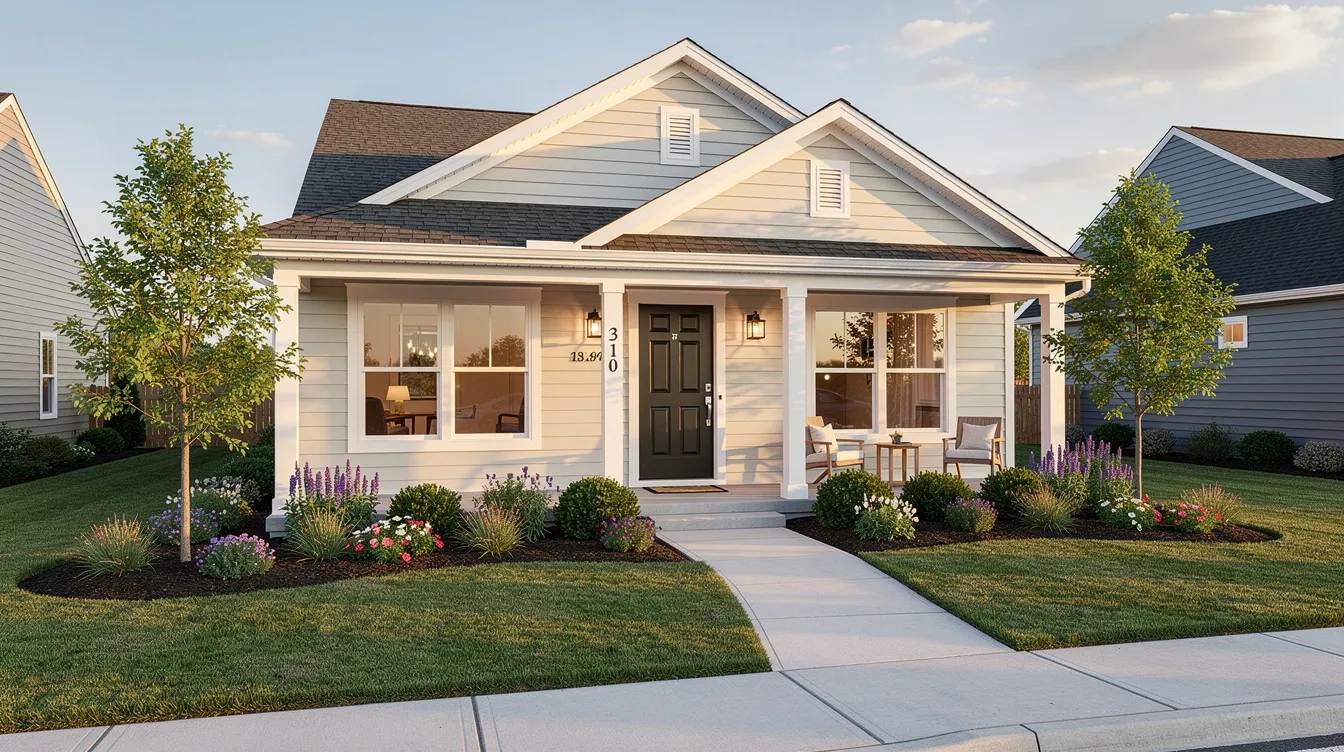
Buy with hard money, rehab with gap funding tools, rent the property, then refinance into a DSCR loan or long term financing. The gap funding covers what the hard money lender won't during the acquisition and rehab phase, then gets paid down from the refinance proceeds. Repeat with the freed up capital.
Short Term Rentals and Airbnb
Hard money or DSCR loan covers acquisition and major rehab. Gap funding handles furnishing, staging, marketing spend, and reserves for the first few months before the property cash flows. A HELOC on a separate investment property works brilliantly here as a revolving source.
Small Multi Family and Mixed Use
Larger deals mean larger gaps. A $600,000 multi family with $120,000 in renovation costs might leave a $100,000+ shortfall even with aggressive hard money leverage. Layering unsecured term loans, card stacking, and a HELOC can close that gap without bringing in an equity partner who takes 30% to 50% of your profit.
Interest Rates, Fees, and the True Cost of Stacked Capital
I'll be honest with you: stacked capital costs more than a single conventional loan from a bank. But it delivers speed, flexibility, and access when banks say no or move too slowly.
Here's how to think about real cost on a 9 month flip:
- Hard money loan at 12% interest plus 2 points on a $200,000 loan = roughly $20,000 in borrowing costs over 9 months
- Unsecured gap funding at 10% on $40,000 for 9 months = roughly $3,000
- 0% credit card stacking on $25,000 for rehab = $0 interest if paid within the promo period
Total borrowing cost: ~$23,000. If your ARV is $350,000 and you bought at $200,000 with $60,000 in rehab, your gross profit before borrowing costs is $90,000. After capital costs, you're still clearing $67,000.
The key is a clear exit strategy and a schedule to refinance, sell, or consolidate. If you're carrying high rate debt past the project timeline, the numbers shift fast. That's where a structured debt consolidation plan after the deal closes can clean up any remaining balances and protect your credit for the next deal.
Alternatives to Hard Money Loans and When They May Be Better
Fair's fair. Hard money and gap funding aren't always the best path.
- Traditional bank financing and credit unions: More favourable rates and longer terms, but they require strict income verification, weeks of paperwork, and often won't touch distressed properties. If you have months to close and a vanilla property, conventional financing may cost less.
- DSCR and long term rental loans: For stabilised rentals with strong cash flow, these offer long term financing at better rates. They should be your exit target from a bridge loan, not your acquisition tool.
- SBA loans: Low rates, long terms, heaps of paperwork. Ideal for business acquisitions. Terrible for time sensitive real estate deals.
- Private lending, gator lending, and transactional funding: Specialised tools for narrow situations like earnest money deposits and double closings. Options like gator lending, transactional lending, and earnest money deposit financing serve specific short term needs but aren't full capital stack solutions.
Other lenders and debt funds can serve particular niches. The best investors match the tool to the deal, not the other way around.
Step by Step: How to Pair a Hard Money Lender with Gap Funded for Your Next DealStep by Step: How to Pair a Hard Money Lender with Gap Funded for Your Next Deal
- Get a deal under contract with realistic timelines. Know your purchase price, rehab scope, and ARV.
- Secure a term sheet or estimate from a hard money or DSCR lender. Know your max loan amount and what percentage of the deal it covers.
- Calculate your exact funding gap. Add up the down payment, closing costs, earnest money, initial rehab float, carrying costs, and unexpected costs contingency.
- Apply at gapfunded.com/apply to build out your capital stack. Soft pull, no obligation, no impact to credit.
- Close and execute. Align your gap funding disbursement dates with the hard money closing for smooth execution.
Have your purchase contract, rehab budget, ARV comps, bank statements, and exit strategy summary ready. Most clients see approvals on unsecured products within days.
When Hard Money and Asset Based Lending Go Wrong, and How to Avoid Common Mistakes
Deals go sideways when investors skip the boring stuff. Here are the most common errors I see:
- Underestimating rehab timelines: Budget 10% to 20% contingency on every renovation. Renovation costs always creep.
- Inflating ARV: Use conservative comps. If you need the top comp to make the deal work, the deal doesn't work.
- Ignoring carrying costs: Interest only payments, insurance, taxes, and utilities add up every month the property sits empty.
- No backup exit: If your flip doesn't sell in 6 months, can you refinance into a DSCR or rental loan? If not, you're staring down a balloon payment with no way out. A recent foreclosure on your record makes everything harder going forward.
- Maxing 0% cards with no repayment plan: Those intro rates expire. If you haven't sold or refinanced by then, you're paying 22% to 29% APR. That's not a gap strategy. That's a trap.
- Extension options that eat your profit: Many hard money loans charge 1 to 2 points per extension. Two extensions can wipe out your margin.
- Stacking too much short term debt without modelling worst case: Run the numbers assuming the project takes 3 months longer and the ARV comes in 10% lower. If the deal still works, proceed.
Gap Funded's review process helps investors model these scenarios before committing capital. We'd rather tell you a deal doesn't pencil than watch you get buried in prepayment penalties and extension fees.

Next Steps: See Your Hard Money Plus Gap Funding Options with Gap Funded
Hard money asset based lenders are powerful tools for closing real estate deals quickly, but they rarely cover 100% of what a project actually costs. The down payment, closing costs, rehab float, reserves, working capital, and earnest money are real costs that real investors need real capital to cover.
Gap Funded uses unsecured gap funding, asset based HELOCs, business lines, and 0% card stacking to close that gap, without taking equity in your deal or placing a lien on the property.
- Soft credit pull: No impact to your score just to see your options
- No equity splits: You keep 100% of your project
- Fast execution: Most unsecured approvals come through within days
- Top lenders and tools matched to your specific deal, not a one size fits all loan program
If you've got a deal in hand, a hard money term sheet, or even just a property you're eyeing, apply at gapfunded.com/apply and see what your capital stack looks like. No obligation. No pressure. Just clarity on whether the financing needed to fund deals is actually within reach.
The deals you walk away from because of a $40,000 shortfall are the ones that sting the most. Don't let the gap be the reason.
Related Reading
This article is for educational purposes only and isn't financial, legal, tax, or investment advice. Credit and financing outcomes depend on your own situation. Talk to a licensed financial professional before making funding decisions for your business.