
Gap Funding for Real Estate: Why Unsecured Capital Stacking Beats Second-Position Loans

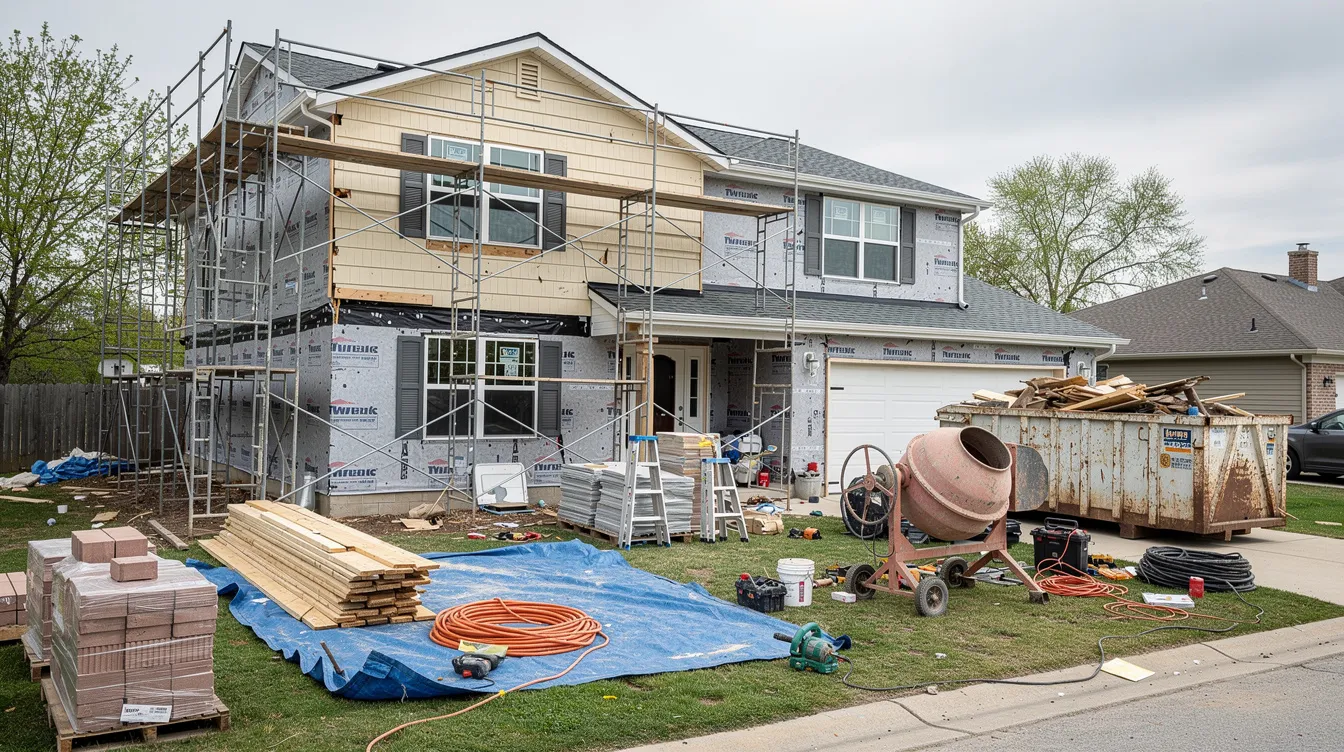
Gap Funding for Real Estate: Why Unsecured Capital Stacking Beats Second-Position Loans
This guide is designed for real estate investors and new business owners seeking to understand how gap funding can help close deals and manage project costs in today's lending environment. Whether you are flipping houses, building a rental portfolio, or launching a new real estate business, understanding gap funding is crucial. In today's lending climate, primary loans rarely cover 100% of your project costs, and knowing how to bridge that gap can mean the difference between a successful investment and a missed opportunity.
What Is Gap Funding in Real Estate?
Gap funding is short-term capital that covers the difference between your primary loan and the total project cost of a real estate deal. Gap financing fills the shortfall that exists because primary lenders typically provide 70% to 80% of a property's purchase price or after repair value, leaving investors responsible for the rest. The funding gap is typically 5% to 20% of total project costs, though gap funding can cover up to 40% of project costs depending on the deal structure.
This gap usually includes:
- Down payment
- Closing costs
- Earnest money deposit
- First rehab draw
- Interest reserves
- Required cash reserves
These line items add up fast on fix and flip, BRRRR, and short-term rental projects. Gap funding is commonly employed when primary lenders do not finance 100% of a project's cost—which is nearly every real estate deal.
Historically, gap funding meant a second-position lien behind a hard money lender. Gap funding can be structured as a second-position loan or equity participation agreement, but here is the hard truth: most serious hard money lenders and DSCR lenders in 2024–2026 explicitly prohibit second liens on the deal property. That reality makes unsecured gap funding—or gap financing secured by a separate asset like a HELOC—the only reliable path forward. This is the model Gap Funded uses, and it is why unsecured capital stacking has become essential for real estate investors who want to close deals without blowing up their primary loan.
How Traditional Gap Funding Works (and Why Second Positions Are Dying)
The old-school model was straightforward: a private money lender or gator lender sat in second lien behind your hard money loan, covering the remaining project costs. Private lenders are the primary source for gap funding rather than institutional banks, and these individuals accepted the subordinate position in exchange for higher interest rates and fees.
Hard money lenders typically fund 65–75% of a project's value. A typical hard money loan might cover 80–90% of purchase and 100% of rehab in escrow draws, leaving a gap for the down payment, closing costs, and reserves. Under the traditional model, a second-lien gap lender would fill that hole. But gap lenders hold a second lien position, increasing risk during foreclosure—if the property sells below the first lien balance, the second lien holder gets wiped out. Gap funding typically involves higher interest rates than traditional loans precisely because of this risk, with rates often landing between 10% and 18%.
Here is the problem: almost every serious hard money lender now prohibits a second lien on the subject property. DSCR loan programs do the same. Intercreditor conflicts, foreclosure complexity, and secondary market requirements have made lenders allergic to subordinate financing on the deal property.
Consider a $300,000 fix and flip where the investor secures a hard money loan covering 85% of purchase plus full rehab escrow. The remaining $60,000 gap needs filling. The investor finds a private lender online willing to take a second position—then the hard money lender denies closing because their loan covenants forbid it. Deal killed.
The downsides of deal-secured gap loans stack up fast:
- Complex title work and intercreditor agreements
- Conflicts with primary lender covenants
- Slow approval timelines
- Frequent last-minute deal kills when the first lender refuses consent
- Financing costs that reflect subordinate-position risk
Why Unsecured Gap Funding Is Safer and More Realistic Today
When gap funding is unsecured, your primary hard money lender or DSCR lender retains a clean first lien on the property with zero intercreditor conflict. There is no second position to negotiate, no consent to obtain, no title complications. Gap funding covers shortfalls in real estate project financing without touching the deal property's lien structure, which is exactly what primary lenders require.
From the investor's perspective, unsecured capital keeps the capital stack simple:
- One lender
- One recorded lien
- One clean title
Using gap funding this way can reduce personal financial risk for investors because there is no additional collateral pledge on the subject property, and no risk of a lien dispute derailing the deal at the closing table.
Now consider the other side. A random individual off the internet offering to fund your gap with a second lien is making a poor investment. Without a strong first-position lien or separate collateral, their capital sits behind a senior lender who will absorb most or all proceeds in a default scenario. The only rational way for an individual to secure gap financing is against a totally separate asset—a lien on the investor's other rental property, for example. At that point, the investor is better off arranging a HELOC on that separate property, which is exactly what Gap Funded helps arrange as part of its capital stacking approach.
How Gap Funded's Capital Stacking Model Works
Gap Funded specializes in building unsecured capital stacks tailored for real estate investors and new business owners. Instead of taking a second lien on the deal property, Gap Funded assembles a customized mix of funding tools:
Types of Unsecured Gap Funding
- Unsecured term loans with 3–7 year amortizations
- Stacked 0% intro business credit cards for purchases and balance transfers
- Personal and business lines of credit
- HELOCs on a home or investment property (only when appropriate, and never on the deal property)
- Working capital and debt consolidation options to clean up existing credit before a new deal
This capital covers the typical funding gap, including:
- Down payment
- Closing costs
- First rehab draw
- Earnest money deposit
- Interest reserves
- Cash buffers
Typical Timeline
- Gap funding can be secured in as little as 1 to 7 days
- Gap funding typically closes within 1 to 14 days
This speed allows real estate investors to move quickly on acquisitions and renovations without financing delays and lets investors manage multiple projects simultaneously.
Gap funding can fill gaps in acquisition down payments and capex plans regardless of which primary loan type the investor uses. Whether the deal involves hard money loans, a DSCR loan, a bank loan, or a bridge loan, the gap funding sits entirely outside the property's lien structure, avoiding many of the strict gap funding requirements private lenders impose.
Example:
A 2025 fix and flip in Atlanta requires $45,000 beyond the hard money loan for the down payment and closing costs. Gap Funded stacks $25,000 via an unsecured term loan and $15,000 across 0% intro business credit cards, with the remaining $5,000 from a HELOC on the investor's primary residence. No lien on the deal property. No conflict with the hard money lender. Approved and funded on the timeline the deal requires.

Common Real Estate Use Cases for Unsecured Gap Funding
Gap Funded primarily supports active real estate strategies where timing, leverage, and liquidity matter more than bank-style interest rates. Their institutional gap funding solutions are designed around speed and reliability. Here is how gap funding works across the most common deal types in real estate investing today.
Fix and Flip Projects.
- Unsecured gap funding covers the 10–20% down payment the hard money lender does not finance, plus closing costs and the first draw of the rehab budget.
- Investors use gap funding for renovation costs beyond primary loan limits.
- Example: $250,000 purchase, $60,000 rehab, 12-month hard money loan at 10–12% interest. Gap Funded provides roughly $50,000 unsecured to close. Gap funding is often used for renovation and repositioning costs on these rehab projects.
BRRRR and Long-Term Rentals.
- Gap capital helps with the acquisition down payment, light rehab, and seasoning costs until a DSCR refinance six to twelve months later.
- DSCR lenders typically cap refinance at 75–80% LTV.
- Gap funding bridges the difference between the entire project cost and DSCR proceeds, and gap funding can support down payments when lender leverage is low.
Short-Term Rentals and AirBnB.
- Investors use gap funding to furnish properties, cover initial management and marketing costs, handle reserves required by DSCR lenders, and preserve liquidity during the ramp-up.
- It helps cover interim costs during new development projects and early operations before cash flow stabilizes.
New Real Estate Businesses and Acquisitions.
- Many new entities are not yet eligible for business loans, which often require two years in business and at least $20,000 per month in revenue.
- Unsecured personal-profile funding becomes the fastest path to launch or complete an acquisition.
- Gap funding can be used for acquisition, renovation, and refinance shortfalls across these scenarios.
Post-Close Capital Shortfalls.
- Sometimes investors close with a primary loan but underestimate rehab or holding costs.
- Unexpected expenses surface.
- Gap Funded can step in with rapid working capital and credit stacking to cover costs and prevent forced sales that destroy investment goals.
Costs, Interest Rates, and Risk Management with Unsecured Gap Financing
Unsecured gap financing carries higher interest rates than traditional financing from a bank—but so does every tool in real estate that trades speed and flexibility for cost. Interest rates for gap funding typically range from 10% to 18%, depending on credit profile, and unsecured term loans for strong credit often land in the 9–22% APR range. Zero-percent intro business credit cards provide 6–18 months of interest-free capital on purchases and balance transfers. Compare this with common hard money rates of 9–13% plus 1–3 points upfront. The investor's blended cost of capital across the entire deal is what matters, not any single rate in isolation.
Risk Factors
Gap funding can significantly reduce profit margins on smaller deals, and investors risk reduced profit margins due to gap funding costs if the numbers are not stress-tested. Short repayment windows for gap funding can lead to financial strain, and gap funding loans usually have terms of 6 to 12 months. Poor project planning can result in budget overruns with gap funding.
Benefits of Unsecured Gap Funding
However, smart investors use unsecured gap financing to increase overall ROI by:
- Allowing two to three deals at once instead of one, compounding returns
- Preserving liquidity for unexpected repairs and carrying costs with monthly payments that fit the timeline
- Avoiding giving up equity or profit shares to gator lenders demanding 15–25%+ returns
Exit Strategies
A well-defined exit strategy is critical for successful gap funding. To protect your investment:
- Stress test every deal at higher interest rates and longer hold times
- Maintain conservative ARV assumptions and rehab budgets with 10–15% buffers
- Always plan multiple exit strategies—sell at ARV versus refinance with a DSCR lender, for example
- A clear exit strategy and a strategic approach to your rehab budget protect you regardless of what the market does
Gap Funded does soft credit pulls initially, so you can see your options with no impact to credit before deciding whether the cost of capital makes sense for your specific deal.
How to Qualify and Apply for Gap Funding Through Gap Funded
If you are ready to secure gap financing without jeopardizing your primary loan, here is how to get started.
Profile Requirements
- Credit score generally 650+ (stronger scores and low utilization unlock larger limits and favorable terms with lower interest rates)
- Verifiable income, business revenue, or equity in a home or investment property for HELOC-based strategies
- A clear real estate strategy—fix and flip, BRRRR, STR, or new business acquisition—with basic deal numbers prepared
Application Process
- Complete a quick online funding questionnaire covering your credit profile, income, and target funding amount.
- Undergo a soft credit pull so options can be presented without impacting your FICO score.
- Review a customized capital stack proposal—unsecured term loans, business credit card stacking, HELOC options, lines of credit—tailored to your deal and timeline.
Many clients receive initial approval in a few business days and can start drawing on cards or term loans within 7–14 days. This often runs in parallel with a hard money or DSCR underwriting process so everything is ready at closing. Gap Funded does not take equity in deals, does not place liens on the investment property, and does not act as a hard money lender. It is a funding intermediary focused entirely on unsecured and separate-asset capital solutions that negotiate terms that work for your deal structure.
Gap funding covers shortfalls between primary loans and total project costs—and the fastest way to see what you qualify for is to apply for a quick funding review. No equity splits, no liens on your deal property, and no impact to your credit just to check your options. See how much unsecured gap capital you can access for your next real estate project.
Related Reading
This article is for educational purposes only and isn't financial, legal, tax, or investment advice. Credit and financing outcomes depend on your own situation. Talk to a licensed financial professional before making funding decisions for your business.