
Flipping Houses: How to Start (Beginner's Guide for 2026)

Introduction: How to Start Flipping Houses in Today's Market
Most people get excited about flipping houses after binge watching reality TV on a Sunday arvo. The host buys a wreck, rips out a wall, installs new cabinets and new flooring, then walks away with a cheque that would make your accountant weep. Looks easy. It is not.
House flipping involves buying, renovating, and reselling properties quickly for profit. In 2024, median profits from house flipping were about $73,500 per deal, according to ATTOM's tracking data. That sounds brilliant until you realise that number is gross profit, before financing costs, holding costs, closing costs, and all the surprises hiding behind drywall. In 2025, gross ROI dropped to roughly 25.5%, the lowest since the Great Recession. Today's market is tighter, margins are thinner, and winging it is a recipe for losing money.
But here is the thing: real estate investors who approach this with discipline, conservative numbers, and proper funding are still making it work. Many new flippers can realistically expect a net profit of $20,000 to $60,000 on a well sourced deal, depending on the local market and rehab scope. Not a dream home payday, but a genuinely lucrative way to build wealth over time.
This guide walks you through every step of the house flipping process, from zero experience to your first flip and beyond. Here is what you will learn:
- How to find a good deal and evaluate whether a property is worth your time and money
- How to run the numbers so you do not overpay or underbudget
- The financing options available and where the "funding gap" shows up for first time flippers
- How Gap Funded helps you close that gap with tools like unsecured term loans, 0% credit stacking, and HELOCs, so workable deals do not die for lack of cash
- How to manage rehab, build your team, and sell for maximum resale value
Let's get into it.
What Is House Flipping? (House Flipping 101)
At its core, house flipping means buying a property in poor condition or with outdated finishes, improving it, and reselling it within roughly four to twelve months for more money than you put in. That is the whole game. Buy low, add value, sell higher.
Most house flippers target distressed or outdated homes where renovation meaningfully raises value. Think 1970s kitchens with avocado tiles, worn out roofs, bathrooms that haven't been touched since shoulder pads were fashionable. The goal is to turn a neglected house into something a retail buyer sees as their dream home, or at least their "good enough" home.
There is a spectrum of flip intensity. A light cosmetic flip might involve paint, flooring, fixtures, and landscaping. A heavy rehab flip could mean structural work, foundation repairs, replacing all the mechanicals (plumbing, electrical, HVAC), and navigating complex permits. Beginners: start light. Seriously.
A few terms you will see throughout this guide:
- ARV (After Repair Value): The expected resale price after renovations are complete. This is the number your entire deal analysis revolves around.
- Holding costs: Monthly expenses while you own the property: property taxes, insurance, utilities, loan payments.
- Contingency budget: Reserved dollars (typically 10 to 20% of your rehab estimate) for surprises.
- Hard money: Short term, asset based loans commonly used by flippers for speed.
- Gap funding: Capital that fills the shortfall between what your main lender covers and the total cash you actually need to do the deal, a concept many investors misunderstand until they study what gap financing in real estate actually is.
How the House Flipping Process Works (From Offer to Sold)
Think of the flipping process as a relay race with six legs. Drop the baton at any stage and it costs you time, which costs you money. Here is the 30,000 foot view before we dive into each step.
Flipping houses typically takes four to six months from purchase to sale. The typical sequence looks like this for a first house in a mid priced market:
- Weeks 1 to 6: Find deals, analyse them against your buy box, and identify a property worth pursuing.
- Weeks 6 to 10: Secure funding, make your offer, negotiate, and close the purchase.
- Weeks 10 to 20: Renovate. This is where renovation often consumes the most time in house flipping. Expect surprises.
- Weeks 20 to 28: List the property, stage it, handle showings, negotiate with buyers, and close the sale.
Speed matters at every stage. Every day a property sits unsold incurs holding costs like mortgage payments, insurance, and taxes. The faster you move from purchase to a well executed renovation to listing, the more net profit you keep.
This section is your roadmap. The rest of the article fills in every detail. Bookmark it if you need to.
Is Flipping Houses Right for You?
Not everyone is cut out for this. I reckon about half the people who tell me they want to start flipping houses would be better off in index funds. That is not a dig. It is an honest observation about risk tolerance and lifestyle fit.
House flipping requires careful market knowledge and financial discipline. Managing contractors requires significant time investment. Selling a property requires time for showings and meetings. Patience is essential for successful house flipping. If the idea of a $15,000 surprise plumbing bill makes you physically ill, this might not be your game.
Here is a quick self check before you go further:
- Savings cushion: An emergency fund should cover 3 to 6 months of living expenses, separate from any money you plan to invest.
- Credit score: Aim for a strong credit score of 700 or higher. Many financing options open at 650+, but 700+ gives you better terms.
- Income stability: A steady job or reliable income stream while you learn the ropes is important. Do not quit your day job for your first flip.
- Time commitment: Beginners should expect 5 to 15 hours per week, especially during acquisition and early renovation.
- Family support: Flipping can be time consuming and stressful. Make sure your household is on board.
If you tick most of those boxes, keep reading. If not all of them line up perfectly, that is normal. Most successful flippers started with imperfect circumstances and built from there.
Understanding Your Local Real Estate Market
National headlines about real estate are mostly noise for house flippers. What matters is your local market: the specific city, suburb, or even neighbourhood where you plan to buy and sell.
Flippers need knowledge of real estate markets at the micro level. A house that is an amazing deal in Kansas City might be a money pit in San Francisco. You need to understand local inventory levels, days on market for renovated homes, median sale prices, and whether the area is trending up or cooling down.
Here is how to quickly assess a target market:
- Check recent sales of comparable renovated homes on Zillow or Redfin. Look at what 3 bed / 2 bath homes in the $200,000 to $350,000 range actually sold for, not just listed for.
- Talk to a local real estate agent who works with investors. They can pull MLS data and tell you where demand for renovated homes is in high demand.
- Review county assessor records for tax values and ownership history. Long term owner occupied homes in improving areas often signal opportunity.
- Avoid "no go" zones for your first flip: ultra high end luxury markets, rural properties with a tiny buyer pool, areas with frequent zoning challenges or code enforcement headaches, and neighbourhoods where recent sales show declining prices.
The best first flip neighbourhoods tend to be B class areas with stable or improving schools, low crime trends, and strong demand from first time home buyers or young families. That is where your buyer pool is deepest.
Setting Your Budget and Profit Targets (Know Your Numbers First)
This is where most beginners get it wrong. They fall in love with a property before running the numbers. Do not be that person.
Understanding renovation costs is crucial for profitability. So is tracking every other cost category. Here is what a fully built out budget for a first flip looks like:
- Purchase price: What you actually pay for the property.
- Closing costs (buy side): Typically 2 to 3% of purchase price. Title insurance, transfer taxes, attorney fees, lender fees.
- Rehab budget: Materials, labour, permits. Include a 10 to 20% contingency buffer for surprises like hidden water damage, electrical upgrades, or permit delays.
- Holding costs: Factor in interest payments, property taxes, insurance, utilities, and maintenance for every month you own the property. Not accounting for holding costs can erode profits quickly.
- Selling costs: Agent commissions (typically 5 to 6%), closing costs on the sale side, staging, and marketing.
- Financing costs: Interest, points, and fees on whatever loans you use, which matter even more if you plan to fund a fix and flip with no money out of pocket.
The 70% rule suggests paying no more than 70% of after repair value minus repair costs. So if a property has an ARV of $325,000 and needs $60,000 in rehab, your maximum offer is ($325,000 × 0.70) minus $60,000 = $167,500. In practice, many markets are too competitive for that formula to work perfectly, so experienced flippers use a 65 to 75% range and adjust based on market conditions.
Worked example: Purchase at $250,000. Rehab $60,000. ARV $325,000. Closing costs both sides roughly $18,000. Holding costs over six months $8,000. Financing costs $15,000. Total all in cost: $351,000. Gross sale: $325,000. That deal actually loses you money. See why the numbers matter?
Do not over improve a property beyond neighbourhood standards. If every other house on the street sells for $300,000, spending $80,000 on a gourmet kitchen to chase $375,000 is a fantasy. Track all expenses meticulously during the renovation process.

How to Find a Good Deal for Your First House Flip
A good deal is not just a cheap house. It is a property where the spread between your total costs (purchase plus rehab plus holding plus selling) and the ARV leaves you enough net profit to justify the risk, with room for error.
Establish your maximum purchase price independently of the seller's asking price. Your number comes from the ARV and your budget, not from what someone else thinks the house is worth.
Here is where to find deals:
- MLS via an investor friendly real estate agent: Properties are often found on the MLS, despite competition. A good agent who understands your buy box can send you deals before you even wake up.
- Local wholesalers: They find off market deals and assign contracts for a fee. Good ones save you time. Bad ones waste it.
- Driving for dollars: Physically driving neighbourhoods looking for neglected properties, then reaching out to owners directly.
- Auctions: Courthouse steps or online auctions can offer deep discounts but carry significant risk. Not recommended for your first property.
- Direct mail or cold outreach: Targeting absentee owners, pre foreclosures, or probate situations.
Novices often rush to buy the first property they see. Do not do that. Analyse at least 10 to 20 properties before making your first offer. A good first deal profile: 3 bed / 2 bath, 1,200 to 2,000 square feet, built after 1978 (avoiding lead paint), in a B class neighbourhood, needing mostly cosmetic updates. That is where you find deals with manageable risk and strong buyer demand.
Evaluating Properties: Avoiding Money Pits
Not every cheap house is a good deal. Some are cheap for a reason. Here is how to screen out the money pits before they eat your budget.
Many flippers underestimate renovation costs, leading to losses. Here is a quick "good bones" checklist:
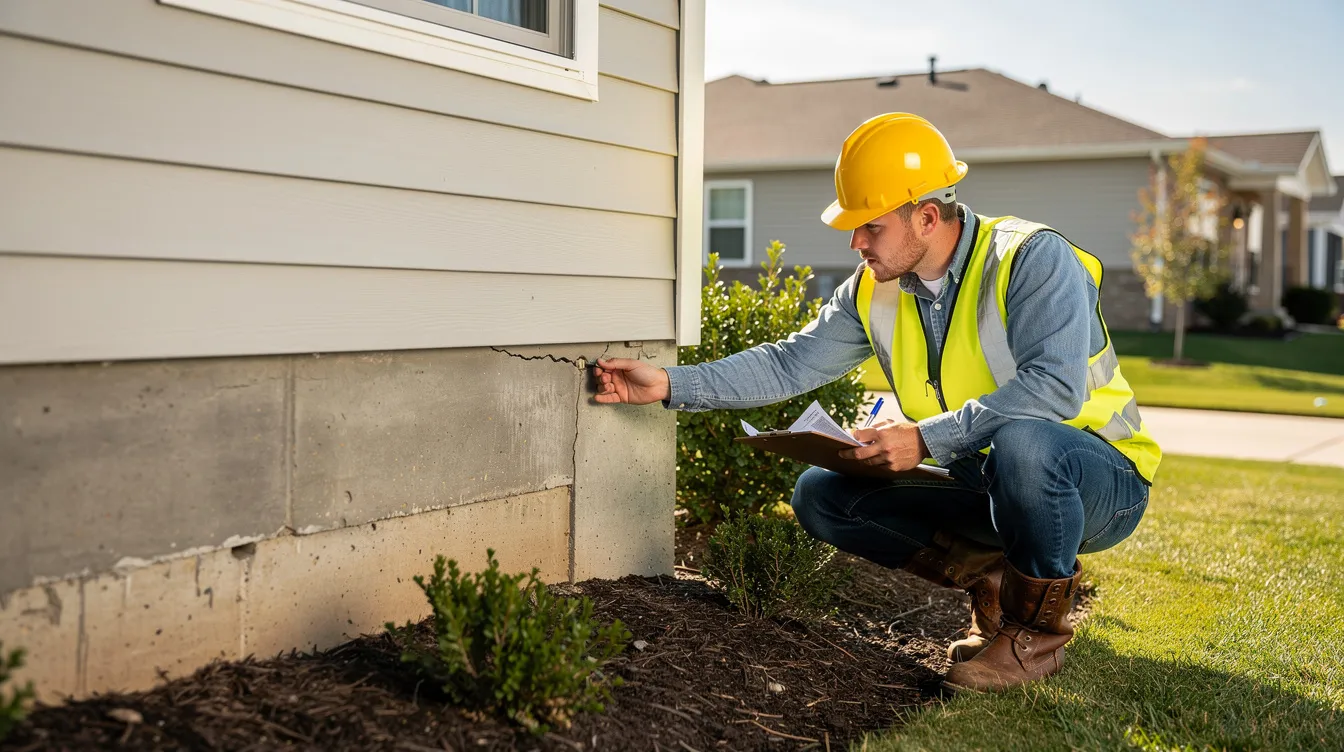
- Foundation: No major cracks, no significant settling, dry basement or crawlspace. Walk away from severe structural issues on your first flip.
- Roof: Straight roofline, no visible sagging. A roof replacement is expensive but predictable. A collapsing structure is not.
- Electrical: Modern panel (not fuse box), no knob and tube wiring. Rewiring an entire house adds a fair whack to your rehab budget.
- Plumbing: Not entirely galvanised pipe. Mixed or copper is workable. Full replacement is costly.
- HVAC: Less than 15 to 20 years old. Replacing a furnace and AC unit is a budget line item, not a deal killer, but factor it in.
- Mould and water damage: Some surface mould is treatable. Extensive mould in walls or ceilings signals deeper problems.
- Septic: If the property has septic, get it inspected. A failing system can cost $10,000 to $30,000 to replace.
Engage a home inspector before purchasing to verify property conditions. On your first flip, this is non negotiable. Budget $400 to $600 for a thorough inspection. That is the cheapest insurance you will ever buy.
A property needs to be structurally sound at its core. You can fix ugly. You cannot affordably fix "falling down."
Making Offers That Win Without Killing Your Profit
Here is where discipline meets strategy. You know your ARV. You know your rehab estimate. Now you turn those into a maximum allowable offer (MAO) and you stick to it.
The 70% rule suggests paying 70% of after repair value minus costs. Let's run the numbers on a specific deal:
- ARV: $310,000
- Rehab estimate: $60,000
- MAO using 70% rule: ($310,000 × 0.70) minus $60,000 = $157,000
In many markets, you will not find deals at that price on the MLS. That is reality. But it gives you an anchor. Adjust to 75% in competitive markets, and tighten your rehab contingency to compensate.
A true cash offer closes fastest and wins more often. About 63% of house flips are purchased with cash nationwide. But if you do not have $200,000 sitting in the bank, a financed offer backed by fast hard money plus rapid gap funding can behave almost identically. Sellers care about certainty and speed, not where the money comes from.
Flippers should avoid overestimating their skills and knowledge when it comes to rehab estimates. If you are not sure about a number, round up. In a multiple offer situation, the temptation is to stretch your price. Resist. Overpaying destroys the flip before you even pick up a hammer. Have a clear exit strategy before acquiring a property, and walk away if the numbers do not work.
Financing Your First House Flip: Options and Trade Offs
Let's talk money. You have several financing options, and each has trade offs. Here is a fair comparison:
Cash: No interest, no lender approval, fastest closing. But most people do not have $250,000 in liquid capital. Skilled professionals often flip houses for extra income, but even they rarely pay cash on every deal.
Traditional bank loans: Lower interest rates but banks may require a 25% down payment for flipping loans. Underwriting takes 45 to 90 days, which kills you in a competitive real estate market. They also struggle with distressed properties.
Hard money loans: The workhorse of flipping. A hard money loan typically has interest rates around 15% (industry data shows 9 to 12% being common in 2025 to 2026, with some lenders higher), plus 1 to 3 points upfront. They close in 7 to 14 days and lend based on the property, not your tax returns. The cost is high, but speed and flexibility justify it for many flippers.
DSCR loans: Better suited for rental properties or when a flip converts to a hold. Rates around 7 to 9%, longer terms, but the property needs to be stabilised and generating rent income.
Private money: A private lender might be a friend, family member, or a wealthy individual in your network. Private money can come from friends or family, often with flexible terms. The trade off is the relationship risk and typically fewer protections for both sides.
Gap funding: Not a replacement for your primary lender, but the capital that fills the shortfall between what that lender covers and what you actually need. More on this in a moment, including how gap funding in real estate is structured as a capital stack.
Think of your "capital stack" as layers: the primary loan covers most of the purchase and maybe some rehab, but everything else (down payment, closing costs, earnest money, reserves) must come from somewhere.
Where the Funding Gap Shows Up in a Flip Deal
Here is where a lot of first time flippers hit a wall. They find a deal. They get approved for a hard money loan. Then they realise the lender is not covering everything.
The funding gap is the difference between what your main lender finances and the total cash you actually need to close the deal and see it through. Most hard money lenders cover up to 70 to 85% of purchase price, or 85 to 90% of total loan to cost. That remaining 10 to 30% is on you.
Let's use a concrete example:
- Purchase price: $250,000
- Rehab budget: $60,000
- Hard money covers: 85% of purchase ($212,500) plus maybe 70% of rehab ($42,000) = $254,500 funded
- Total project cost: roughly $310,000 (purchase + rehab)
- Your gap: $55,500 minimum
But that is not all. Add these line items many beginners forget:
- Earnest money deposit: 1 to 3% of purchase price, due at contract signing ($2,500 to $7,500)
- Closing costs (buy side): 2 to 3% of purchase ($5,000 to $7,500)
- Contingency reserves: 10 to 20% of rehab budget ($6,000 to $12,000)
- Carrying costs buffer: Enough to cover 1 to 2 extra months of holding if the property does not sell on schedule
Suddenly your gap is $60,000 to $90,000. Maintain cash reserves specifically for property renovations, because running out of money mid rehab is one of the most expensive mistakes you can make. Many beginners have a workable deal but walk away because they simply cannot cover that gap with personal savings or family money, largely because they misunderstand what you actually need to qualify for gap funding.
How Gap Funded Helps New House Flippers Close the Gap
This is where we come in. Gap Funded is not a hard money lender. We are not a bank. We specialise in closing the gap between what your primary lender funds and what you actually need to get the deal done, with no equity splits and no liens on your deal property.
Here are the main tools we use, and the order matters:
- Unsecured personal term loans: These can cover your down payment and closing costs quickly, without tying up the deal property.
- 0% intro APR business credit card stacking: Ideal for rehab purchases, materials, and holding costs. Zero interest for an introductory period means more of your profit stays in your pocket.
- HELOC (including on investment property): If you have equity in a home or investment property, a HELOC provides a flexible line you can draw from for earnest money, overages, or short term working capital, and many investors use HELOC loans to unlock their home equity for flips.
- Business lines of credit: Available to borrowers with established business history and revenue.
The sequencing matters because applying out of order can knock out approvals for later tools. We walk you through this.
Realistic qualification: typically 650+ FICO, verifiable income, and reasonable debt to income. No recent major derogatories. Checking your options with us uses a soft credit pull, so there is no impact to your credit score just to see what is available, especially if you are considering 0% credit card stacking strategies for funding.
If you are planning your first flip or have a deal in hand and need to fill the gap, start with a quick funding review at gapfunded.com/apply. No obligation, no hard pull, and you will know your funding firepower before you make an offer.
Choosing and Managing Your Renovation Strategy
Renovation is where the money is made or lost. The three paths are: do it yourself, hire a general contractor, or act as your own project manager and coordinate individual trades.
Most beginners should avoid doing major work themselves unless they already have professional level skills and heaps of spare time. I have seen first time flippers try to re plumb a house to save money and end up spending three times the budget fixing their own mistakes.
Hire multiple contractors for competitive bids and avoid over reliance on a single estimate. Get at least three written, line item quotes for every major scope of work.
Finalising scope and securing necessary permits should happen quickly to address tasks that affect safety. Electrical, structural, and plumbing permits protect you legally and keep the project moving.
Prioritise your spend:
- Safety and code items first: Electrical, plumbing, roofing, foundation
- High ROI upgrades: Kitchens, bathrooms, and curb appeal improvements deliver the best return
- Cosmetics last: Paint, new flooring, fixtures, and landscaping
Do not over improve a property beyond what the neighbourhood supports. If comparable homes sell at $300,000 with builder grade finishes, do not install $40,000 worth of custom tile. You will not recoup it.
For your first flip, stick to cosmetic or light to medium rehab. Heavy structural work introduces complexity, permitting delays, and financial risk that is hard to manage without experience.
Building Your House Flipping Team
Flipping homes is a team sport, even if you are the only investor. Here are the critical players:
- Investor friendly real estate agent or real estate broker: Helps you find deals, pull comps, list and sell the finished product. Ask about their last five investor closings.
- Hard money broker or lender: Your primary financing source. Compare rates, points, and speed.
- Gap funding partner (Gap Funded): Fills the capital shortfall your primary lender will not cover, providing institutional gap funding solutions for real estate projects.
- Closing attorney or title company: Handles escrow, title search, and closing paperwork.
- Home inspector: Non negotiable for your first flip. Catches problems before they become yours.
- Contractor(s): Get written bids, check references, and verify licensing. Ask for photos of recent completed projects.
- Insurance agent: Investor specific coverage (builder's risk or vacant property insurance), not a standard homeowner's policy.
A good real estate agent helps you find deals and accurate comps. A bad contractor can cost you months and thousands of dollars. Each team member directly affects your profit and risk. Other house flippers in your area are a great source of referrals. Start networking at local REI meetups, Facebook groups, and forums. Your best friend in this business is someone who has done what you are about to do and is willing to share who they trust.
Timeline: How Long Does It Take to Flip a House?
Flipping houses generally takes four to six months from purchase to sale. In 2025, the average was about 163 days from acquisition to resale, according to ATTOM data.
Here is a realistic breakdown for a first flip:
- Weeks 1 to 6: Finding and securing a deal
- Weeks 6 to 10: Closing the purchase
- Weeks 10 to 20: Renovation (this varies wildly based on scope)
- Weeks 20 to 28: Listing, showings, buyer negotiation, and closing the sale
Every day a property remains unsold incurs costs like mortgage payments, insurance, and utilities. Delays in permits, inspections, materials, or contractor schedules can easily add 30 to 60 days and eat directly into your profit.
Build a conservative timeline into your analysis. If you budget for six months, plan your funding and reserves to handle eight. In many markets, well priced and move in ready homes still sell within 30 to 60 days, but "well priced" is the key phrase. Many first time flippers price houses too high to recover costs, which backfires spectacularly when the property sits and carrying costs pile up.
Managing Risk: Common House Flipping Mistakes to Avoid
Let me be blunt: the easiest way to lose money flipping houses is to skip the boring stuff. Here are the mistakes I see most often from beginners:
- Underestimating rehab: Unexpected renovation costs are the number one profit killer. Always include that 10 to 20% contingency buffer.
- Overestimating ARV: Wishful thinking on the sale price is dangerous. Use conservative comps from recent sales, not aspirational listings.
- Ignoring holding costs: Monthly payments on your loan, property taxes, insurance, and utilities add up fast, especially during market downturns or slow sales.
- Buying in the wrong neighbourhood: A cheap property in an area with no buyer demand is not a good deal. It is a trap.
- Underfunding the project: Starting a flip without reserves or relying on a single credit card at 25% APR is a recipe for disaster, especially when faster options like Gator Lending style private capital for investors exist for time sensitive gaps.
- Flippers should avoid overestimating their skills: If you have never managed a renovation, do not take on a gut rehab as your first project.
Mini example: You buy a house for $200,000. During demolition, the contractor discovers extensive water damage behind the bathroom walls. The repair costs $15,000 more than budgeted. If you had a 15% contingency buffer on your $50,000 rehab budget ($7,500) plus gap funding in reserve, you can absorb the hit. Without it, you are scrambling for cash mid project, which leads to delays, which leads to more holding costs, which leads to a thinner profit or a loss.
Mitigate risk with inspections, conservative numbers, solid contracts, and pre arranged funding. That includes having gap financing available for contingencies and rehab overruns before they happen.
Do You Need a Real Estate License to Flip Houses?
Short answer: in most U.S. states, you do not need a real estate license to flip houses. You are buying and selling property you own, which is perfectly legal without a licence.
That said, there are benefits to having one:
- Direct MLS access for comps and deal sourcing
- Potential savings on listing commissions (you represent yourself)
- More control over offer speed and disclosure forms
- Credibility with the National Association of Realtors network
And trade offs:
- Cost of licensing courses, exams, and ongoing fees
- Continuing education requirements
- Time that could be spent actually doing deals
- All the liability issues that come with holding a licence, including fiduciary duties if you represent others
My suggestion: partner with a strong investor friendly agent for your first one to three flips. Learn the flipping business first. Then decide whether a real estate license makes sense for your house flipping business. For many successful flippers, working with a great agent remains the better path long term.
Scaling from Your First House Flip to a Flipping Business
Your first flip is about learning. Your second is about refining. By flip three or four, you should have systems in place that make the flipping process repeatable.
Successful flippers build:
- Standardised rehab templates: A go to scope for kitchens, bathrooms, flooring, paint colours, and fixtures that works for your price point
- Repeat contractor teams: Reliable trades who know your standards and timeline expectations
- Defined buy box criteria: Specific neighbourhood, property type, price range, and rehab scope you target consistently
- Repeatable financing relationships: A primary lender and gap funding partner who know your track record and can move quickly
As your flipping business grows, Gap Funded's tools grow with you. Credit card stacking, revolving lines, and term loans can support larger or multiple concurrent flips. Once you reach two or more years in business and $20,000+ per month in revenue, more money becomes available through business only funding options like larger business lines of credit and working capital facilities.
The jump from one flip to a real business is where most people stall. Not because they cannot find investment properties, but because they cannot fund multiple deals simultaneously. That is a solvable problem.
Taxes, Licensing, and Legal Basics for House Flippers
I am not a CPA, attorney, or financial advisor, so this section is high level guidance, not advice. Talk to professionals before making decisions here.
Key things every new flipper should know:
- Tax treatment: Flips are generally treated as ordinary income, not long term capital gains. Self employment tax may also apply. This can be a significant bite. Flipping houses incurs costs like taxes, insurance, and utilities that must all be accounted for.
- Entity structure: Many house flippers use an LLC or similar entity for liability separation and professional image. Consult an attorney before setting one up, and understand local building codes and regulatory requirements.
- Permits and inspections: Every renovation that touches structural, electrical, or plumbing systems typically requires a permit. Skipping permits is illegal and creates problems at resale.
- Disclosures: When selling, you are required to provide disclosure forms covering known defects, lead based paint (for homes built before 1978), and other material facts. Not all states have identical requirements, so check with your real estate agent or attorney.
Assemble a professional advisory team early: a CPA who understands real estate investing and a real estate attorney who works with investors. The cost is modest compared to the mistakes they prevent.
How to Use Gap Funding Strategically in Your Flipping Business
Gap funding is not an emergency parachute. It is a deliberate part of your capital stack that you plan for when analysing each potential deal.
Here is how the pieces fit together:
- Personal term loans cover down payment and closing costs. You know the amount before you make an offer.
- 0% intro APR business credit card stacking handles rehab material purchases, appliances, and some contractor deposits. Zero interest during the introductory period means your cost of capital on those items is essentially nothing.
- A HELOC on your home or investment property provides a flexible "opportunity fund" for earnest money deposits, cost overages, and short term working capital between deals.
Use these tools responsibly. Stress test every deal at higher interest rates. Ensure monthly payments fit your cash flow even if the flip takes two months longer than planned. Gap funding should help you do more deals or better deals. It should not bail out bad ones.
The financial risk of flipping is real, but it is manageable when you go in with your eyes open and your funding lined up. Earn money by being disciplined, not by being reckless.
Your concrete next step: pre qualify with Gap Funded at gapfunded.com/apply so you know exactly how much capital you can access before you start making offers. Knowing your firepower changes how you negotiate.
Conclusion: Your Next Steps to Start Flipping Houses
You have the roadmap. The core steps to start flipping houses are: learn your local market, define your buy box, build your team, line up funding (including gap funding), find a good deal, run conservative numbers, execute the rehab, and sell. That is the entire flipping business in one sentence, even though each piece takes real work to do well.
The most common barrier is not opportunity. It is capital. Down payments, rehab draws, closing costs, and working capital are exactly the gaps Gap Funded is built to solve. A thousand dollars here or there should not be the reason a workable deal dies.
Start small but start soon. This week:
- Analyse three properties in your target market using the 70% rule and a realistic rehab estimate
- Talk to at least one investor friendly real estate agent and one contractor
- Begin a funding review at gapfunded.com/apply so you know your numbers before you need them
If you are a hard money broker, wholesaler, or business loan broker who works with flippers, check out our referral partner programme at gapfunded.com/partners. We help your clients close, which helps everyone.
Your first flip does not need to be perfect. It needs to be funded. Let's sort that part out.
Related Reading
This article is for educational purposes only and isn't financial, legal, tax, or investment advice. Credit and financing outcomes depend on your own situation. Talk to a licensed financial professional before making funding decisions for your business.