
Fix and Flip Loan Guide (2026): How to Finance, Fix, and Profit From Your Next Flip

Summary: What Is a Fix and Flip Loan?
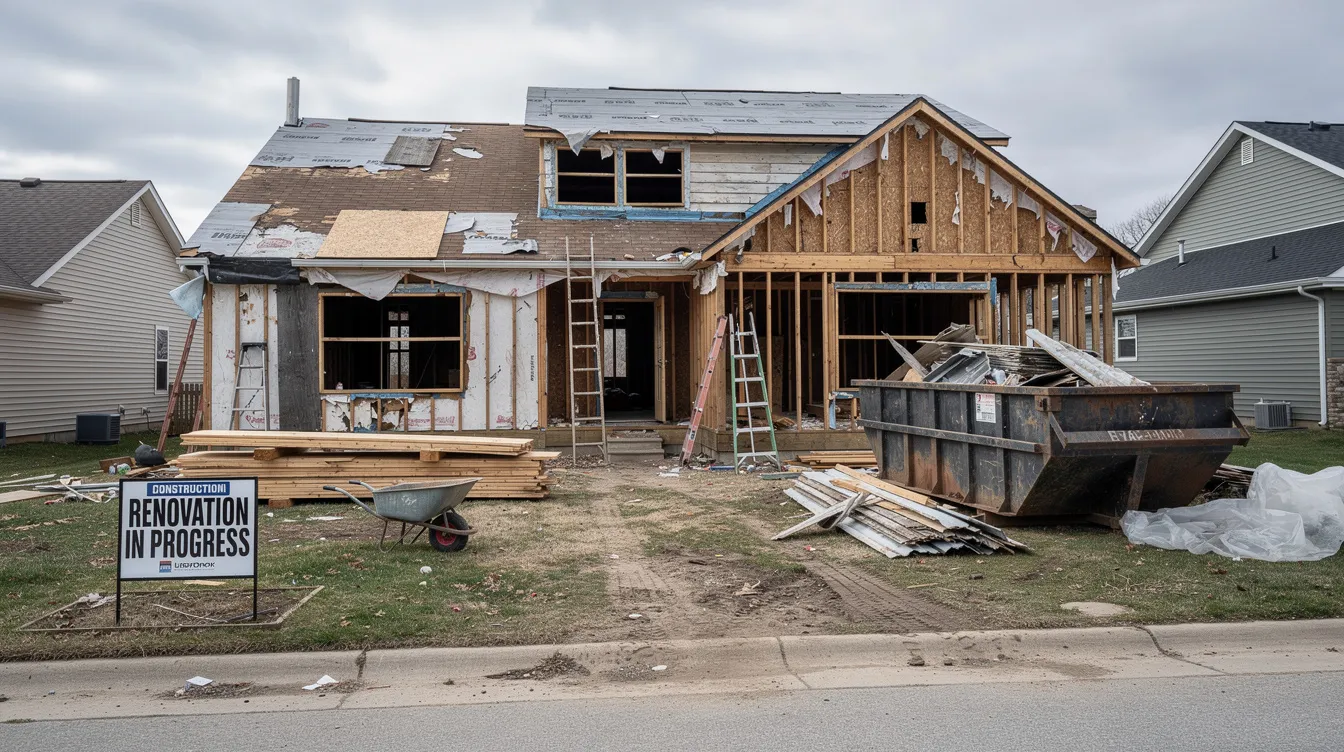
A fix and flip loan is short-term financing for real estate investors to purchase and renovate distressed properties. These loans are designed for both new and experienced real estate investors who want to buy, renovate, and quickly sell (or refinance) properties, typically within 6 to 18 months. Fix and flip loans usually offer fast approval and funding, but come with higher interest rates and fees compared to conventional loans. The main benefits include access to capital for renovations and the ability to leverage property value rather than personal income. However, risks include pressure to sell quickly, potential renovation overruns, and the risk of default if the project is not managed properly. A solid exit strategy is essential for success.
Introduction: Who Should Read This Guide and Why
Are you a real estate investor—whether just starting out or already experienced—looking to maximize profits from your next property flip? This guide is specifically for real estate investors, both new and experienced, who want to understand how to use a fix and flip loan to successfully finance, renovate, and sell investment properties. Understanding fix and flip loans is crucial because most flip deals don't fail due to renovation issues; they fail because investors can't secure the right fix and flip loan or structure their capital stack before the contract expires. By mastering the ins and outs of fix and flip loans—including costs, qualification, and how to cover the cash shortfall that nearly every lender leaves behind—you'll be positioned to succeed in the competitive world of property flipping.
A fix and flip loan is short-term financing for real estate investors to purchase and renovate distressed properties. If you're looking to buy, renovate, and quickly sell or refinance a property, understanding how these loans work is essential for your success.
Fix and Flip Loan Basics: What Is a Fix and Flip Loan?
A fix and flip loan is a type of short-term financing used by real estate investors to purchase and renovate distressed properties. These loans are specifically designed for investors who want to buy a property, renovate it, and sell or refinance within 6 to 18 months. Unlike traditional mortgages, which are intended for long-term homeowners, fix and flip loans are built for speed and flexibility, making them ideal for flipping projects.
How Fix and Flip Loans Are Structured
Fix and flip loans are asset-based, meaning lenders evaluate the property itself—its purchase price, renovation costs, and after repair value (ARV)—rather than your personal income. After Repair Value (ARV) is the realistic market value after renovations, based on comparable sold properties nearby. Your salary matters less than the spread between what you're buying and what you're selling.
A typical fix and flip loan can cover:
- The purchase price (often 80% to 90%)
- The full rehab budget (drawn in phases)
- Carrying costs during the renovation period
- Some or all closing costs, depending on the lender and your leverage
Most fix and flip loans are interest-only with a balloon payment due when you sell or refinance. This structure ties the loan directly to your exit strategy—a crucial element for securing a fix and flip loan.
Eligibility and Key Terms
Eligibility for a fix and flip loan is based more on the property and project than on your personal income. Lenders focus on the value of the property, the scope of renovations, and your exit strategy. The property typically secures the loan, and failure to repay can result in foreclosure. Fix and flip loans usually mature within 6 to 18 months, posing risks of default if not managed properly.
Example Scenario
Suppose you find a distressed property in March 2026, buy it for $240,000, budget $60,000 for renovations, and project an ARV of $350,000. A lender might fund 90% of the purchase ($216,000) plus the full rehab, charge around 10% to 12% interest, and expect interest-only monthly payments for the nine-month hold. You pay off the total loan when the property sells.
Now that you understand the basics, let's look at how the loan process works from contract to closing.
How Fix and Flip Loans Work From Contract to Closing
Once you go under contract on a property, the fix and flip loan process begins. You submit your purchase contract, contractor bids, and comps to the lender. They underwrite based on the deal: is the price right, is the rehab scope realistic, does the ARV stack up? If everything checks out, you get a term sheet, then close.
The property typically secures the loan, and failure to repay can result in foreclosure. That's the trade-off for speed and flexibility.
Funding Buckets Explained
- Funds for the property purchase (usually 80% to 90% of the purchase price) are provided at closing.
- Rehab funds are held in escrow and released in draws as you hit milestones (foundation done, framing done, etc.). Borrowers may need to cover initial costs before receiving rehabilitation funds through draws.
Most fix and flip loans have terms ranging from 6 to 18 months. During that window, you pay interest only. Principal comes due at sale or refinance, making that balloon payment the moment of truth.
Plan your carrying costs carefully. Interest, taxes, insurance, and utilities all add up during the life of the loan. Many lenders waive prepayment penalties on fix and flip loans, but always confirm this in the loan terms before you sign.
Next, let's break down the key numbers and ratios lenders use to evaluate your deal.
Key Numbers: LTV, LTC, and ARV in Fix and Flip Financing
Fix and flip lenders care about leverage ratios and after repair value far more than your salary. Understanding these three metrics will save you from submitting deals that get rejected on the spot.
- Loan to Value (LTV): The loan amount divided by the property value. The maximum loan-to-value ratio for fix and flip loans is usually 90%.
- Loan to Cost (LTC): The total loan divided by total project cost (purchase price plus rehab plus closing). Many fix and flip lenders offer 80% to 90% LTC on the purchase and up to 100% of rehab in favorable conditions.
- After Repair Value (ARV): The realistic market value after renovations, based on comparable sold properties nearby. Most fix and flip lenders cap total financing at about 70% to 75% of ARV. The maximum loan amount is often based on after repair value.
In underwriting, lenders determine the lower figure between what LTC allows and what ARV allows. For example, if total cost is $260,000, LTC cap at 90% gives $234,000. ARV cap at 75% of $380,000 gives $285,000. The binding constraint is $234,000 because LTC comes in lower.
Learn to reverse engineer your maximum purchase price by starting from ARV, subtracting rehab and closing costs, and backing into what makes sense.
With these numbers in mind, let's explore the main types of fix and flip financing available.
Common Types of Fix and Flip Financing (and When to Use Each)
There's no single best fix and flip loan. Different tools fit different flip projects, timelines, and credit profiles. Here are the main options real estate investors use:
- Hard money loans: The workhorse of fix and flip financing. Fast, asset-based, and structured for purchase plus rehab. Hard money loans can close in as little as one week. Downside: higher interest rates (typically higher than traditional loans), origination points of 1 to 3, and stricter ARV caps.
- Private lenders: Similar to hard money fix and flip programs but sometimes with slightly lower rates or fewer fees for strong deals. Relationships matter here.
- Business lines of credit: A business line of credit allows flexible access to funds as needed. Best for repeat borrowers managing multiple projects, though good credit scores are typically required.
- Home equity loans and HELOCs: A home equity loan or home equity line of credit lets you tap existing equity. Home equity loans require at least 15% equity in your home. Useful as supplemental flip financing, but you're tying your primary residence or investment property to the deal.
- Personal loans: Personal loans can provide up to $100,000 for house flipping. Unsecured, fixed payments, no lien on the deal property.
- 401(k) loans: 401(k) loans allow borrowing up to 50% of your vested balance. Risky if the flip goes sideways.
- Credit unions and traditional lenders: Slower, stricter documentation, and little tolerance for heavy rehab. Rarely the right fit for flip investors who need speed.
- Seller financing: Occasionally available on off-market deals where the seller carries part of the note. Worth exploring but uncommon.
Hard money and dedicated fix and flip loan programs remain the core tool for the purchase and rehab. Everything else tends to fill gaps or supplement.
Now that you know your options, let's examine the costs and terms you can expect with a fix and flip loan.
Understanding Loan Terms and Costs on a Fix and Flip Loan
Looking only at the interest rate is like buying a house based on the paint color. The full cost of capital on your flip project includes more than the headline number.
Typical Loan Terms and Costs
- Term duration: 6 to 18 months is standard. These loans typically have repayment terms of six to 24 months, though 12 months is most common.
- Interest rates: Typical range is about 9% to 13.5% depending on deal, borrower experience, and market. Interest rates for fix and flip loans generally range from 8% to 15%. Average interest rates for fix and flip loans can exceed 10%. Borrowers often face higher interest rates and fees compared to conventional loans.
- Origination points: Usually 1 to 3 points paid at closing. Lower rate often means more points upfront, so do the math on your expected hold period.
- Other fees: Appraisal ($500 to $1,000), inspection fees per draw ($150 to $250), legal and processing costs, potential extension fees.
- Closing costs: Fix and flip loans have closing costs between 3% to 6% of the loan amount. Budget for this.
- Interest-only payments: Interest-only payments are often required during the short term, with principal due at sale.
To calculate your "all in" finance cost, add up the interest you'll pay over your expected hold, plus points, plus all fees, plus any extension charges. A loan at 10% with 2 points over 8 months can cost less total than one at 9% with 3 points if you sell quickly.
When you get a term sheet, verify: total interest rate, origination points, ARV cap, LTC and LTV caps, the draw process and inspection timing, all fees beyond rate, prepayment penalties, and extension fee structure. Compare lenders on speed to close, rehab draw process, and leverage, not just advertised rates.

With a clear understanding of costs, let's walk through the step-by-step process of securing a fix and flip loan.
Fix and Flip Loan Process Step by Step
Pre-Approval and Deal Submission
- Pre-approval or deal submission: Submit your purchase contract, rehab scope, and comps. Many lenders give you an initial answer within minutes. A fast approval process helps investors win competitive auctions or time-sensitive deals.
Term Sheet and Application
- Term sheet: Issued within 24 to 48 hours if your documents are in order.
- Full application: You supply contractor bids, proof of funds, entity documents (LLC paperwork), ID, and sometimes bank statements. First-time flippers may need to provide additional documentation compared to seasoned investors.
Appraisal and Underwriting
- Appraisal and ARV review: Takes roughly 2 to 7 days. The lender verifies current condition and comparable sales.
- Underwriting: Lender checks that the deal meets LTC, ARV, and LTV caps. Reviews your exit strategy, scope of work, and contractor qualifications.
Closing and Funding
- Closing: Fix and flip loans typically close in 10 to 14 business days. Hard money loans can be funded in as little as one week for straightforward deals with clean title and responsive borrowers.
Rehab Draws and Inspections
- Rehab draws and inspections: Once you complete a milestone, submit photos and invoices. The lender inspects and releases funds, usually within 3 to 5 business days. This draw process is how renovation funds flow throughout the project.
Experienced fix and flip lenders can often close within 7 to 10 days, which matters for wholesale and auction acquisitions where speed is everything.
With the process in mind, let's determine how much financing you really need for your next flip.
How Much Fix and Flip Financing Do You Really Need?
Building a Realistic Budget
The right loan amount comes from your deal analysis, not from what the lender's marketing page says. Your total project cost includes more line items than most new house flippers expect. Here's a realistic budget for a sample deal:
- Purchase price: $210,000
- Earnest money deposit: $2,000
- Closing costs: $8,000
- Rehab labor and materials: $65,000
- Permits: $1,500
- Contingency (10% of rehab): $6,500
- Holding costs (interest, taxes, insurance, utilities for 5 to 6 months): $10,000
- Selling costs (agent commissions, title insurance, transfer taxes): $18,000
- Cash reserves for overages: $5,000
Total project cost approaches $326,000. If your lender funds 85% of purchase plus 100% of rehab, you're getting roughly $243,500 in a single loan. The gap between that and $326,000 is real money you need to find somewhere.
Down Payment and Funding Gaps
Most fix and flip loans require a down payment of 10% to 20%. Fix and flip loans can cover up to 100% of renovation costs in many programs, but the down payment, closing, and holding costs still fall on you.
Avoid maxing out leverage without reserves. If your renovation budget blows out by 15% or the property sits on the market an extra two months, those costs multiply fast. The funding gap usually shows up in the down payment, rehab overages, closing costs, and working capital during the flip.
Now, let's review what lenders look for when qualifying borrowers in 2026.
Qualifications: What Fix and Flip Lenders Look For in 2026
Even asset-based loans have qualification criteria beyond "the deal looks good." Lenders often prioritize property value over personal income, but they still want to know you won't crater the project.
Core Borrower Factors
- Credit score: Many lenders want a minimum FICO around 650 to 660 for favorable terms. Lower scores may still get funded, but expect stricter loan terms and higher rates.
- Track record: Some lenders prefer investors with completed renovations for eligibility. Borrowers with 3 to 5 completed fix and flip projects in recent years get better leverage, competitive interest rates, and faster closings. First-time flippers face more scrutiny on scope of work and contractor selection.
- Liquidity and cash reserves: Lenders want to see you can handle rehab overages and carry costs without defaulting.
- Exit strategy: A solid exit strategy is essential for securing a fix and flip loan. Lenders want a primary plan (sell) and ideally a backup (refinance into a DSCR loan—a Debt Service Coverage Ratio loan, which is based on the property's income potential rather than your personal income).
- Entity structure: Most flip lenders accept LLCs. Borrowing in your personal name may work but sometimes at worse terms or with more documentation.
- Credit history issues: Tax returns and DTI (debt-to-income ratio) matter less than in conventional lending, but recent bankruptcies, late payments, or liens still hurt approvals.
If you qualify for a primary fix and flip loan but are short on the cash to close, that's where Gap Funded comes in. More on that shortly.
Next, let's compare lenders and see how to choose the right partner for your project.
Comparing Fix and Flip Lenders: How to Choose the Right Partner
Choosing between flip lenders based only on headline rates is like picking a contractor based only on their hourly rate. The cheapest quote isn't always the cheapest project.
Key Comparison Criteria
- Speed to close (can they match your contract deadline?)
- Maximum LTV, LTC, and ARV caps
- Rehab draw process and timing (how fast do funds actually arrive?)
- Transparency of fees (are there hidden processing or extension charges?)
- Flexibility on borrower experience (do they work with first-time flippers?)
- Clarity around exit strategy options and what happens if you need an extension
Request sample term sheets from at least 2 to 3 fix and flip lenders for the same deal. You'll be surprised how much the numbers differ. Check online reviews, local real estate investor associations (REIAs), and peer referrals before committing.
Some lenders specialize in smaller single-family flip projects. Others are better for multi-property portfolios or heavy rehab. Ask every lender how they handle timeline delays, change orders, and loan extensions. The answer tells you a lot about who you're really working with.
Imagine you're comparing two term sheets: Lender A offers 11% with 1.5 points and closes in 7 days. Lender B offers 10% with 3 points and closes in 14 days. If your hold period is 6 months, Lender A's all-in cost might actually be lower despite the higher rate, and the faster close wins you the deal. Run the numbers, not the vibes.
Now, let's address the funding gap that most investors encounter.
Funding Gap: Why Your Fix and Flip Loan Rarely Covers Everything
Here's the part nobody tells you on the first call with a loan officer. The funding gap is the difference between what your primary fix and flip financing covers and your total project cash need. It exists on nearly every deal.
Typical Funding Gaps
- Down payment (often 10% to 20% of the purchase price)
- Closing costs ($5,000 to $15,000 depending on deal size)
- Rehab draw float (you often pay contractors before the lender reimburses)
- Earnest money deposit
- Holding costs and reserves
- Day-to-day working capital during the flip
Many fix and flip lenders and hard money lenders intentionally require borrowers to have "skin in the game." That's reasonable from their perspective. But it means you need cash beyond the loan.
Example: A lender offers 90% of a $200,000 purchase and 100% of $60,000 in rehab. You still need $20,000 for the down payment, $10,000 in closing costs, and $8,000 in cash reserves. That's $38,000 in gap before you've bought a single sheet of drywall.
Trying to fill this gap with high-fee merchant cash advances, undocumented loans from friends, or draining every dollar of personal savings is risky. You need a strategic, layered capital stack built around gap funding in real estate. That's where Gap Funded's services come in.
Let's see how Gap Funded works to close this gap.
How Gap Funded Works
Gap Funded is not a hard money lender or private lender. We're a funding intermediary that complements your primary fix and flip loan by covering the parts of the capital stack that most flip lenders won't touch: down payments, closing costs, rehab draws, reserves, and working capital.
Gap Funding Tools and How They're Used
- Unsecured personal term loans (Rapid Gap Funding): Fixed payments, no lien on the deal property. These cover the highest priority fixed costs like your down payment and closing costs. Funds can move in 24 to 72 hours.
- 0% business credit card stacking: Multiple cards with introductory 0% APR terms (usually 12 to 21 months), used strategically for rehab purchases, materials, reserves, and short-term holding costs; when planned correctly, 0% credit card stacking strategies for businesses can provide $50K–$150K+ in flexible capital.
- Business lines of credit or HELOCs: If you have equity in a primary residence or investment property, or you've built business revenue ($20k+ per month, 2+ years in business), these revolving tools support multiple projects and ongoing cash flow needs.
This order matters. Term loans give you predictable payments and fill the gap quickly. Credit stacking layers on flexible, interest-free capital. Lines of credit come last because they often require more qualification and serve as ongoing revolving capital rather than one-time gap fill.
Qualification benchmarks: Generally 650+ FICO, verifiable personal income or business revenue, and in some cases equity in a property. We use soft credit pulls for initial options checks, so there's no impact to your credit just to see what's possible.
Apply at gapfunded.com/apply. The application is quick and designed for both new and experienced fix and flip investors.
Now, let's break down each gap funding tool and when to use them, and how institutional gap financing solutions can plug into your overall strategy.
Gap Funding Tools for Fix and Flip Investors
Unsecured Personal Term Loans
- Fixed monthly payments
- No collateral on the flip property
- Ideal for covering a $20,000 to $50,000 down payment or closing cost gap on a single flip project
- Predictable payment schedule makes budgeting straightforward
Business Credit Card Stacking at 0% APR
- Open multiple high-limit cards and use them strategically for rehab materials, contractor deposits, and short-term holding costs
- Align your payoff plan with your exit strategy (clear balances before the 0% window expires)
- Flexible financing for costs that come in waves
Business Lines of Credit
- Revolving capital for repeat borrowers managing several fix and flip projects at once
- Best once you've got 2+ years in business and at least $20k per month in revenue
HELOCs on an Investment Property
- Option for those who already have equity
- Caution: tying your home to flip projects carries real risk
We generally steer clients away from merchant cash advances and daily payment products. The fees are brutal and the payment structure can wreck your cash flow mid-project.
Case Example: An investor bought a property for $185,000. The lender covered 80% of purchase and 100% of rehab draws. The gap included $37,000 down, $5,500 closing, $2,000 EMD, and $13,000 in float and reserves. Gap Funded suggested $25,000 in term loans plus $45,000 in 0% business credit cards. The flip sold, all balances cleared, and profit stayed with the investor. No equity split. No lump sum repayment drama.
Let's see how to coordinate your primary lender and Gap Funded for a seamless capital stack.
Working With Your Primary Fix and Flip Lender Plus Gap Funded
The goal is collaboration, not competition. Your hard money or fix and flip lender finances the property. Gap Funded fills your cash shortfall. Two separate pieces of the same capital stack.
Gap Funded does not place liens on the deal property, so we don't interfere with the primary lender's position or closing process. Your loan officer at the primary lender doesn't need to worry about a second lien complicating their deal.
Step-by-Step Coordination
- Secure a conditional term sheet from your fix and flip lender.
- Identify the cash you need to close (down payment, closing costs, reserves).
- Apply at gapfunded.com/apply.
- Stack the appropriate tools in the right order.
- Close on the property.
This approach lets flip investors move quickly when a strong investor deal appears, instead of losing it because they're $30,000 short on the down payment. We're not a joint venture or equity partner. No equity splits. You keep 100% of the upside on your flip projects.
Share your loan terms and timeline with us so the capital stack can be designed around real numbers and real deadlines. That's how you fund projects properly.
Next, let's cover risk management and the most common mistakes to avoid.
Risk Management: Avoiding the Most Common Fix and Flip Loan Mistakes
Financing magnifies both profits and losses. A well-structured deal can make you heaps of money. A poorly structured one can cost you everything. Here are the mistakes I see most often:
Overestimating ARV
- Picking the highest comp on the street and calling it your number. One investor projected $400,000 ARV on a street where the best comp was $365,000. The deal barely broke even. Use conservative comps and stress test with a slightly lower ARV.
Underestimating Rehab Costs
- The $40,000 kitchen reno that becomes $58,000 when you open a wall and find termite damage. Always add a 10% to 15% contingency to your renovation budget.
Ignoring Carrying Costs
- Every extra month on market costs you interest, taxes, insurance, and utilities. Potential drawbacks include pressure to sell quickly and risks of renovation overruns.
Choosing the Cheapest Contractor
- The contractor who quotes 30% less than everyone else usually has a reason. Get references, check licenses, verify insurance.
Having No Backup Exit Strategy
- If your flip doesn't sell, can you refinance into a DSCR loan and rent it? Every house flipper should define at least two exit strategies. Fix and flip loans usually mature within 6 to 18 months, posing risks of default if not managed properly.
Being Overleveraged
- Too high LTC in a weak market turns a small miscalculation into a real loss. Leave yourself a margin.
I'd recommend adding both time and cost buffers. Use any fix and flip loan calculator with conservative assumptions: slightly lower ARV, slightly higher rehab costs, one extra month of hold time. If the deal still works on paper, it'll probably work in reality. Consider alternative strategies like gator lending or explore Gator Lending for real estate investors for situations where traditional flip financing doesn't fit.
Now, let's help you decide if a fix and flip loan is right for you and outline your next steps.
Is a Fix and Flip Loan Right for You? Next Steps and How to Apply
Fix and flip loans are built for investors targeting short-term value-add opportunities who are comfortable managing construction, timelines, and market risk. If that sounds like you, here's a quick self-assessment:
- Do you have a deal pipeline or at least one property under contract or in sight?
- Are you comfortable managing renovations (or hiring someone who is)?
- Is your credit score around 650 or above?
- Do you have some liquidity, or access to additional financing through Gap Funded, to cover the gap?
Next Steps
- Learn basic deal analysis (ARV, rehab budgets, holding costs, profit margins).
- Line up a primary fix and flip lender and get pre-approved.
- Map out your full capital stack, including potential gaps.
- Apply with Gap Funded for supplemental funding to cover down payment, closing costs, and reserves.
You can complete a fast, no-obligation application at gapfunded.com/apply with a soft pull to see your unsecured term loan and business credit options. No impact to your credit just to check.
Whether you're a first-time flipper or a seasoned investor running multiple projects, Gap Funded's tools (gap funding, debt consolidation, business credit card stacking, planned unit developments financing, and more) are designed to keep your deals moving without giving up equity or control.
Your next profitable flip project won't wait. Get pre-qualified now so you can move the moment the right deal hits.
Fix and Flip Loan Summary Table
| What is a Fix and Flip Loan? | How Does It Work? | Who Is It For? | Main Risks | Main Benefits |
|---|---|---|---|---|
| Short-term financing for real estate investors to purchase and renovate distressed properties. | Provides fast capital for purchase and renovation, typically with interest-only payments and a balloon payment at sale or refinance. | Real estate investors (new and experienced) seeking to buy, renovate, and quickly sell or refinance properties. | Higher interest rates and fees than conventional loans; pressure to sell quickly; risk of renovation overruns; risk of default if not managed properly. | Fast approval and funding; access to capital for renovations; ability to leverage property value over personal income; flexible terms for flipping projects. |
Related Reading
This article is for educational purposes only and isn't financial, legal, tax, or investment advice. Credit and financing outcomes depend on your own situation. Talk to a licensed financial professional before making funding decisions for your business.