
Fix and Flip Hard Money Lender: How to Fund Your Next Flip (and the Gap Banks Won't Touch)

Fix and Flip Hard Money Lender: How to Fund Your Next Flip (and the Gap Banks Won't Touch)
Why Fix and Flip Loans Need More Than Just a Hard Money Lender
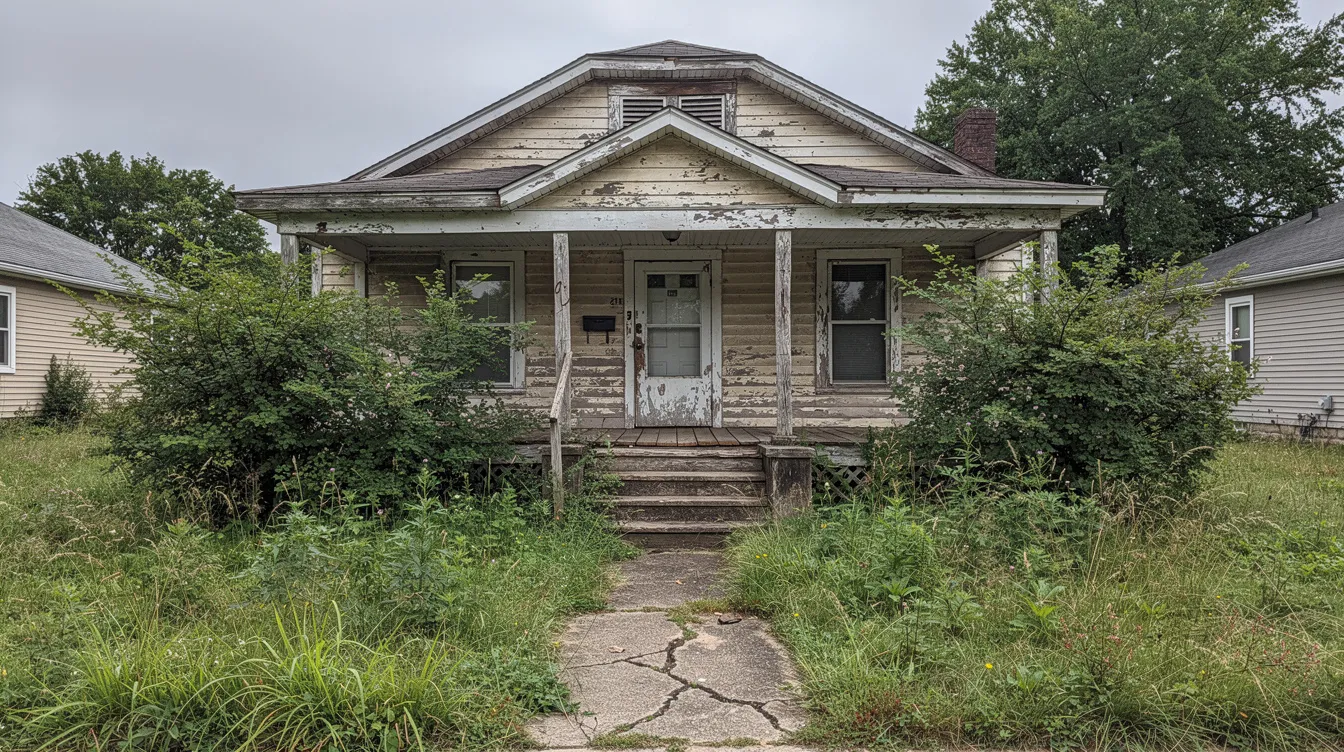
A fix and flip hard money lender provides short term loans (typically 6 to 18 months) so real estate investors can buy a distressed property, renovate it, and sell for profit. Unlike traditional financing from a bank, hard money lending is asset based: the lender cares most about the property value and its after repair value, not your tax returns or employment history. Hard money loans fund quickly, often within 3 to 10 days, which is why flipping houses without them is like bringing a butter knife to a steak dinner.
But here is the part most "get rich flipping" content skips over: even with the best hard money lenders covering 90% of purchase and 100% of rehab, you still need real cash for the down payment, closing costs, rehab overages, monthly payments, and reserves. That gap kills more flip projects than bad tile choices ever will.
Gap Funded exists to close that gap. We are not a hard money lender or a private lender. We are a capital stacking partner that works alongside your chosen money lender to fully fund real estate deals, without equity splits and without placing a lien on the flip property itself.
Here is a quick example to frame the rest of this article. Say you are buying a distressed property for $260,000 with a $60,000 rehab budget and an ARV of $380,000. Your hard money lender offers 85% of purchase plus 100% of rehab, capped at 70% of ARV. That cap means your maximum loan is about $266,000. Sounds generous until you realise you still need roughly $55,000 to $65,000 in cash for the down payment, closing, holding costs, and contingency. That is the gap. And that is what we are going to break down in this article.
What Is a Fix and Flip Hard Money Loan?
Fix and flip loans are short term financing for property renovation and resale. Here is what defines them:
- A fix and flip loan is a short term hard money lending product, typically lasting 6 to 24 months, used by property investors to acquire, renovate, and resell investment properties.
- Hard money loans are secured by the property itself. The loan comes from a private money lender or fund, not a bank. Lenders focus primarily on the property's value for hard money loans, along with the after repair value.
- Common structures include interest only monthly payments during the project, a balloon payoff when you sell or refinance, and rehab funds held in a draw escrow. The loan amount is determined by Loan to Cost (LTC) and After Repair Value (ARV) limits.
- These loans often cover 100% of the purchase price in some structures, though the total loan is always capped by ARV limits. Hard money loans typically cover 70 to 75% of after repair value.
- Traditional financing works differently. Banks focus on W2 income, debt to income ratios, and property condition standards that most distressed fix and flips cannot meet. Traditional lenders also take 30 to 60 days or more to close. Hard money lenders typically fund fix and flip loans quickly, often in 3 to 5 days.
How Fix and Flip Hard Money Lenders Underwrite Your Deal
Understanding how a hard money lender evaluates your deal helps you package it properly and avoid wasting time. Here is what matters:
- Core underwriting inputs include the purchase price, your rehab budget with a detailed scope of work, the ARV supported by recent comparable sales, your exit strategy (sell or refinance via a BRRRR approach), and the local market's liquidity. A solid exit strategy is essential in hard money lending for repayment.
- Typical leverage in 2025 to 2026: lenders usually fund 70% to 90% of the purchase price and up to 100% of the rehab budget, but cap the total loan at 65 to 75% of ARV. For example, on a $300,000 purchase with $50,000 rehab and $420,000 ARV, 85% LTC yields $297,500 but 70% ARV caps you at $294,000. The lower number wins.
- Loan to Value (LTV) ratios are important factors in hard money lending. Hard money lenders evaluate the After Repair Value (ARV) of a property to set their maximum exposure. LTV ratios for fix and flip loans average around 83% of purchase price in many markets, and borrowers can receive up to 75% of the after repair value as a ceiling.
- Many hard money lenders require no minimum credit score on paper, but in practice, many of the best hard money lenders quietly expect a minimum credit score of 650 to 680 or higher. Stronger credit (700+) gets better rates and higher leverage. Many hard money loans require that the borrower has experience or a proven track record, particularly for maximum leverage.
- Approval speed: well packaged deals (signed purchase contract, contractor bids, photos, entity documentation) can be pre approved and closed in 3 to 10 business days. Hard money loans can fund in as little as 3 to 5 days when everything aligns. Pre approval is the first step for hard money loans.
- Even with "90% LTC plus 100% rehab" headlines, the hard money lender rarely funds the entire project cost. The borrower may be required to contribute additional cash for costs not covered by the loan, including closing costs, carrying expenses, and contingency reserves.
Fix and Flip Loan Terms vs Traditional Financing
Numbers matter more than marketing. Here is what fix and flip hard money loans actually cost compared to the alternatives:
- Interest rates for hard money loans range from 10% to 18%, with most fix and flip loans landing in the 10% to 13% range for borrowers with decent credit and experience. Interest rates for hard money loans generally range from 8% to 15% for the strongest profiles. Hard money lenders often charge origination points ranging from 1% to 4%, with 1.5 to 3.5 points being the most common in 2026. Terms run 6 to 18 months with interest only monthly payments.
- Traditional financing offers lower rates (6% to 8% for DSCR rental loans or conventional mortgages), longer amortisation (25 to 30 years), and smaller monthly payments. But closings take 30 to 60 days, and most distressed properties do not meet condition requirements. If your property needs a new roof, updated electrical, and fresh plumbing, a bank is not going to touch it.
- Funding speed is a critical factor when selecting a hard money lender. Being able to close in 7 to 10 days lets you beat out competing offers in a competitive market, snap up wholesale deals, and reduce holding costs. Sometimes fast funding saves you more money than a lower interest rate.
- Hidden fees and prepayment penalties should be closely reviewed in loan agreements. Some lenders bury extension fees, inspection charges, or early payoff penalties that eat into your profit on a flip property.
- The average loan amount for fix and flip in St. Louis is $282,500, which gives you a sense of the typical deal size in a Midwestern metro. Property appraisal costs range from $400 to $600 and are usually the borrower's responsibility.
- Smart investors use hard money for acquisition and rehab, then refinance into DSCR or conventional loans once the property is stabilised. This BRRRR approach pairs flip financing with long term rental loans to build a portfolio.
Draw Schedules, Rehab Escrows, and Monthly Payments
This is where the day to day mechanics of a fix and flip loan get real:
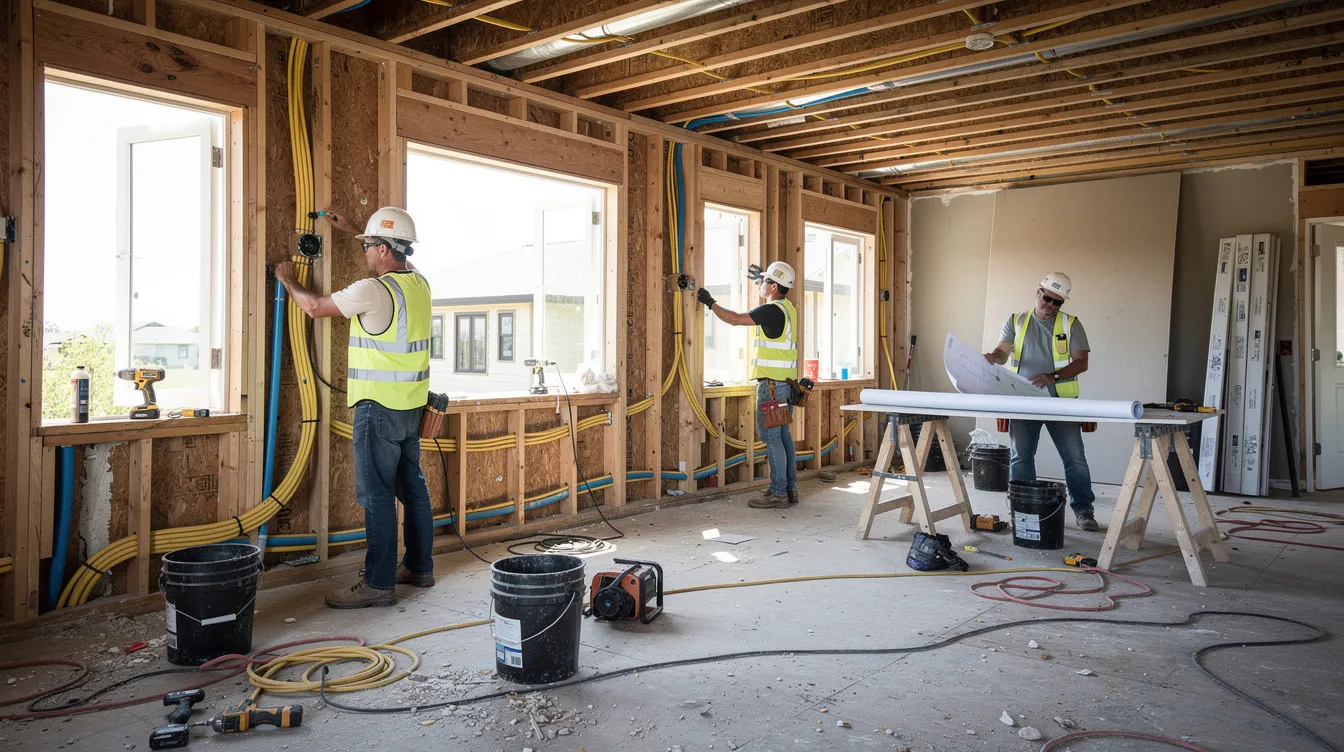
- Most fix and flip loans place rehab funds into a repair escrow. Renovation funds are provided in draws as construction milestones are met, not upfront. Each draw requires inspection or documentation proving the work is done.
- A typical draw schedule for a $50,000 rehab might look like: Draw 1 ($10,000) for demolition and rough in; Draw 2 ($15,000) for mechanical systems; Draw 3 ($15,000) for drywall, trim, and windows; Draw 4 ($10,000) for finish work, flooring, cabinets, and landscaping.
- Many hard money lenders require interest only monthly payments on the full drawn balance, which can strain cash flow if you have not budgeted for it. If you have drawn $200,000 at 11%, that is roughly $1,833 per month in interest alone, plus insurance, utilities, and property taxes.
- Some specialty lenders offer deferred or "no monthly payments" programs, but these are not standard and typically come with higher rates or more points to compensate. Do not build your budget around finding one.
- Here is where the gap becomes obvious: the down payment, closing costs, initial rehab costs you front before the first draw is released, several months of interest and utilities, and a 10 to 15% rehab contingency all need a second capital source beyond the hard money lender.
The Real Funding Gap in Fix and Flips (Where Deals Fall Apart)
Let me walk you through a real deal scenario so you can see exactly where the cash gap appears.
Purchase price: $240,000. Rehab budget: $60,000. ARV: $360,000. Your hard money lender offers 85% of purchase ($204,000) plus 100% of rehab ($60,000), but caps total financing at 70% of ARV ($252,000). The ARV cap is more restrictive, so your maximum loan is $252,000.
Now calculate what you actually need in cash:
- Down payment on purchase (15% of $240,000): $36,000. Borrowers typically provide a down payment of 10% to 25% of the purchase price. Hard money loans typically require a 20% down payment, though some lenders go lower for experienced investors.
- Closing costs (roughly 2% to 3%): $5,000 to $7,000
- Rehab contingency (10% to 15% of $60,000): $6,000 to $9,000
- Holding costs (interest, taxes, insurance, utilities for 4 months): $8,000 to $12,000
- Marketing and exit costs: roughly $5,000
Total cash needed: approximately $60,000 to $69,000.
Even when the lender covers a fair whack of the deal, you still need $60K or more in cash. This is where many promising flip projects die. The investor has the deal, has the hard money approval, but does not have enough capital to close or survive delays. Gross returns on flips fell to about 25.5% in 2025 according to ATTOM, the lowest since 2008. With margins that thin, you cannot afford to lose a deal because of a capital shortfall.
Capital stacking and gap funding are the missing piece between a solid deal and a closed, profitable deal.
Why Gap Funded Works Alongside Your Hard Money Lender (Not Instead of Them)
Gap Funded does not replace your primary fix and flip hard money lender. We fill the unfunded slice of the capital stack: the down payment, closing costs, initial rehab expenses, reserves, and monthly payments that your hard money lender does not cover.
- No equity splits. You keep 100% of the profit from your flip.
- No liens on the flip property itself. Gap Funded's financing is unsecured or secured against a separate asset you already own.
- Soft credit pulls to pre qualify. No impact to your credit just to see what is available.
- Fast execution that matches the speed of hard money closings, so you do not lose competitive deals.
- Gap Funded pairs with virtually any direct hard money lender, DSCR lender, or private lender across the US. Choosing the right hard money lender is crucial for a successful fix and flip, and we work with whichever one you choose.
- Realistic qualification: typically 650+ FICO (a minimum credit score requirement for most programmes), verifiable income or business revenue, and capacity to manage short term loans responsibly.
Tools Gap Funded Uses to Close Your Fix and Flip Funding Gap
Here is the capital stacking toolkit, and the order matters because applying out of sequence can knock out later approvals:
Unsecured term loans. Personal term loans provide fast capital for down payments, closing costs, or rehab contingencies. These do not touch the flip property. If you are carrying existing debt that limits your capacity, debt consolidation can free up room before you borrow for the deal.
0% business credit card stacking. Stacking several 0% introductory APR business cards gives you flexible working capital for materials, contractor deposits, and monthly payments with less interest during the intro period. This is one of the fastest gap funding tools available. Learn more about credit card stacking for real estate.
Business lines of credit and term loans. Investors with 2 or more years in business and at least $20K per month in revenue may qualify for revenue based products that backstop multiple flip projects at once. These include a business line of credit or business term loans depending on your financial situation.
HELOCs on primary or investment property. If you have equity in an existing home or rental properties, a HELOC can serve as a reusable credit facility for flip after flip. This falls under your broader asset based capital strategy.
Why this order? Start with unsecured gap funding and card stacking for speed and minimal collateral requirements. Layer in asset based and revenue based options for larger loan amounts or repeat fix and flip projects. Each tool has different key factors for approval, and sequencing them correctly maximises what you qualify for.
Step by Step: How to Stack Gap Funding with a Fix and Flip Hard Money LoanStep by Step: How to Stack Gap Funding with a Fix and Flip Hard Money Loan
- Get your primary loan terms. Secure a purchase contract and initial terms from your chosen hard money lender: LTC, rate, term, and required cash in. This tells you exactly how much the lender will provide funding for.
- Calculate your true cash need. Add up the down payment, closing costs, first two months of interest only payments, a 10% to 15% rehab contingency, and personal runway. Most investors underestimate this by $15K to $25K.
- Apply at Gap Funded. Use the quick application to provide basic credit, income, and project details. It is a soft pull with no impact to your credit, just to see your options.
- Review your capital stack. Choose from unsecured term loans, credit card stacking, lines of credit, or HELOCs. Decide how much to allocate to each part of the deal (down payment, closing, rehab reserves, monthly payments).
- Time your funding. Ensure gap funds are lined up before or concurrently with the hard money loan closing. You need to arrive at the closing table fully capitalised, not scrambling.
- Execute the flip. Use the hard money draw schedule for big rehab milestones and your gap funding for upfront costs, small change orders, and monthly payments.
- Exit and repeat. Sell or refinance, pay off both the fix and flip loan and gap funding facilities, then roll remaining profit into the next project.

Example: Fully Funding a 2026 Fix and Flip from Purchase to Sale
Let me walk through a complete deal to show how this works in practice.
The property: a 3 bed, 2 bath in a Midwestern metro, purchased in early 2026 for $210,000. Rehab budget: $55,000. ARV: $330,000. Planned timeline: 6 to 8 months.
The hard money lender offers 85% of purchase ($178,500) plus 100% of rehab ($55,000), capped at 70% of ARV ($231,000). Interest only at 11%, 2 points origination fee, 12 month term. The total loan comes to $231,000.
The true cash gap:
- Down payment (15% of $210,000): $31,500
- Closing costs (roughly 3%): $6,300
- Holding costs (5 months of interest, insurance, taxes, utilities): roughly $10,000
- Rehab contingency (10%): $5,500
- Total cash need: approximately $53,300
How Gap Funded fills it: $35,000 in unsecured term loans covers the down payment and closing costs. $18,000 in stacked 0% business cards handles materials purchasing and monthly payments with competitive rates during the intro period.
The outcome: the property sells for $325,000 (slightly under ARV to move quickly). After paying off the hard money loan, gap funding, selling costs, and all holding expenses, the investor nets roughly $25,000 to $30,000 in profit. Without gap funding, this investor could not have closed the real estate deal at all.
Credit and income assumptions: 680 FICO, $80,000 verifiable income from a W2 job. Not a whale. Not a first timer either, with two prior flips under the belt. A realistic profile, not a fantasy.
When Hard Money Alone Is Enough and When You Should Add Gap Funding
I reckon honesty serves you better than a sales pitch here.
You probably do not need gap funding if you have 20% to 25% of total project cost in liquid cash, plus 6 months of living expenses set aside. If your financial situation allows you to comfortably cover the down payment, closing costs, and holding costs without stretching, a hard money lender alone may be sufficient for your fix and flips.
Red flags that hard money alone is risky: minimal reserves after closing, a thin rehab budget with no contingency built in, or an exit plan that depends on a buyer paying top dollar ARV in a softening market. Experienced investors know that renovation projects almost always cost more or take longer than planned.
Gap Funded is most valuable when the deal is strong, primary loan approval is in hand, but you are short on cash for the down payment, closing costs, or cushion for monthly payments and surprises. It turns a "maybe next year" deal into a closed, profitable deal today.
Be candid with yourself: gap funding adds another layer of debt, so the numbers must still produce a safe projected profit after all financing costs. I always tell people to underwrite at a slightly lower ARV and a slightly longer timeline before layering additional financing solutions. If the deal still works with conservative numbers, stack away.
Qualification Basics: Who Gap Funded Can (and Can't) Help
- Typical minimum credit score range for most Gap Funded programmes is around 650 to 680+. Investors with good credit at 700+ tend to get better terms and higher approvals.
- Income and documentation: W2, 1099, or business revenue that reasonably supports repayment. We need to see that you can handle the short term loans and credit obligations alongside your existing commitments.
- Brand new investors are welcome if they have strong credit and income. Deep knowledge of flipping is a plus but not always required, since your hard money lender is also vetting the deal. This applies whether you are flipping in North Dakota, South Dakota, or any other state, though state specific regulations may affect certain products.
- Investors with recent bankruptcies, foreclosures, or severe late payments will be difficult to approve. I would rather be upfront about that than waste your time.
- We use a soft pull for the initial funding review, so you can explore options without a credit check impacting your score. Same day approvals are possible for straightforward files. No risk in finding out where you stand.
Next Steps: Lock In Your Fix and Flip Capital Stack
The ideal fix and flip funding plan combines a strong hard money lender for the main fix and flip loan with targeted gap funding for down payment, closing costs, rehab cushion, and monthly payments. That is how you go from one or two flips a year to a repeatable pipeline, without giving away equity or draining your savings on every deal.
If you have an active or upcoming real estate deal, complete the quick application at Gap Funded for a no obligation funding review. Soft pull only. Takes a few minutes.
If you are a broker, wholesaler, national lender, or direct hard money lender looking to help your clients close more deals, check out our partner programme to bring Gap Funded into your clients' capital stacks. Whether you are working on construction loans, new construction loans, commercial loans for commercial properties, hard money bridge loans, short term bridge loans, bridge loans, or standard flip hard money loans, we provide funding for the gap your primary financing options leave behind. No competition, just a better close rate for your borrowers and their investment properties, whether those are non owner occupied residential or renovation projects in any competitive market.

Related Reading
This article is for educational purposes only and isn't financial, legal, tax, or investment advice. Credit and financing outcomes depend on your own situation. Talk to a licensed financial professional before making funding decisions for your business.