
Fix and Flip Bridge Loans: Fast Funding for Overlapping Deals and Rehab Costs

Why Fix and Flip Bridge Loans Matter in 2026
If you've ever found a screaming deal on a distressed property while your last flip is still sitting on the market waiting for a buyer, you know the frustration. Your capital is locked up, the clock is ticking, and the seller doesn't care about your cash flow problems.
In 2026, real estate investors face tighter timelines, multiple competing offers, and renovation costs that keep creeping upward. Bridge loans allow for quick capital acquisition in competitive real estate markets, and that speed is often the difference between closing and losing. This post breaks down exactly what a fix and flip bridge loan is, when you should use one, and how to cover the funding gaps that even generous lenders leave behind.
Bridge loans help investors transition between property transactions. Maybe you're buying a distressed duplex in March while your Phoenix flip is still listed at $425,000 with closing expected in May. Or maybe your lender covers 85% of the purchase price but you're short on closing costs, reserves, and rehab overages. Either way, fix and flip bridge loans exist to keep your investment strategy moving.
At Gap Funded, we sit behind the primary lender as a capital stacking partner. We don't originate the bridge loan or hard money loans. We help you close the gap for down payments, rehab overages, reserves, and working capital so you're not scrambling at the closing table.
This article is structured as a practical guide with real scenarios, clear comparisons, and a simple path to apply for funding.
What Is a Fix and Flip Bridge Loan?
A fix and flip bridge loan is short term financing used to cover immediate purchase costs before an exit strategy occurs. It combines bridge financing (temporary financing between transactions) with fix and flip loan structures (rehab tied to after repair value).
Here's how it works in plain English:
- A short term loan, typically lasting 6 to 36 months, though fix and flip bridge loans typically have terms of 12 months or less. Bridge loans can also have terms as short as 2 weeks to 1 year depending on the deal.
- Payments are usually interest only payments during the loan term, keeping your monthly cash flow manageable while you renovate.
- Your defined exit strategy is either a property sale or refinancing into a DSCR or conventional loan.
- Bridge loans are secured by real estate property, often the subject flip, an existing property in your rental portfolio, or both.
- Most bridge loan lenders base the maximum loan amount on a combination of purchase price, rehab budget, and after repair value. Expect caps around 80% ARV or 90% loan to cost, but rarely 100% of all costs. That leftover is the funding gap.
Fix and Flip Bridge Loans vs. Standard Fix and Flip Loans: The Loan Showdown
These two loan types get confused constantly, so let's sort it out.
- A standard fix and flip loan is usually a stand alone hard money loan or construction loan based heavily on ARV and project scope. Fix and Flip Loans are short term loans for real estate investors, covering both the purchase and renovation costs, with typical terms ranging from 12 to 18 months. Loan amounts are often based on after repair value. You use these when your capital isn't heavily tied up elsewhere. Speed is a significant advantage of bridge loans as they close faster than traditional loans, but even standard fix and flip lenders can sometimes close in as little as 48 hours for experienced borrowers.
- A fix and flip bridge loan is what you reach for when you're juggling multiple projects or have a pending property sale. Bridge financing lets you close on a new property now and repay when existing equity frees up. Bridge loans are typically categorised as hard money loans, commonly used in real estate investing.
- Timelines differ. Standard fix and flip loans often take 2 to 3 weeks from application to closing, whereas flip bridge loans fix overlapping deal timing by closing in 5 to 10 business days for experienced borrowers.
- Bridge structures usually carry slightly higher interest rates or fees because they cover more timing risk. Fix and flip loans cover both purchase and renovation costs, while bridge loans layer on additional flexibility for overlapping deals.
- Decision rule: use a pure fix and flip loan if this is your only project and you have the full down payment. Use a fix and flip bridge loan if your down payment or rehab capital is trapped in another property.
When Real Estate Investors Should Use Fix and Flip Bridge Financing
Investors often use bridge loans to acquire distressed properties quickly before resale or refinancing. Here are the specific situations where bridge loans work best:
- Overlapping deal timing. You have a flip in Phoenix listed at $425,000 with closing expected in May 2026. A distressed duplex at $310,000 hits the market in March with a 7 day offer deadline. Bridge financing lets you buy the duplex now without waiting for the first property sale.
- Lender covers most, not all. Your construction loans or standard hard money cover 80 to 90% of the purchase price and 100% of rehab, but lenders require 10 to 20% cash down plus closing costs and interest reserves. That shortfall can be $25,000 to $50,000, which is exactly where gap funding in real estate becomes critical.
- Mid project pivot. You start as a flip in Jacksonville, then decide to hold as a rental. A bridge loan can carry the property until it qualifies for DSCR refinance based on stabilised rental income.
- Heavy rehab surprises. Properties needing $80,000 to 150,000 in construction where contractor delays and change orders demand extra working capital beyond the original budget. These renovation projects eat capital fast, and tapping HELOC loans for real estate investors can provide a reusable cushion for these overruns.
- Portfolio scaling. Active real estate investors running 3 to 5 flip projects per year need reliable funding to move profits from one project into earnest money and rehab for the next. Bridge loans enable investors to keep multiple projects running without long pauses between deals, especially when paired with institutional gap financing solutions designed for repeat operators.
They provide quick capital for property acquisition and renovations, which is why competitive acquisitions in hot markets almost always involve some form of bridge financing, especially when you're aiming to fund a fix and flip with no money out of pocket.
Key Loan Terms and Structures to Understand
Before you sign anything, understand the metrics that drive your loan approval and loan amount:
Loan to Cost Ratio (LTC)
- The loan divided by total project cost (purchase price plus rehab budget). Many 2026 lenders offer 80 to 90% LTC for strong borrowers. The lower your experience, the lower your LTC.
Loan to Value (LTV)
- The loan divided by the property's current or after repair value. Bridge loans can offer loan to value ratios up to 70% on as is value. For flip bridge loans, lenders often cap total leverage at the lower of 90% LTC or 75% ARV.
Interest Rates
- Interest rates for bridge loans are higher than those for conventional mortgages. Expect 8% to 13.5% depending on experience, deal strength, and location. Traditional mortgages don't apply here because traditional lenders won't touch a fix flip with a six month timeline.
Fee Structure
- Origination points (typically 2 to 4%), appraisal fees, underwriting fees, and closing costs can easily add 3 to 5% to overall project cost. Lenders may impose higher fees for prepayments on bridge loans compared to traditional loans, so watch for prepayment penalties and understand gap funding requirements to actually qualify before you stack additional financing.
Draw Process for Renovation Funds
- The lender disburses renovation funds as construction milestones are met. You front labour and materials, get inspected, then receive a draw. Cash timing matters.
Reserves
- Many bridge loan lenders require reserves for interest payments, taxes, and insurance. These loans allow down payments as low as 10%, but that's best case. Evaluating bridge loans includes assessing the loan to cost, loan to value, and after repair value ratios together.
How the Approval Process Works (and How to Speed It Up)
Bridge loans require a solid exit strategy as they come due quickly after a short term. Lenders want to see that you have a clear plan. Borrowers need to demonstrate liquidity for holding costs and renovation expenses during the loan.
What Lenders Look At
- Property details: address, photos, purchase contract, rehab scope of work, contractor bids, and your exit strategy (property sale or DSCR refinance).
- Investor profile: credit scores often 650 to 680+ for best terms, some track record with at least 1 to 2 completed flip projects, and verifiable income or business revenue.
- Timeline: pre approval or term sheet within 24 to 48 hours, full underwriting within 3 to 7 business days, and bridge loans can close in as little as 15 days when title is clear and appraisal is fast.
How to Move Fast
- Have a standard rehab template, recent bank statements, LLC formation documents, and a simple project budget ready for each new deal.
Gap Funded's Role
- We do a soft credit pull (no impact to your score) to pre qualify for gap funding, often aligned with the bridge lender's approval so down payment funding or working capital is ready before closing day.
Real World Fix and Flip Bridge Loan Scenarios
Overlapping Flips in Columbus, OH
- February 2026: investor has a current property listed at $295,000 (expected net proceeds $80,000) and a new $210,000 distressed single family comes available. Bridge lender funds 85% of purchase and 100% of $45,000 rehab. Gap Funded covers the $31,500 down payment and closing costs via unsecured term loans and business credit cards.
Heavy Rehab in Atlanta, GA
- Investor buys for $180,000 with an ARV of $315,000 and $70,000 rehab. Bridge lender funds 90% LTC ($225,000), leaving a $25,000 gap for rehab costs, interest reserves, and contingency. Gap Funded provides a revolving business line of credit to plug this gap. If you're in a similar market, check out the best fix and flip loan options in California or Texas for state specific guidance.
Fix to Rent Pivot in Jacksonville, FL
- Investor acquires a $220,000 investment property planning to flip for $320,000 but decides mid 2026 to hold for $2,600/month rental income. The bridge loan term is extended 3 months while the property stabilises, then refinances into a DSCR loan. Gap funding covers payments and light property improvements during the hold.
New Business Plus Flipping
- A contractor launching a small renovation company wants to take on their first flip while buying equipment. Standard fix and flip lender funds most of the deal. Gap Funded structures credit card stacking at 0% intro APR, a personal term loan, and potentially Gator Lending for real estate investors to cover equipment, payroll, and earnest money deposit.
The Hidden Funding Gap in Fix and Flip Bridge Loans
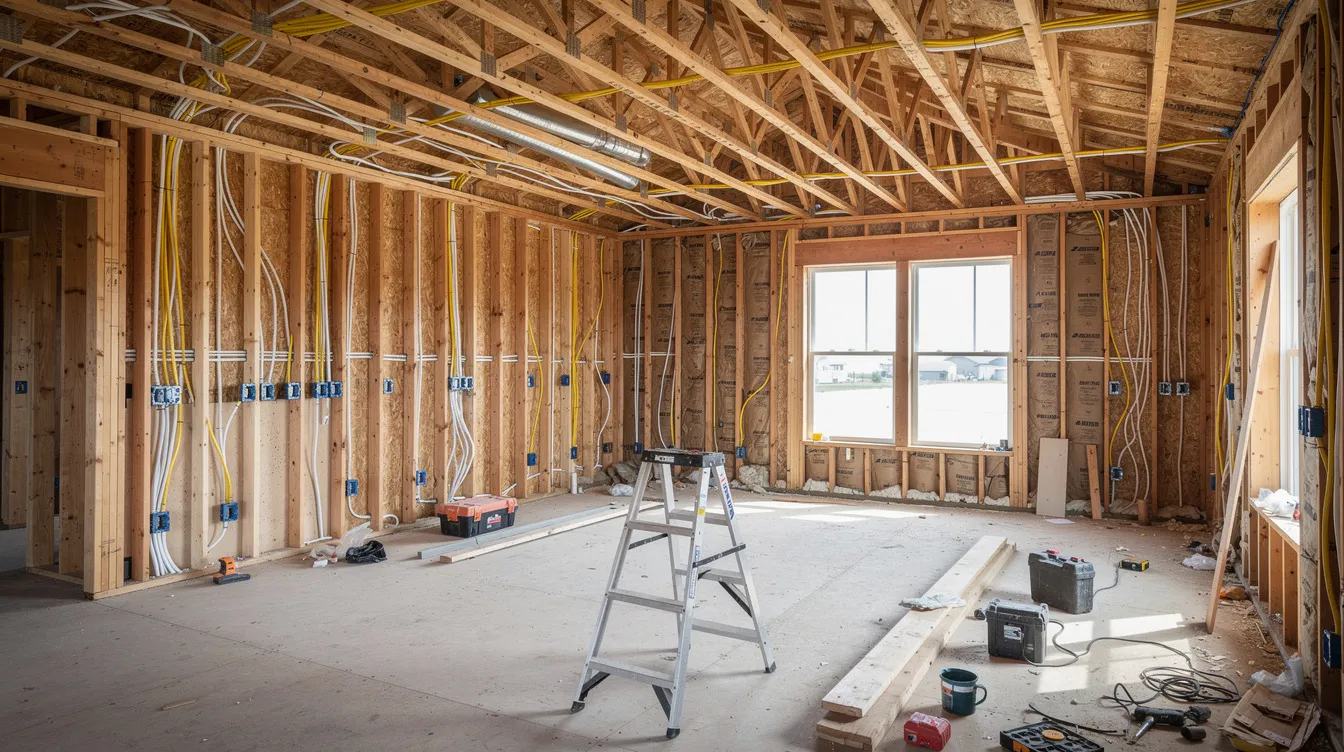
Even "high leverage" bridge loans usually leave 10 to 30% of total project cost unfunded. Bridge loans function as gap funding between a property purchase and secure longer term financing, but they don't cover everything.
Here's what goes unfinanced:
- 10 to 20% down payment on the purchase price
- 1 to 3% origination plus closing costs
- Rehab cost overruns beyond original scope
- Required reserves (often 3 to 6 months of payments, taxes, and insurance)
- Soft costs: permits, utility deposits, staging, listing photography, interest during marketing time
- Earnest money deposits on competitive acquisitions, where earnest money deposit financing can keep your cash free for rehab and reserves
On a $300,000 purchase with $80,000 rehab and a $450,000 ARV, a 90% LTC loan might cover $342,000. That leaves $38,000 plus for you to bring to closing, plus 3 to 4 months of carrying costs. Most real estate investors underestimate these numbers until they're staring at a larger down payment requirement than expected.
This is exactly where Gap Funded's capital stacking solutions sit behind the primary bridge or fix and flip loan, providing unsecured term loans, business credit cards, and lines of credit to cover these unfunded portions without equity splits or liens on the deal property. You keep 100% of your upside on every flip.
How Gap Funded Closes the Gap for Fix and Flip Bridge Deals
We're not your bridge lender. We're the team that makes sure you can actually use that bridge loan. Here's how, and why the order matters:
- Tool 1: Unsecured personal term loans. Used first for predictable, fixed needs like down payments and closing costs. Lump sum funding, fixed payments, no liens on the property. Funded in 1 to 3 days. $20,000 to $120,000 range.
- Tool 2: Business credit card stacking at 0%. Used second for flexible rehab and working capital. Multiple high limit cards with 0% intro APR (often 12 to 21 months) give you a buffer for materials, labour, and contingency without immediate interest.
- Tool 3: Business lines of credit and HELOCs. Used third as revolving backup for larger operators. If you have equity in a primary residence or existing property, a HELOC provides up to $750,000. Business lines of credit ($50,000 to $250,000) cover unexpected construction delays or carrying costs.
Why the order matters: term loans first lock in predictable costs and improve your credit utilisation metrics, which then qualifies you for better card limits and HELOC terms. Applying out of order can knock out later approvals. This sequencing is a key feature of how we work.
Qualification is realistic: many clients have 650 to 750+ FICO scores, W2 or 1099 income, or at least $20,000/month in business revenue. New businesses can qualify using the owner's personal credit. No equity splits, no liens on the deal property, no personal assets at risk on the flip itself.
Ready to see what you qualify for? Visit gapfunded.com/apply for a soft pull pre qualification and funding review aligned with your current or next flip bridge loan.
Pros and Cons of Fix and Flip Bridge Loans (and When They're a Bad Fit)
Pros
- Fast loan approval and closing for competitive property acquisition
- Ability to act before a property sale closes on your previous deal
- Higher leverage based on the property's potential ARV
- Interest only payments that preserve cash flow during construction projects
- Flexibility to scale multiple projects in one year and resell properties faster
Cons
- Higher interest rates and fees than traditional financing options
- Strict loan term and maturity dates create pressure. Short timelines for bridge loans can risk default if renovations or sales are delayed.
- Market downturns can erode ARV projections and squeeze your debt to income ratio
- Managing multiple loans and draw schedules adds administrative complexity
When It's a Bad Fit
- Owner occupants planning to live in the property as a primary residence long term
- Investors with minimal savings and no margin for cost overruns or personal assets to fall back on
- Projects in slow or declining markets where you can't sell quickly
Alternatives like conventional or FHA renovation loans, HELOCs vs bridge loans, and DSCR loans may be better for long term holds or smaller rehabs. They're slower but cheaper when speed isn't crucial.
For investors doing repeated, time sensitive flips, a bridge loan program paired with Gap Funded capital stacking often provides the best mix of speed, flexibility, and non dilutive immediate funding.
Step by Step: Getting Started with a Fix and Flip Bridge Loan and Gap FundingStep by Step: Getting Started with a Fix and Flip Bridge Loan and Gap Funding
- Analyse the deal. Run ARV comps, estimate rehab in detail, confirm projected profit after all costs. Aim for at least 10 to 20% profit margin on the ARV.
- Talk to your primary lender. Get a term sheet confirming maximum LTC, ARV cap, interest rate, and required cash to close. Now you know exactly how big your funding gap is.
- Apply with Gap Funded. Go to gapfunded.com/apply, complete the quick application, and authorise a soft credit pull to see which combination of term loans, 0% business cards, and lines of credit you qualify for.
- Coordinate timelines. Work with the bridge lender and Gap Funded so gap funding disburses ahead of your scheduled closing date.
- Execute and manage. Use gap funding strategically for down payment, materials, reserves. Keep detailed records. Stay ahead of milestones to hit your planned property sale or refinance date.
- Rinse and scale. After a successful exit, use your improved track record to negotiate better terms on both your bridge loan and Gap Funded tools. Build a proper house flipping business plan if you haven't already.

Move Faster on Flip Projects Without Giving Up Equity
Fix and flip bridge loans are powerful tools for real estate investing, but they rarely cover every dollar required for down payments, rehab, and holding costs. That 10 to 30% gap is where deals die or investors get pushed into unfavourable equity splits.
Gap Funded's gap funding, credit card stacking, and term loan solutions plug those funding gaps without equity splits or liens on the property. You keep 100% of the upside from successful real estate projects.
If you have a 650+ credit score or growing business revenue, explore your options early, before the next deal hits. A short term loan paired with the right capital stack means you can act the same day a profitable opportunity appears.
Start your funding review at gapfunded.com/apply. If you're a broker, wholesaler, or connector looking to help your clients with capital stacking, check out gapfunded.com/partners.
Related Reading
This article is for educational purposes only and isn't financial, legal, tax, or investment advice. Credit and financing outcomes depend on your own situation. Talk to a licensed financial professional before making funding decisions for your business.