
First Time Fix and Flip Loans: 2026 Guide for New Real Estate Investors

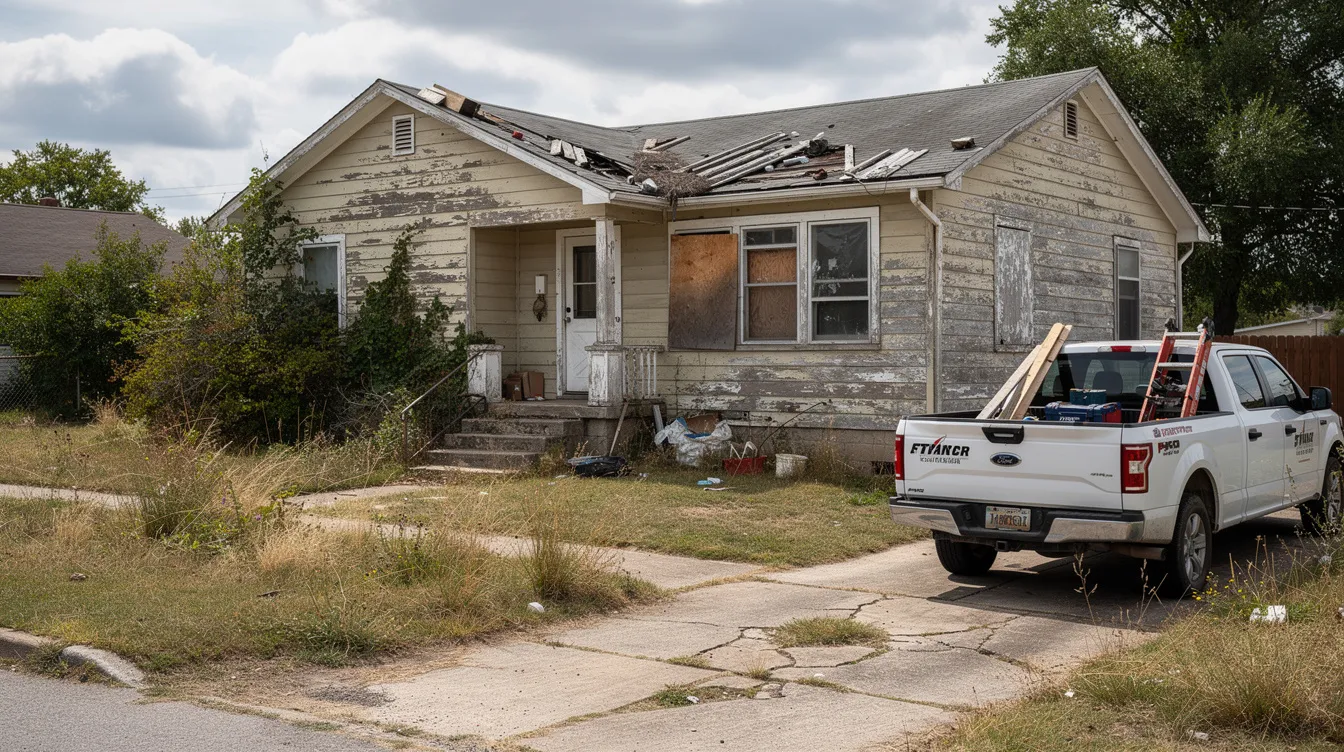
You found a deal. The numbers look solid. But you have zero flips under your belt and you're wondering whether any lender on earth will actually fund you. Fair question. Here's the short answer and the longer one.
Answering the Big Question: Can First Time Investors Really Get a Fix and Flip Loan?
Yes. First time flippers can qualify for a fix and flip loan in 2026 with zero completed flips. I know that sounds too good to be true, but here's why it works: most fix and flip lenders care far more about the deal than about your resume. They want to see a sensible purchase price, a realistic rehab budget, a conservative after repair value, and proof you have enough cash to weather the unexpected.
A fix and flip loan is a short term, interest only loan designed for real estate investors who buy distressed properties, renovate them, and resell them for profit. Terms typically run 6 to 18 months, with most fix and flip loans having a 12 month term. The lender bases approval on the property's after repair value (ARV), not just today's as is condition. These loans enable purchasing distressed properties and quickly reselling them for profit, which is the entire point of house flipping.
The catch for first time investors? You'll likely face slightly higher interest rates, more conservative leverage, and stricter proof of reserves compared to experienced investors with a track record. But "slightly harder" is not the same as "impossible." The real barrier for most beginners is the funding gap: the cash needed for the down payment, closing costs, rehab reserves, and carrying costs that the primary lender won't cover. That's exactly what we solve at Gap Funded. If you want to see what you could qualify for before your first deal, start with a soft pull funding review at gapfunded.com/apply.
What Is a Fix and Flip Loan? (First Timer Friendly Definition)
A fix and flip loan is a short term renovation loan used to buy, rehab, and resell an investment property, typically within 6 to 18 months. It is not a traditional mortgage. It is not a conventional loan. It is closer to a short term business loan secured by the property you're flipping.
Here's how the loan structure works. You make interest only monthly payments during the term. When you sell the property, the sale proceeds pay off the total loan balance. Loan amounts cover both the purchase and renovation costs, meaning the lender funds the acquisition and holds rehab funds in escrow, releasing them through a draw process as work gets completed.
Fix and flip loans focus on property value, not borrower income. Lenders evaluate ARV to determine loan amounts for flips, so the deal itself is the star of the application. In 2026, typical terms look like this: interest rates for fix and flip loans typically range from 10% to 12.5%, origination fees run 1 to 3 points, and leverage can reach up to 85% loan to cost for strong deals. First time flippers usually land on the more conservative end of that range.
Compare that to traditional mortgages or conventional renovation loans like the FHA 203(k), which require owner occupancy, take 30 to 60 days to close, and won't touch a property that needs serious work. Fix and flip financing is built for speed and distressed properties. That's the trade off: you pay more in interest, but you can actually close on deals that banks won't touch.
How First Time Fix and Flip Financing Works Step by Step
The flip loan process for a first timer follows a predictable path. Having your documents ready before you find a deal will save you days and possibly the deal itself.
Step 1: Deal analysis. Before you talk to any lender, run your own numbers. Estimate the purchase price, rehab budget, ARV, carrying costs, and selling costs. If the deal doesn't work on paper, no lender can fix that.
Step 2: Pre qualification. Most fix and flip lenders let investors prequalify in 1 to 2 business days with a basic application, soft credit pull, and a summary of the deal. You'll get a rough term sheet showing rate, points, and leverage.
Step 3: Formal application and appraisal. Once you have a purchase contract, you submit full documentation: scope of work, contractor bids, comparable sales, bank statements, and entity documents. The lender orders an appraisal or ARV review, which typically takes 5 to 10 business days.
Step 4: Underwriting and closing. Many lenders evaluate a potential borrower's financial position and project execution plan during this stage. Fix and flip loans can close in 10 to 14 business days once all documents are in.
Step 5: Rehab draws. After closing, renovation funds are typically released after project milestones are verified by inspectors. Draw schedules are used for disbursing renovation funds in stages, meaning you complete a phase, request an inspection, and the lender releases the next tranche of rehab funds.
First time investors can speed up this entire flip loan process by having a scope of work, rough contractor bids, and 3 to 5 recent sold comps ready before they even apply. And if you need gap funding for the down payment or reserves, we can run our process in parallel with your primary lender so both pieces are ready at the same time.
Key Loan Terms and Loan Structure First Time Flippers Must Understand
Misunderstanding loan terms is one of the fastest ways first time investors lose money on a flip project. Let me walk you through the ones that matter most.
Interest Rate vs APR
The quoted rate (say 11%) is just the annual interest on the loan balance. The APR factors in points, fees, and the short term nature of the loan, making it look much higher. Don't panic at the APR; focus on total cost of capital across the entire hold period.
Loan to Cost (LTC)
Loan to cost (LTC) measures the loan amount against the total acquisition and rehab costs. If your purchase price is $220,000 and your renovation budget is $60,000, your total project cost is $280,000. At 85% LTC, the lender funds $238,000 and you bring the remaining $42,000 plus closing costs.
After Repair Value (ARV)
After repair value (ARV) estimates a property's market value post renovation. ARV is calculated by adding purchase price and renovation costs, then cross referencing comparable sales in the area. Most lenders cap the total loan at 65% to 75% of ARV regardless of LTC. The 70% Rule uses ARV to determine maximum purchase price: it caps offers at 70% of ARV minus repairs, which is a useful guardrail for first time flippers.
Dutch vs Non Dutch Interest
Dutch vs non Dutch interest. This one catches beginners off guard. With Dutch interest, you pay interest on the full approved rehab budget from day one, even if you haven't drawn a dollar yet. With non Dutch interest, you only pay interest on funds actually disbursed. Non Dutch is significantly cheaper when your rehab draws are spread over months. Always ask.
Here's a quick example for a 2026 first time flip in a mid priced market. Purchase price $210,000. Renovation budget $55,000. ARV $350,000. Lender offers 85% LTC ($225,250 total loan) capped at 70% of ARV ($245,000). Interest rate 11.5%, 2 points origination, 12 month term. Your monthly interest only payment on the full draw would be roughly $2,350. Higher leverage means less cash in, but higher monthly payments and less margin for error. For your first flip, conservative leverage is your friend.

Who Counts as a First Time Fix and Flip Investor (And How Lenders View You)
First time investors are borrowers who have not yet bought, renovated, and resold an investment property in their own name or LLC within the last 3 to 5 years. That's the lender's definition, and it's stricter than you might expect.
Grey areas: remodelling your primary residence, doing DIY projects around the house, or working as a contractor on someone else's flip generally don't count as flipping experience. Lenders want to see you managed the full cycle: acquisition, rehab, and sale.
Most fix and flip lenders in 2026 tier their programs by experience. Zero flips gets you the highest rates and most conservative leverage. One to three flips unlocks mid tier pricing. Five plus flips in the last 24 to 60 months qualifies you for the best terms as repeat borrowers. First time investors often face stricter down payment requirements compared to experienced investors, but the gap is manageable if you bring compensating factors: a strong credit score (usually 650 to 720+ FICO), verifiable income, solid liquidity, and a well documented scope of work. First time flippers are advised to present a detailed scope of work and accurate budget to lenders.
First Time Fix and Flip Loan Requirements in 2026
Specific criteria vary by lender, but the baseline requirements for fix and flip financing are remarkably consistent across the industry.
Borrower requirements: Minimum FICO typically falls in the 660 to 680 range for standard programs, though some lenders accept 640 with higher pricing. No major foreclosures in the last 3 to 4 years. Lenders typically require 10% to 20% down on purchases, and lenders commonly require proof of liquid reserves for unexpected expenses or delays.
Documentation: Government issued ID, LLC or corporation documents if using an entity, purchase contract, detailed rehab budget with contractor bids, bank statements showing down payment and reserve funds, and sometimes a brief resume describing prior related experience in construction, project management, or real estate sales.
Property requirements: One to four unit residential investment properties including condos and townhomes in most markets. Minimum purchase price thresholds often sit at $75,000 to $100,000 or more. Maximum ARV limits vary by lender and market.
Common restrictions: No owner occupied properties (this is investment property financing only), limited financing in rural or very low liquidity areas, and tighter terms on heavy structural rehabs versus light cosmetic flip projects.
Gap Funded's gap financing tools, including unsecured term loans, 0% business credit card stacking, and HELOCs, usually require a 650+ credit score and verifiable income but do not require any experience as a real estate investor, making them an accessible form of institutional gap funding for real estate projects.
Real Numbers Example: First Time Fix and Flip Project From Start to Finish
Let me walk you through a realistic 2026 scenario. Meet Sarah, a first time flipper buying a distressed 3 bedroom house in Jacksonville, FL for a purchase price of $210,000. Her renovation budget is $55,000 and the ARV, based on 5 recent comparable sales, is $350,000.
Loan Structure and Terms
Her hard money lender structures the deal like this: 85% of the purchase price funded ($178,500), 100% of renovation costs funded ($55,000), maximum total loan capped at 70% of ARV ($245,000). The total loan comes to $233,500. The term is 12 months, interest only, at 11.5% with 2 points origination.
Cash Needed at Closing
Here's what Sarah needs in cash at closing:
| Line Item | Amount |
|---|---|
| Down payment (15% of purchase) | $31,500 |
| Origination (2 points) | $4,670 |
| Closing costs (approx 4%) | $9,340 |
| Prepaid interest (1 month) | $2,238 |
| Rehab contingency (10%) | $5,500 |
| Total cash needed | $53,248 |
The average closing costs for fix and flip projects range from 3% to 6%, and Sarah's deal lands right in the middle. Over 7 months of holding, she'll pay interest of roughly $15,666 plus taxes, insurance, and utilities (carrying costs of perhaps $1,200 per month, totalling $8,400). Selling costs at 8% of sale price eat another $28,000.
Net Profit Calculation
Net profit calculation: $350,000 sale price minus $210,000 purchase minus $55,000 rehab minus $15,666 interest minus $14,010 fees and closing minus $8,400 holding minus $28,000 selling costs equals roughly $18,924 net profit. Not life changing, but a solid first flip with room to improve on the next one.
The bigger takeaway? Even though the flip loan funds most of the deal, Sarah still needs over $53,000 in cash. That's the funding gap.
The Funding Gap for First Time Fix and Flip Investors (Where Deals Fall Apart)
The funding gap is the difference between what the primary fix and flip loan covers and the true cash you need to close and complete the project. Investors typically need 25% of total project costs for down payments and reserves, which surprises a lot of beginners.
Here's where that cash goes: the down payment (usually 10% to 20% of the property purchase), points and closing costs, the first several months of monthly payments, rehab overruns, carrying costs like taxes and insurance, and emergency contingency. Hard money loans can finance up to 90% of purchase costs in the best case, but "90% of purchase" is not "100% of everything."
Using Sarah's example, her total project cost including rehab is $265,000. Even at 85% LTC, she needs $53,000+ in cash. That number is what blocks otherwise solid first time investors from taking down their first flip, even when a hard money or private lender has already issued a term sheet.
Gap Funded exists specifically to stack capital sources that cover these shortfalls using a gap funding methodology for real estate. We don't replace your main fix and flip lender. We complement them to complete the capital stack, without equity splits and without putting liens on the flip property.
How Gap Funded Closes the Gap for First Time Fix and Flip Loans
Gap Funded specialises in rapid gap funding for real estate investors, particularly first time flippers who already have, or are close to getting, primary flip financing approved. Our approach shows you how to fund a fix and flip with no money out of pocket by layering multiple tools in the right order. Here's how the tools layer, and the order matters because applying out of sequence can knock out later approvals.
Tool 1: Unsecured personal term loans. These typically range from $25,000 to $250,000 with 2 to 7 year repayment terms, no collateral required. Use them for down payment, earnest money deposit financing, closing costs, or cash reserves. Because there's no lien on the deal property, your hard money lender won't even blink, and they avoid the strict limitations that come with traditional private gap funding requirements.
Tool 2: 0% business credit card stacking. Multiple 0% intro APR cards can be stacked to create $50,000 to $150,000+ in usable credit for materials, contractor draws, or short term working capital. This is essentially free money for 12 to 18 months if you pay it down before the intro period ends and you truly understand what gap financing in real estate is.
Tool 3: HELOCs. If you have sufficient equity in a primary residence or investment property, you can tap up to 75% to 85% CLTV and deploy that capital as part of your flip financing strategy, leveraging the flexibility of HELOC loans for real estate investors. Fair warning though: using your home as collateral to fund a flip adds real risk. Only do this if you're genuinely comfortable with that exposure.
Typical qualification: borrowers with 650 to 700+ FICO, at least $30,000 to $40,000 of verifiable annual income, and manageable existing debts are the best fit. Checking your options at gapfunded.com/apply uses a soft credit pull and will not affect your credit score.
Comparing First Time Fix and Flip Financing Options (Pros and Cons)
First timers often piece together funding from multiple sources. Here's an honest look at what's available.
Hard money fix and flip loans are the go to primary financing for most flip projects. Fast closings (often 7 to 10 days), asset based approvals, and hard money lenders can provide up to 90% financing for purchases. The downside: higher rates, points, and higher closing costs. Most lenders evaluate property value over personal income, which actually works in a first timer's favour.
Private lenders (friends and family) can be flexible and sometimes cheaper, but capital is limited and the relationship risk is real. I've seen more friendships ruined over flip projects than I care to count.
Banks and credit unions offer lower interest rates but take 30 to 60 days to close, require extensive documentation, and rarely fund distressed property purchases for non owner occupied deals. Traditional mortgage products and conventional loans simply aren't built for this.
Alternative tools: A home equity line of credit, personal loans, 401(k) loans, a business line of credit, or Gator Lending style private capital can all serve as supplemental flip funding. Each has its place. Bridge loans work well for short term financing between transactions. A delayed purchase refinance can recover capital after a cash purchase. A DSCR loan works beautifully as an exit strategy for fix and hold investors.
National hard money lenders like Easy Street Capital, Park Place Finance, and others excel at primary fix and flip financing. Where they fall short is solving the down payment and reserves problem. That's the specific gap we target.
Common First Time Fix and Flip Mistakes (And How Smart Financing Helps Avoid Them)
Most first time flippers stumble not because of bad intentions, but because of optimistic assumptions. Here are the mistakes I see most often, broken down for clarity:
Overestimating ARV
- Overestimating ARV can lead to financial losses in flips. Use only sold comps from the last 90 days within a half mile radius. Ignore active listings. They haven't sold yet.
Underestimating Renovation Costs
- Average renovation costs exceed initial estimates by 20%. That's not pessimism; that's data. Build a 10% to 15% rehab contingency into every budget and treat it as non negotiable. Investors should maintain reserves equal to 25% to 30% of renovation costs.
Ignoring Holding Costs
- Higher carrying costs and short loan terms can impact project profitability more than most beginners expect. Every month you hold the property, you're paying interest, taxes, insurance, and utilities. A 2 month delay on a $233,000 loan at 11.5% costs you roughly $4,500 in interest alone.
Hiring the Cheapest Contractor
- The cheapest bid is often the most expensive outcome. Vet contractors by checking references on actual investment rehabs, not just homeowner bathroom remodels.
Starting Without Adequate Reserves
- Investors should include a contingency for unexpected expenses in their budgets. If you don't have a buffer, one surprise (a failed inspection, a delayed permit, a busted sewer line) can force a distress sale.
Proper loan structure and a realistic funding plan, including gap financing for contingencies, can absorb these surprises without forcing you into a fire sale.
Exit Strategies for First Time Flippers: Sell, Refinance, or Hold?
Every investor plans to sell. Smart ones plan a backup too.
Straight flip: You finish the rehab, list the property, accept an offer, and the sale proceeds pay off the total loan at closing. Timeline from final inspection to closing typically runs 45 to 90 days depending on your market. Consider this when planning against your loan term.
Fix and hold (BRRRR): Once rehab is complete and the property is rented, a DSCR rental loan can refinance the fix and flip loan based on the property's income and repair value. Many first time investors discover they prefer holding some properties for long term cash flow while flipping others for fresh capital.
Before applying for a fix and flip loan, think about your exit. Loan terms, prepayment penalties, and seasoning requirements can all affect your options. Some flip lenders charge extension fees of 0.5 to 1 point if you hold past term. Others have prepayment penalties that eat into profit if you sell too quickly. Ask upfront.
Gap Funded also supports investors beyond the first flip, with tools that help cover down payments and reserves on DSCR and rental acquisitions so you can scale a portfolio over time, and with startup and small business funding options if you're building a broader real estate or construction business around your flips.
Action Plan: How to Get Ready for Your First Fix and Flip Loan in 30 Days
You can realistically complete this checklist in about a month. Here's the plan:
- Personal finances. Pull your credit reports from all three bureaus. Pay down small high interest debts first. Target a 650+ FICO before applying for any flip financing. Even small improvements can shift your rate by a full point or more. Consider debt consolidation if you're carrying scattered balances.
- Education. Study recent sold comps in one or two target neighbourhoods. Talk to at least one investor friendly real estate agent. Collect sample deals that fit the 70% ARV rule. Build a house flipping business plan even if it's just two pages.
- Team. Identify at least one experienced contractor familiar with investment rehabs and one investor friendly title company in your state. These relationships are worth more than any course you'll buy.
- Capital plan. Estimate the cash needed for down payment, closing costs, rehab reserves, and a 10% to 15% contingency. Figure out how much you can contribute personally and how much requires gap funding. Investors need 25% of total project costs plus reserves as a working benchmark.
- Apply for funding. Submit a quick, no impact pre qualification request at gapfunded.com/apply to see how much gap funding you could layer on top of a future fix and flip loan. Getting this done before the perfect deal appears lets you move as fast as cash buyers when an opportunity hits.

Why First Time Flippers Partner With Gap Funded (And How to Start)
Gap Funded is a funding intermediary that builds the middle of the capital stack so real estate investors don't have to bring all cash themselves or give up equity to a partner. No equity splits. No liens on the deal property. Soft credit pulls only for initial approvals. Rapid execution that aligns with tight hard money closing timelines.
We work hand in hand with hard money lenders, DSCR lenders, and other flip lenders. Never competing with them. Always complementing them. You can see real world examples of investors who used gap funding to close deals at gapfunded.com/results.
The next step is simple. Visit gapfunded.com/apply, fill out the short application in about 3 to 5 minutes, and get a personalised funding review outlining specific tools and limits you likely qualify for. Stop waiting for perfect circumstances. Use smart fix and flip financing plus gap funding to complete your first profitable flip project in 2026. The deal won't wait. You shouldn't either.
Related Reading
This article is for educational purposes only and isn't financial, legal, tax, or investment advice. Credit and financing outcomes depend on your own situation. Talk to a licensed financial professional before making funding decisions for your business.