
DSCR Loan Texas: 2026 Guide for Real Estate Investors

DSCR Loan Texas: 2026 Guide for Real Estate Investors
Most Texas real estate investors I talk to don't struggle to find deals. They struggle to close them. The property cash flows, the DSCR lender gives a thumbs up, and then reality hits: you need $80,000 or more in cash for down payment, closing costs, and reserves. This guide covers how DSCR loans in Texas actually work in 2026, what the numbers look like, and how to fill the funding gap so good deals don't die on the vine.
Quick Answer: How DSCR Loans Work in Texas (and Where Gap Funded Fits)
A DSCR loan in Texas is a mortgage for investment properties where the lender cares about one thing above all else: whether the property's rental income covers the debt obligations. Instead of handing over two years of tax returns, pay stubs, and personal income verification, you show the lender that the rental income generated by the property supports the mortgage payment, property taxes, insurance, and any HOA dues. That debt service coverage ratio is what gets you approved.
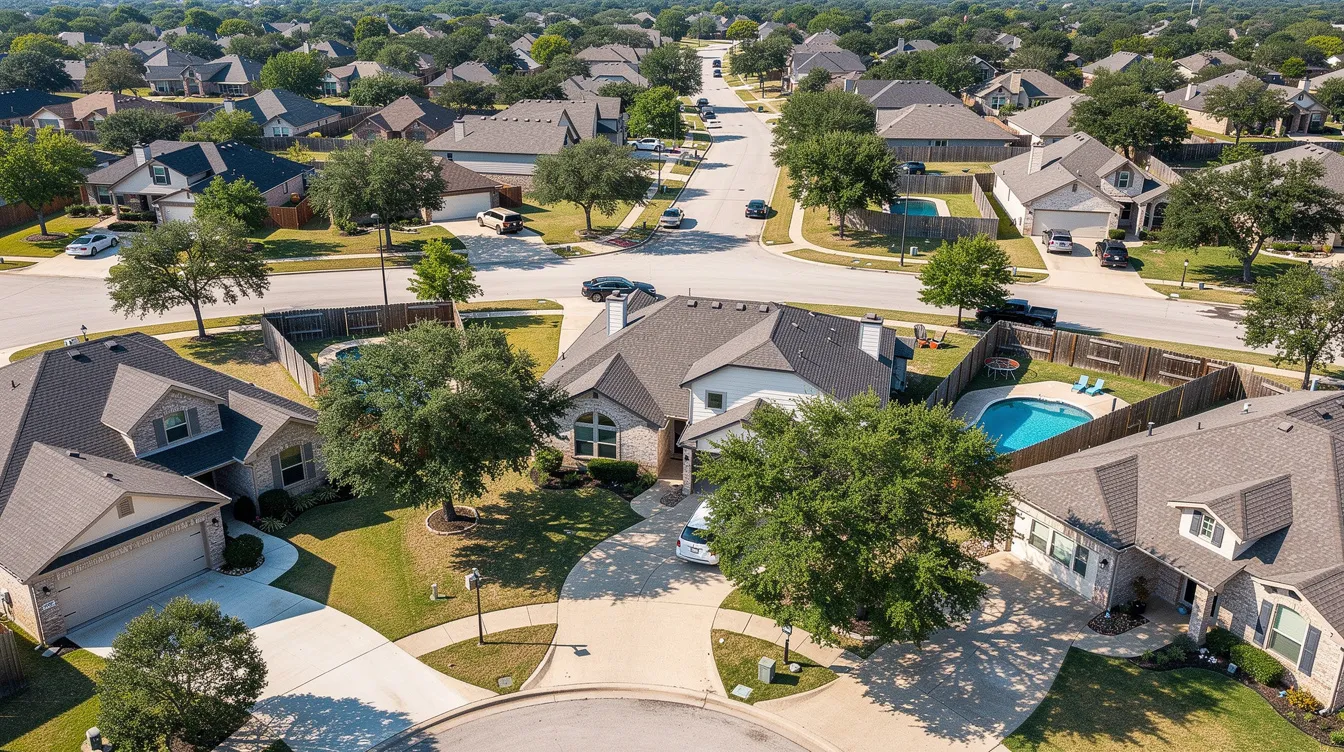
Texas DSCR loans are built for non-owner-occupied investment properties. Think single family rentals, duplexes, triplexes, small multifamily up to four units, and short term rentals in markets where local ordinances allow them. Austin, Dallas, Houston, and San Antonio are prime investment cities, but secondary markets across the state are seeing plenty of DSCR activity too.
Here's the catch most articles skip over: DSCR lenders still require 20 to 25% down payment, plus closing costs and reserves. They'll finance the bulk of the purchase based on the property's cash flow, but you need real money to get in the door. That's where Gap Funded comes in. We don't originate the DSCR mortgage. We help you cover everything the DSCR lender won't fund.
How investors typically stack financing on a Texas DSCR deal:
- Primary DSCR loan for 75 to 80% of the purchase price
- Unsecured term loans for down payment, earnest money deposit, or reserves
- Business credit card stacking at 0% intro APR for rehab, furnishings, or operating costs
- HELOC on existing property to pull equity without disturbing the DSCR financing
If you already have or expect DSCR loan approval but you're light on cash for the deal, you can start a no impact pre-qualification at Gap Funded. Soft pull, no score harm.
What Is a DSCR Loan in Texas?
The debt service coverage ratio is simply the property's net operating income divided by its total debt service. DSCR lenders in Texas use this single number to decide whether a property generates enough rental income to cover the mortgage. A DSCR of 1.0 means the property breaks even on debt service. Anything above 1.0 means income exceeds payments. Most lenders want to see 1.10 to 1.25 or higher for comfortable approval.
DSCR loans in Texas are for investment properties only. Property must generally be non-owner-occupied for DSCR loans. That includes long term rentals, BRRRR deals, and Airbnb or short term rentals in places like Austin, the Texas Hill Country, and Gulf Coast vacation towns. Some lenders allow short-term rentals under DSCR guidelines as long as there's documented booking history or strong market comparables.
A typical Texas DSCR loan looks like a standard 30 year fixed or adjustable rate mortgage, but the underwriting is completely different. Instead of personal income documentation, the lender focuses on leases, market rent schedules, and appraisal rental comps versus PITIA (principal, interest, taxes, insurance, and HOA). DSCR loans simplify the approval process with less paperwork.
This falls under the non-QM (non Qualified Mortgage) market, meaning these loans are not backed by Fannie Mae or Freddie Mac. DSCR loans do not typically require personal income documentation like conventional loans do. Gap Funded's role here is as a capital stacking partner: we don't replace your DSCR lender, we help you come up with the down payment, closing costs, rehab budget, and reserves they won't cover.
How DSCR Loans Work in Texas: The Basics
The loan process follows a straightforward path: find a Texas rental property, estimate market rent, calculate the DSCR to confirm it clears the lender's minimum, apply with a DSCR lender, and close using 20 to 25% down plus costs.
Property eligibility includes single family rentals and multi-family units. Specifically, Texas DSCR loans work for:
- Single family rentals (1 to 4 units) in metros like Dallas to Fort Worth or Houston
- Small multifamily properties like duplexes and triplexes in cities such as San Antonio or El Paso
- Vacation rentals in Gulf Coast, Hill Country, and lake area markets
- Commercial real estate is also eligible for DSCR loans in Texas under certain programs
Many DSCR lenders permit closing under an LLC for liability protection, which is attractive for investors managing multiple properties and wanting clean asset protection.
Common loan terms as of 2026: 30 year fixed, 5/1 or 7/1 ARMs, interest only options on some refinances, and loan sizes ranging roughly from $100,000 up to $3 million depending on the program. Investors can finance properties with DSCR loans up to $3 million in many cases, with some specialty programs going higher.
The key difference from conventional financing: DSCR underwriting is property-centric (rent roll, appraisal, vacancy, expenses) while conventional underwriting is borrower-centric (DTI, tax returns, W-2s, employment history). This distinction matters enormously for self employed individuals and investors with complex finances.
How to Calculate DSCR on a Texas Investment Property
You can calculate DSCR yourself before ever ringing a lender. It takes about five minutes with a calculator and some reasonable assumptions.
The formula: DSCR = Net Operating Income (NOI) divided by Total Debt Service (annual principal and interest payments plus property taxes plus insurance plus HOA dues).
Net operating income equals gross annual rental income minus normal operating expenses (property management, maintenance, vacancy allowance, utilities). It excludes loan payments. The property's income is the numerator; debt payments are the denominator.
Here's a concrete Texas example. A $350,000 single family rental in San Antonio:
- Monthly rent: $2,400. Annual gross rent: $28,800
- Vacancy allowance at 7%: subtract $2,016. Effective gross income: $26,784
- Operating expenses at 30% of effective income: $8,035
- Net operating income: $18,749
Now the debt side. Loan of $262,500 (25% down) at 6.75% over 30 years:
- Annual principal and interest payments: approximately $20,424
- Property taxes (Texas has the seventh-highest effective property tax rate in the U.S., roughly 2.2%): $7,700
- Insurance: $1,500
- Total debt service: $29,624
DSCR = $18,749 / $29,624 = 0.63. That's below 1.0, so this deal needs adjustments: bigger down payment, higher rent, or lower expenses.
Lenders typically require a DSCR above 1.0 for approval. Higher DSCR ratios can unlock better loan pricing, with the sweet spot usually around 1.20 to 1.30 for the best interest rates and higher leverage. Some niche programs accept ratios down to 0.75 with compensating factors like a larger down payment.
Why Texas Real Estate Investors Use DSCR Loans
Texas gained over 9 million residents from 2000 to 2022. That population surge drives rental demand across metros and secondary cities alike. Texas has no state personal income tax, benefiting investors who keep more of their rental income. The state offers diverse rental markets including military and university towns, giving investors options beyond the big four metros.
DSCR loans are popular among real estate investors for good reason:
- Loan approval is based mainly on the property's ability to generate income rather than the borrower's personal income from W-2s or tax returns
- Investors can finance multiple properties more easily with DSCR loans, avoiding the conventional cap that typically kicks in around 10 financed properties
- Approval timelines for DSCR loans are often faster than traditional mortgages because there's less paperwork around personal financial history
- DSCR loans are ideal for self-employed investors with complex finances whose adjusted gross income looks low on paper
Self employed investors, portfolio builders scaling beyond 10 properties, and Airbnb operators in tourist markets all benefit from DSCR financing. DSCR loans support various investment strategies across property types.
The limitation nobody mentions enough: DSCR loans solve the "income" problem but do nothing about the "cash to close" problem. Even if properties qualify on paper, you still need a fair whack of capital upfront.
DSCR Loans vs. Conventional Loans in Texas
The core difference comes down to what the lender examines. DSCR loan options focus on the property's financial performance: is the rental income enough to cover total debt service? A traditional mortgage loan focuses on the borrower's income through debt to income ratios, requiring full personal income verification via tax returns, W-2s, and employment history. DSCR loans focus on property income, not personal income, which makes them fundamentally different animals.
On documentation, DSCR lenders want leases, rent schedules, and an appraisal with rental comps. Conventional lenders want two years of tax returns, pay stubs, bank statements, and a thorough look at your personal financial history. For investors with complicated tax situations (hello, depreciation), DSCR loans provide a much cleaner path.
Regarding property count limits, conventional loans backed by Fannie Mae or Freddie Mac get progressively harder once you own more than a handful of financed properties. DSCR lenders are generally more flexible here, making them the go-to for scaling.
The trade-offs are real though. Higher interest rates are common with DSCR loans compared to conventional loans. DSCR loans often have higher rates than conventional loans by roughly 1 to 2 percentage points. Many Texas DSCR programs include prepayment penalty options, typically 3 to 5 year step downs. And down payments tend to be 20 to 25% versus potentially lower down payments on conventional investor loans for borrowers with strong income.
Some experienced investors strategically mix both: conventional loans on early properties in the Texas market, then shifting to DSCR loans as they scale across cities like Austin or Houston. Gap Funded sits neutrally here. We don't originate either mortgage type. We help investors close the capital gap regardless of which primary loan structure they choose.
Typical DSCR Loan Requirements in Texas
Every DSCR lender has its own overlay, but most Texas programs share core DSCR loan requirements.
On credit: a minimum credit score of 620 is required by many programs, though minimum credit scores for DSCR loans typically range from 620 to 680 depending on the lender. Better pricing and higher LTV (say 80% on purchase or 75% on cash out) usually requires 700 to 740 or above.
On cash:
- A down payment of 20 to 25% is typically required for DSCR loans. Some lenders may accept lower down payments under specific conditions, but expect to bring at least 20% on a standard purchase
- Lenders require cash reserves of 3 to 12 months of PITIA post-closing
- Closing costs, appraisal, title insurance, and escrow fees are additional
- Rehab budget if you're doing value-add work
On the property and documentation side:
- Property must be an investment property, typically 1 to 4 units
- Some lenders limit condos, rural properties, or certain short term rental markets
- You'll need an appraisal with market rent schedule, lease agreements, or projected rental income
- Lenders may require a cash flow statement for eligibility
- A DSCR of at least 1.0 is generally required for approval
The pattern I see constantly: strong would-be borrowers with good credit and strong DSCR numbers who fail not because of the ratio or their score, but because they cannot produce the down payment plus rehab and reserves. That's the real bottleneck.
Interest Rates, Fees, and DSCR Loan Costs in Texas
Rates shift constantly, so treat these as directional examples for 2026, not gospel. Always check current pricing with your chosen Texas DSCR loan specialist.
DSCR loan interest rates range from 6.5% to 8.5% for 30 year fixed products with 20 to 25% down and a DSCR at or above 1.20. One major lender (Pinnacle Funding Network) advertises rates starting around 5.8% for the strongest deal profiles (high DSCR, high credit, significant down payment), but that's the floor, not the norm. Lower DSCR, lower credit scores, or smaller down payments push rates toward the higher end.
Common closing costs on Texas DSCR deals:
- Lender origination fees: typically 1 to 2 points
- Appraisal, title insurance, escrow, and survey
- Hazard and wind/hail insurance (especially costly in coastal counties)
- Property taxes escrowed at closing
Prepayment penalties are standard in most Texas DSCR programs, usually structured as 3 to 5 year step down schedules. You can sometimes buy out the penalty with a higher rate upfront, but weigh that against your hold period.
When stacking DSCR financing with gap funding, your blended cost of capital rises slightly. But if the alternative is not doing the deal at all, a slightly higher blended rate on a cash flowing property beats watching from the sidelines.
Example: DSCR Loan Scenario on a Texas Rental Property
Let's run through a deal that actually pencils.
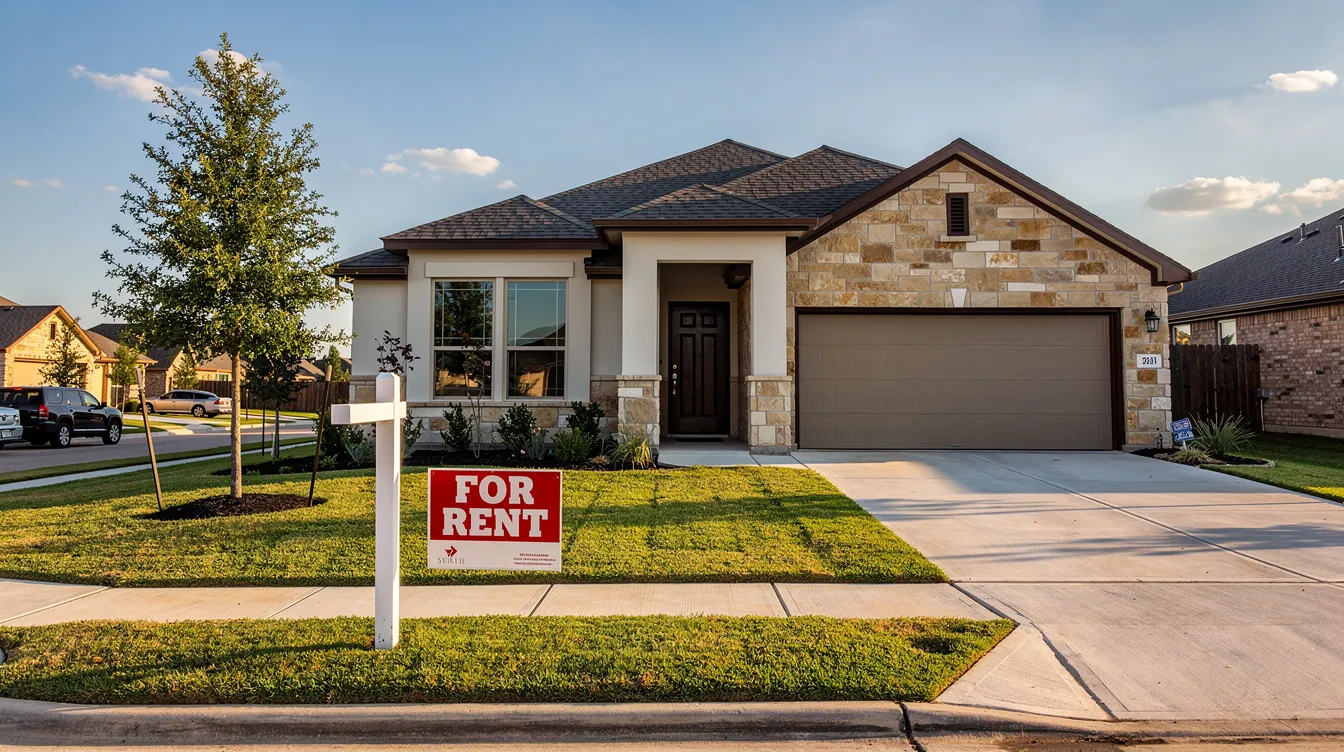
A single family rental in Fort Worth, purchase price $400,000. You put 25% down ($100,000), borrowing $300,000 at 6.75% on a 30 year fixed. Monthly principal and interest payments come to about $1,946. Add property taxes at 2.2% ($733 per month), insurance at $175 per month. Total monthly PITIA: approximately $2,854, or $34,248 annually.
The property rents for $2,800 per month. Annual gross rent: $33,600. After 7% vacancy ($2,352) and 30% operating expenses on effective income ($9,374), your net operating income lands around $21,874.
DSCR = $21,874 / $34,248 = 0.64. Still short. Bump the down payment to 35% (loan drops to $260,000) and DSCR climbs closer to 0.74. To truly hit 1.20 or above, you'd need either significantly higher rents or a lower purchase price.
Now consider a short term rental in Galveston. Purchase at $450,000, 25% down. Average nightly rate of $225 with 65% occupancy yields roughly $53,000 gross annually. Higher expenses (cleaning, furnishings, coastal insurance) eat into margins, but a strong STR can still produce a DSCR above 1.0 if the purchase price and down payment are right.
The DSCR figure directly influences your loan terms. A DSCR of 1.00 may only get you 70 to 75% LTV with higher rates. Push above 1.25 and you might access 80% LTV and more favorable loan terms.
Even in these scenarios, the investor needs tens of thousands in cash for down payment, closing costs, and reserves. The property's income potential is solid but the upfront capital requirement is the real barrier.
Improving Your DSCR to Get Better Terms
A higher DSCR in the Texas real estate market usually means a better rate, lower fees, or higher LTV approval. Sometimes all three.
Strategies that move the needle:
- Raise rental income: upgrade finishes to command higher rent, pivot to medium term or short term rentals where allowed, adjust rents to current market comps
- Reduce expenses: shop insurance aggressively (especially in high property tax Texas counties), negotiate property management fees, install energy efficient systems, appeal property tax assessments
- Increase your down payment: this directly reduces monthly interest payments and principal, improving the ratio. A bigger down payment is the fastest mathematical lever you have
- Time your deal right: lock in insurance quotes early, get tax assessments appealed before closing, pay off small liabilities that inflate PITIA
Gap Funded can help here too. Using unsecured term loans or business credit card stacking to increase your down payment or cover rehab upfront can improve DSCR and overall loan terms, even when the primary DSCR lender is conservative.
The Real Problem: Funding the DSCR Loan Down Payment and Gaps
Most Texas real estate investors reading about DSCR loans already understand they can qualify based on the property's rental income. Their real constraint is cash. Down payment, closing costs, rehab, reserves, and earnest money deposits all need to be covered before the DSCR lender wires a cent.
The typical funding gap on a Texas DSCR deal:
- 20 to 25% down payment: often $60,000 to $150,000 or more on mid-priced Texas investment properties in 2026
- 3 to 5% in closing costs
- Rehab budget for value add projects
- 3 to 12 months of reserves demanded by the lender
Traditional ways investors fill that gap carry real risks. Informal gator lending partners often demand equity splits or large profit shares. Exhausting personal savings or tapping retirement accounts reduces flexibility. High cost merchant cash advance products can crush cash flow before the property even stabilises.
Gap Funded offers a non-dilutive alternative. We focus on short term, flexible capital to bridge exactly these gaps without taking equity or placing liens on the DSCR-financed property. While DSCR lenders finance the majority of the purchase, Gap Funded steps in for everything they don't cover, allowing you to do more deals simultaneously.
How Gap Funded Helps Texas DSCR Borrowers Close More Deals
Gap Funded is not a DSCR lender. We specialise in complementary tools that investors stack with DSCR loans in Texas to actually close.
The main solutions for DSCR borrowers:
- Unsecured term loans for down payment, closing costs, and reserves. Fixed payments, no lien on the deal property
- Business credit card stacking at introductory 0% APR to fund rehab, furnishings for short term rentals, and operating expenses
- HELOCs on existing property equity to pull capital while keeping DSCR financing focused on the subject property. You can estimate available equity with our HELOC calculator
Realistic borrower profile: typically 650 or higher FICO (stronger scores get better terms and higher limits), verifiable income or strong bank statements for unsecured term loans, and for HELOCs, sufficient equity in an existing property.
Our pre-qualification uses soft credit pulls and does not impact scores. Useful while you're shopping DSCR lenders and don't want unnecessary hard inquiries.
Apply for gap funding in parallel with your DSCR loan application so your full capital stack is ready by closing day. Start at gapfunded.com/apply.
Gap Funding Tools in Order: Building a Smarter Capital Stack
The order you apply for funding tools matters. I reckon most investors don't think about this enough. Applying out of sequence can knock out later approvals, so prioritise cheaper, more flexible capital first.
Recommended sequence for Texas DSCR investors:
- HELOC or asset-based capital on existing equity. Lowest rate when available, largest limits. If you own a primary residence or another investment property with equity, this is your first stop
- Debt consolidation to clean up existing debt obligations and free up borrowing capacity before applying for new funding
- Unsecured term loans for predictable, fixed payments. Primarily used for down payment and closing costs
- Business credit card stacking at 0% APR for 6 to 18 months. Ideal for rehab materials, short term rental furnishings, and setup costs. Requires discipline and a repayment plan before promo rates expire
Why this order? Asset-backed capital has lower rates and larger limits. Fixed term unsecured loans are next in cost but simpler to budget around. Credit card stacking is powerful but needs a clear payoff strategy.
Being candid about alternatives: hard money or gator lenders can close quickly but may be more expensive and sometimes require equity splits. Merchant cash advance products can be fast but should be used cautiously due to high effective costs.
We help investors structure this capital stack so DSCR loan payments, rehab outlays, and operating expenses remain manageable against expected cash flow.
Using Gap Funding with DSCR Loans for BRRRR and Short-Term Rentals
DSCR loans pair naturally with the two most popular Texas investment strategies: BRRRR and short term rentals.
A typical BRRRR sequence in the Texas real estate market:
- Acquire with bridge or hard money (Gap Funded covers down payment and rehab)
- Renovate using credit card stacking or unsecured term loans
- Rent and stabilise, establishing enough rental income to support a strong DSCR
- Refinance existing debt into a DSCR loan once property income generated supports the ratio
- Use cash-out DSCR refinance to repay gap funding and seed the next project
For short term rentals, DSCR lenders usually will not include furniture and décor in the property's appraised value. Having separate flexible funding through Gap Funded for those items prevents shortfalls during setup.
A quick example: a Texas investor buys a lake house for STR use. She uses a HELOC plus an unsecured term loan for the down payment and closing. She stacks business credit cards to furnish it to Airbnb standard. Once booked and producing income, she refinances into a DSCR loan, repays the stacked capital, and repeats the process on the next property. No equity partners, no profit splits.

Step by Step: Applying for a DSCR Loan in Texas and Gap Funding TogetherStep by Step: Applying for a DSCR Loan in Texas and Gap Funding Together
You don't need to wait for DSCR approval before exploring gap funding. Both applications can run in parallel. Here's the checklist:
- Identify your target Texas market and property type (SFR, duplex, short term rental) and estimate potential rent and DSCR
- Pull your own credit or use soft pull tools to confirm you're near or above the 620 to 650 FICO range for both DSCR and Gap Funded products
- Request quotes from several DSCR lenders (Texas-focused or national) to understand required down payment, minimum DSCR, and interest rates
- Visit gapfunded.com/apply and complete the quick funding review to see how much capital you can access for down payment, rehab, and reserves without impacting your credit score
- Lock in a DSCR term sheet based on realistic expectations, then finalise Gap Funded approvals to match the exact funding gap
- Coordinate timing so DSCR lender and Gap Funded disbursements align with contract deadlines, EMD payments, and rehab start dates
Communicate early with both the DSCR lender and Gap Funded. This avoids surprises like underestimated closing costs or last minute reserve requirements.
Organised investors who follow this approach can often move from offer acceptance to DSCR closing in about 30 to 45 days, depending on appraisals and title work. In competitive Texas markets, that speed matters.
Is a DSCR Loan in Texas Right for You?
Before chasing DSCR financing, take an honest look at your situation and strategy.
DSCR loans make sense if:
- You're buying non-owner-occupied income generating properties
- Your tax returns or W-2s make traditional income verification difficult, but you know the property will produce enough cash flow
- You plan to hold medium to long term (to justify DSCR rates and any prepayment penalties)
- You want to scale and secure financing across multiple properties without hitting conventional caps
A conventional loan might be the better call if you're buying an owner-occupied or second home in Texas, or if you have high verifiable income and can qualify easily at lower conventional rates with lower down payments.
But if the main obstacle isn't your borrower's income or creditworthiness but the sheer size of the required down payment and rehab budget, then DSCR plus Gap Funded gap financing is more powerful and less dilutive than taking on an equity partner. You keep full ownership. You keep all the upside.
Speak with the DSCR lender of your choice for the primary mortgage. Use Gap Funded to close the capital gap and scale your Texas investment property portfolio without giving up a single point of equity.
Related Reading
This article is for educational purposes only and isn't financial, legal, tax, or investment advice. Credit and financing outcomes depend on your own situation. Talk to a licensed financial professional before making funding decisions for your business.