
DSCR Loan NC: Investor Guide to North Carolina DSCR Loans and Gap Funding

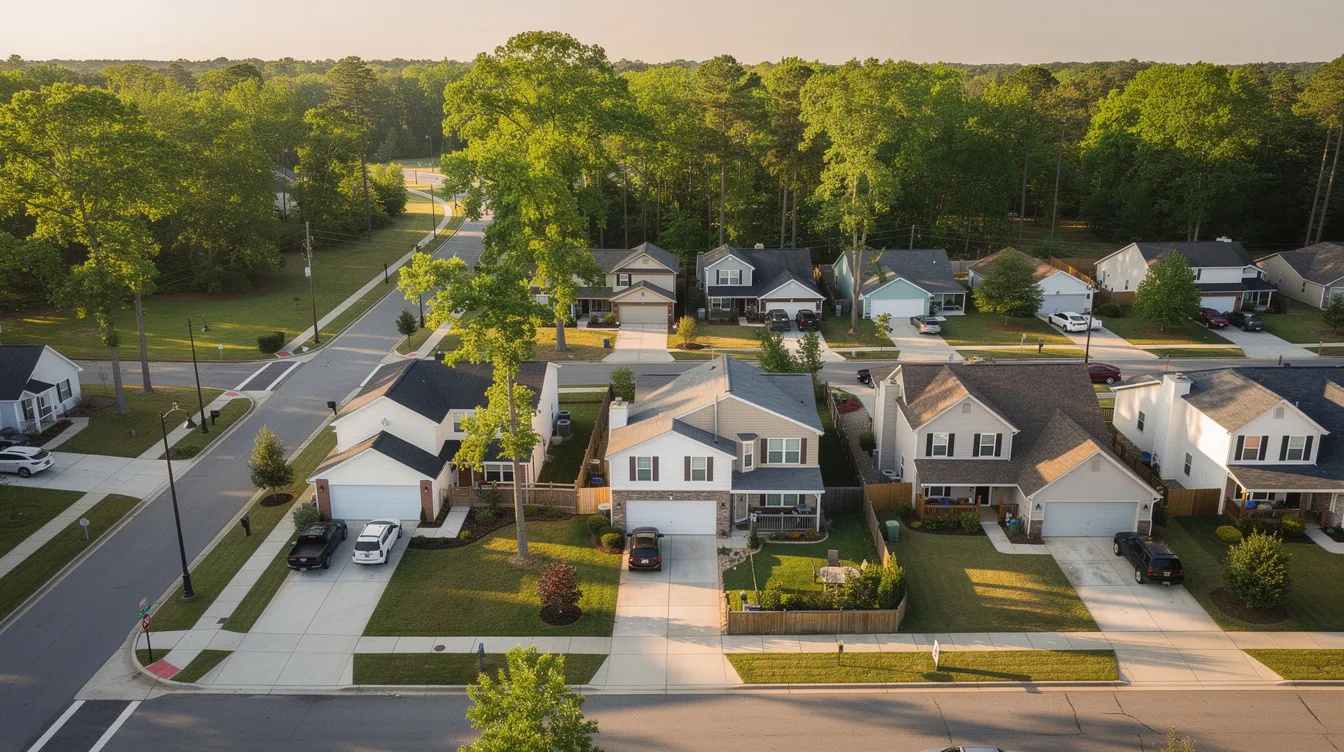
DSCR Loan NC: Investor Guide to North Carolina DSCR Loans and Gap Funding
Most North Carolina investors don't struggle to find deals. They struggle to close them because the cash requirements between what a lender funds and what the deal actually costs are bigger than expected. This guide covers how DSCR loans work in NC, what lenders actually require, which markets make sense, and how to fill the funding gaps that kill otherwise solid deals.
Fast Answer: How a DSCR Loan in NC Actually Works for You
A DSCR loan in North Carolina qualifies you based on the property's rental income, not your personal income or tax returns. The lender's core question is simple: does the rent this property generates cover the full monthly mortgage payment? That payment includes principal, interest, property taxes, insurance, and any HOA dues, collectively called PITIA.
The debt service coverage ratio is the formula that answers that question. DSCR equals gross rental income divided by PITIA. A DSCR of 1.0 means rent covers all debt obligations exactly. A DSCR of 1.25 indicates 25% more income than needed, which is where most DSCR lenders start offering better pricing. Common NC approval benchmarks sit at a minimum credit score of 620, down payments of 20 to 25%, and a target DSCR of 1.0 to 1.25 or higher. Some programs accept lower ratios with compensating factors like stronger credit or additional reserves.
North Carolina DSCR loans are popular among self employed borrowers, investors scaling rental portfolios across multiple properties, and anyone buying under an LLC. Because DSCR loans focus on property income, not personal income, they sidestep W-2 scrutiny and traditional employment documentation. LLC ownership is permitted for DSCR loans in North Carolina, which means you can close properties under an entity for liability protection while still qualifying on the asset's cash flow.
Here's where we come in. Gap Funded doesn't replace DSCR lenders. We fill the funding gap: down payment, closing costs, rehab, reserves, and earnest money. Our gap funding tools use unsecured and asset backed capital so your NC deal can actually close without equity splits or liens on the subject property.
What Is a DSCR Loan? (With North Carolina-Specific Context)
A DSCR loan is business purpose financing for non owner occupied rentals. Approval is based primarily on the property's income potential, not your W-2s, pay stubs, or personal income documentation. These are non-QM (non qualified mortgage) products designed specifically for real estate investors with rental or vacation rental strategies.
How lenders calculate DSCR in practice:
- Use the monthly qualifying rent from a signed lease, an appraiser's rent schedule, or documented Airbnb/Vrbo history for short term rentals
- Divide by total monthly PITIA: principal, interest, property taxes, insurance, and HOA or association dues
- Some lenders use gross rents; others adjust for vacancy or use the property's net operating income
Personal income and tax returns are often not required because DSCR loans focus on property income, not personal income. Lenders still check credit, reserves, and property condition, but the property level underwriting drives the approval, not your debt to income ratio.
Here's a typical North Carolina file to make it concrete. A $350,000 Charlotte single family residence with $2,800/month rent. At 80% LTV on a 30 year fixed at 7.25%, monthly P&I runs about $1,917. Add taxes at roughly 0.80% of value ($233/month), insurance at 0.40% ($117/month), and no HOA. Total PITIA is approximately $2,267. DSCR equals 2,800 divided by 2,267, which is roughly 1.23. That meets most lenders' targets. DSCR loans can help investors with complex tax returns or unconventional income sources because the property's rent does the talking.
How DSCR Is Calculated on a North Carolina Rental
Calculating DSCR on a North Carolina rental property requires realistic estimates for rent, NC county level taxes, insurance (including coastal wind and flood coverage if applicable), and the mortgage payment based on your LTV and interest rate.
The key components:
- Qualifying rent: actual lease agreements, rent rolls, appraiser supported market rent, or for eligible short term rentals, 12 months of booking history from platforms like Airbnb or Vrbo. Lenders validate rental income using lease agreements and appraisals, and many lenders evaluate projected short term rental income for qualification.
- Monthly PITIA: principal and interest based on loan amount, rate, and term, plus property taxes (which vary by NC county), hazard insurance, flood coverage where required, and HOA or condo association fees.
Example 1: Greensboro single family rental. Property value $275,000 at 80% LTV gives a $220,000 loan. At 7.25% over 30 years, monthly P&I is about $1,512. Taxes at 0.66% run roughly $151/month. Insurance at 0.30% adds $69/month. No HOA. Total PITIA: approximately $1,732. With rent at $1,950/month, DSCR equals 1,950 divided by 1,732, or about 1.13. Acceptable to many lenders, though not at their best pricing tier.
Example 2: Charlotte townhome with HOA. Purchase price $300,000, same 80% LTV and 7.25% rate. Taxes at 0.85% ($213/month), insurance $100/month, HOA dues $250/month. P&I approximately $1,641. Total PITIA: $2,204. With rent at $2,650/month, DSCR is about 1.20. But if that HOA climbs or rent dips to $2,300, DSCR drops to roughly 1.04, which most DSCR lenders price with reduced LTV or higher rates.
Lenders typically prefer a DSCR ratio of 1.25 or higher for better terms. Higher DSCR ratios indicate a stronger cash flow buffer, which translates to lower rates, higher LTV, and less friction.
North Carolina DSCR Loan Requirements and Typical Terms
Here's what most DSCR loans in North Carolina require as of 2026.
Borrower level requirements:
- DSCR loans require a minimum credit score of 620. For short term rental or vacation rental programs, expect 660 or higher. Best pricing generally starts at 740+
- Clean recent housing history with no major mortgage lates in the past 12 months. Recent foreclosures or bankruptcies may require seasoning periods
- Lenders may require 3 to 6 months of cash reserves for DSCR loans, sometimes up to 12 months for large balances, coastal properties, or lower DSCR files
- Borrowers using LLCs must provide entity documentation including operating agreements and articles of organisation
Property level requirements:
- The North Carolina property must be non owner occupied and legally rentable under local zoning
- Eligible properties include single family residences and multi family units (2 to 4 units), townhomes, warrantable condos, and some short term rentals where local regulations allow
- Property condition must be habitable and safe. Heavy disrepair typically needs rehab or hard money financing first
- Properties must generate sufficient rental income to qualify at the lender's minimum DSCR threshold
Typical NC DSCR loan terms:
| Feature | Typical Range |
|---|---|
| Loan amounts | $100,000 to $3,000,000+ |
| Purchase LTV | Up to 80 to 85% |
| Cash out refinance LTV | 70 to 75% |
| Fixed rate terms | 30 year and 40 year options |
| ARM options | 5/1, 7/1, 10/1 |
| Interest only periods | Available on select programs |
| Prepayment penalties | 3 to 5 year step down typical |
DSCR loans allow for flexible ownership structures like LLCs, corporations, and trusts with personal guarantee. Investors can access cash out refinance options with DSCR loans once equity builds, and DSCR loans allow multiple properties to be financed without personal DTI limits.
Why DSCR Loans Fit North Carolina Rental Investors
North Carolina's estimated population of 11.20 million by 2025 keeps rental demand strong across metros, university towns, military bases, and vacation destinations. North Carolina law prevents local rent control caps, guaranteeing rental income stays market driven. Property taxes are lower than many states, and the legal environment leans landlord friendly.
Key investor advantages of DSCR financing in NC:
- No traditional debt to income calculation or W-2 scrutiny. A DSCR loan qualifies based on rental income, not personal income
- Easier scaling for investors with multiple properties. Most DSCR loans don't cap financed properties the way conventional loans do at 10
- Ability to buy or refinance under LLCs while focusing on property's rental income and rental property cash flow
- Investors can use DSCR loans for duplexes and triplexes alongside single family rentals
This especially suits self employed North Carolina investors whose tax returns don't reflect their actual earning power, out of state investors buying NC rentals remotely, and experienced BRRRR and portfolio investors who need to build rental portfolios beyond conventional limits.
The contrast with conventional loans is straightforward: conventional underwrites the borrower's personal income and caps your debt to income ratio. DSCR financing emphasises the North Carolina rental property's income, making it far more flexible when you're scaling.
Best North Carolina Markets and Strategies for DSCR Financing
Different North Carolina markets play to different DSCR strengths. Here's a quick breakdown of where rental investors are finding the numbers work.
Charlotte and Mecklenburg County. Charlotte is a major market for finance and healthcare rentals. Investors target long term rentals in emerging neighbourhoods, townhomes near transit, and small multifamily properties near employment clusters. DSCRs commonly land between 1.05 and 1.20 on standard purchases. HOA fees in newer subdivisions are a real factor in PITIA.
Raleigh, Durham, Cary, and Research Triangle Park. Raleigh-Durham is known for strong rental demand from tech professionals, life sciences workers, and university communities around Research Triangle Park. Single family and 2 to 4 unit rentals catering to grad students and medical professionals work well here. Entry prices run higher, so the rent to price ratio can be tight.
Greensboro, Winston Salem, and the Triad. Strong rent to price ratios and workforce housing demand make this area a favourite for cash flow focused portfolios. Many NC investors achieve DSCRs in the 1.25 to 1.50 range here, which is where the best DSCR loan options open up.
Asheville, Candler, Mars Hill, and Western North Carolina. Vacation rental and cabin strategies dominate in western North Carolina. DSCR lenders will consider these with proven or modelled income, but property condition, mountain access, and local rental restrictions on short term rentals all need careful attention.
Wilmington, the Coast, and the Outer Banks. Wilmington supports vacation rentals due to its coastal location, and the Outer Banks draw strong seasonal STR income. However, higher wind and flood coverage pushes PITIA up and tightens DSCR. NC's Vacation Rental Act governs weekly rentals in beach towns and requires compliance with occupancy taxes and permitting. Coastal properties demand thorough rent analysis and insurance budgeting.
Fayetteville, Jacksonville, and military markets. Fayetteville's rental market is driven by military housing demand through BAH driven rental demand. Generally strong DSCRs thanks to lower property value entry points. Watch for minimum loan size requirements from lenders and budget for turnover in military markets Fayetteville and Jacksonville.

Types of Properties You Can Finance with a DSCR Loan in NC
Most residential income producing North Carolina property types are eligible if they meet DSCR, condition, and legal use requirements. DSCR loans can finance single family and multi family properties across the state.
Core eligible property types:
- Single family homes across NC metros and secondary cities
- 2 to 4 unit small multifamily properties in Triad, Winston Salem, Greensboro, Durham, and similar markets
- Townhomes and warrantable condos in Charlotte, Raleigh, Cary, and coastal cities
North Carolina rental property strategies that work with DSCR:
- Long term rentals with 12+ month leases (the simplest to underwrite)
- Mid term rentals targeting traveling nurses or contract workers near hospitals and Research Triangle Park
- Short term rentals may qualify if local regulations allow, covering vacation rental properties in Asheville, Outer Banks, and Carolina Beach markets
Lenders evaluate property condition carefully. Older coastal or mountain homes with structural, septic, or roof issues may require rehab or hard money financing before a DSCR take out. DSCR loans are for investment and business purpose deals only, not primary residences or second homes for personal use.
How to Qualify for a DSCR Loan on a North Carolina Rental
Here's the sequence an NC investor follows from initial idea through to DSCR approval.
Step 1: Estimate DSCR. Use realistic estimates for the property's rental income versus PITIA, including NC county taxes and insurance. If DSCR is likely at or above 1.0 to 1.25, you've got a viable candidate. Lenders may require an appraisal supporting market rent to confirm the property's rent assumptions.
Step 2: Prepare documentation. Gather leases, rent rolls, or Airbnb/Vrbo statements. Collect entity docs for LLC holdings, 2 to 3 months of bank statements, and ID. DSCR loans do not require personal income documentation, but you'll still need to show assets and reserves. Borrowers may need to show several months of reserves.
Step 3: Property underwriting. Order an appraisal with a rent schedule. Ensure property condition, legal unit count, and zoning align with the intended North Carolina rental strategy. Many DSCR lenders won't fund properties that aren't move in ready.
Step 4: Credit and reserves. Strengthen your credit score. Lenders often require a minimum credit score of 620 to 680, with best pricing kicking in at 740+. Document reserves: often 6 to 12 months PITIA across your portfolio depending on experience and how much business income you can verify.
New investors often must own a primary residence and may face slightly tighter LTV or reserve rules on their first DSCR loan. That's normal, not a dealbreaker.
Common Pitfalls for NC DSCR Investors (and How to Avoid Them)
Real mistakes from real NC scenarios. Avoid these and you'll save yourself a fair whack of stress in cities like Charlotte, Wilmington, and the Outer Banks.
Overestimating the property's rental income. Optimistic Airbnb screenshots or seller estimates without appraiser supported rents will get you nowhere. Lenders want a proper rent analysis, realistic occupancy assumptions, and verified projected income. Use third party data like AirDNA or actual lease evidence.
Ignoring local regulations. Asheville, Wilmington, and Outer Banks all have evolving STR rules. Zoning, permits, and occupancy taxes can kill DSCR eligibility if you're not compliant. Local rental restrictions are the kind of thing that looks minor until it torpedoes your deal.
Underestimating insurance and taxes. Coastal wind and flood premiums, hurricane deductibles, and mountain access risks can push PITIA higher than you'd expect. I've seen deals where insurance alone knocked DSCR from 1.20 down to 0.95. Budget conservatively.
Buying weak property condition. Serious foundation, roof, septic, or code issues push deals out of DSCR range until rehabbed. This is where hard money paired with gap funding can bridge you to a later DSCR take out once the property is stabilised.
Insufficient reserves or overleveraging. DSCR lenders in NC look more favourably on borrowers with substantial liquid reserves. Vacancy, repairs, and rate changes on ARMs can stress rental property cash flow fast.
Where the Funding Gap Appears for North Carolina DSCR Deals
Many North Carolina investors can secure DSCR approvals on paper but run short on actual cash. The gap between "approved" and "closed" is where deals die.
Specific funding gaps that show up:
- Down payment on a $400,000 Charlotte or Cary rental when the lender requires 20 to 25% down ($80K to $100K in cash)
- Closing costs, prepaids, and points to optimise DSCR pricing (often $5K to $15K)
- Rehab and furnishing budget for converting a Winston Salem or Outer Banks property into a competitive long term or vacation rental
- Required reserves across multiple properties (6 to 12 months of PITIA adds up fast)
- Earnest money deposits for hot deals in Research Triangle Park adjacent markets where sellers want proof of serious capital
These gaps cause NC investors to lose contracts, miss BRRRR timelines, or under rehab properties so the DSCR loan appraisal and rent support come in too low. The solution is specialised gap funding that doesn't put liens on the subject North Carolina property.
How Gap Funded Helps NC Investors Stack Capital Around DSCR Loans
Gap Funded works alongside DSCR and hard money lenders, providing non dilutive capital to plug the cash shortfall on North Carolina rental deals. We're not a DSCR lender. We're a funding intermediary that provides personal term loans, business credit card stacking, HELOCs on investment property, and lines of credit that stack with DSCR financing.
The structure matters:
- No equity splits in your North Carolina property
- No lien on the subject property (critical when your DSCR lender prohibits secondary liens)
- Soft credit pull for pre qualification, generally aiming at borrowers with 650+ FICO and verifiable income or assets
Sequencing matters too. First, secure your primary financing (DSCR or hard money) so you know your leverage and terms. Second, use Gap Funded to fill gaps on down payment, closing costs, rehab, reserves, and EMD so you can perform on the contract. Applying out of order can knock out later approvals, which is why we guide you through the sequence.
Gap Funding Tools That Pair Well with DSCR Loans in NC
Different North Carolina scenarios call for different tools. We order them intentionally to minimise cost and maximise flexibility.
Unsecured gap funding and personal term loans. Best for covering down payments, closing costs, reserves, light rehab, and furnishings for vacation rentals. Fixed rate, no lien on the deal property, deployable in 24 to 72 hours. If your credit utilisation is high, debt consolidation first can improve your score and open better terms on everything else.
Business credit card stacking at 0%. Stacking multiple 0% intro APR business cards can finance furnishings, materials, and marketing for North Carolina rental and vacation rental launches. You get 12 to 18 months interest free in many cases, which is a fair bit of runway.
Asset based capital and HELOCs on investment property. NC investors with equity in a primary home or existing investment property can tap a HELOC to fund down payments and rehab on new DSCR deals. Interest only draws keep carrying costs low while you stabilise the new property.
Business lines of credit and term loans for established investors. Investors with 2+ years in business and $20K+/month revenue may qualify for revolving business lines, supporting multiple properties and ongoing rehab pipelines.
Realistic qualification: typical minimum FICO mid 600s, sufficient income or revenue to support unsecured funding, and for HELOCs, adequate equity in the collateral property.
Using DSCR Loans Plus Gap Funding in Real North Carolina Scenarios
Here are three sketches showing how NC investors combine DSCR financing with Gap Funded tools. These aren't case studies but they reflect common deal structures.
Scenario 1: Triad long term rental. Investor buying a Greensboro duplex at $250,000. DSCR lender offers 80% LTV. Gap: $50K down payment, $6K closing costs, $4,500 in reserves. Gap Funded provides unsecured gap funding plus credit card stacking to cover the full cash requirement. Each unit rents for $1,100, giving a combined DSCR of approximately 1.20. Deal closes. No equity partner needed.
Scenario 2: Outer Banks vacation rental. Investor acquires a beach house on a DSCR loan qualified off proven short term rental income. Purchase price $500K with 25% down. A HELOC on an existing property covers part of the down payment, and stacked business cards at 0% finance $25K in furniture, decor, and off season improvements. The property generates strong seasonal income that keeps DSCR healthy despite higher insurance costs.
Scenario 3: Research Triangle Park portfolio expansion. Experienced investor with multiple properties near Research Triangle Park wants two more townhomes in Cary and Morrisville. DSCR lender supports expansion based on each property's rental income. Gap Funded structures a mix of personal term loans and a business line of credit to aggregate down payments and maintain reserves across the portfolio.
In each case, having flexible gap capital ready converts "almost approved" DSCR term sheets into closed deals on North Carolina rental properties. Faster closing times are common with DSCR loans due to reduced documentation requirements, and DSCR loans can close in as few as six calendar days when files are clean.

Step by Step: Getting Started with DSCR + Gap Funding in NCStep by Step: Getting Started with DSCR + Gap Funding in NC
Here's your practical roadmap from idea to funded deal.
Step 1: Clarify strategy. Decide whether you're targeting a long term North Carolina rental, vacation rental, BRRRR, or mixed portfolio. Confirm your target market: Charlotte, Raleigh, Triad, Winston Salem, Outer Banks, or somewhere else entirely. Your rental strategy shapes everything downstream.
Step 2: Run preliminary DSCR numbers. Plug in your target purchase price, projected rent, property taxes, and insurance into a simple spreadsheet. If the property generates a DSCR near or above 1.0, it's worth pursuing. If it's well below, look at a different property address or adjust your offer price.
Step 3: Talk to a DSCR lender. Get indicative terms and understand exact LTV, DSCR minimum, and reserve requirements for your specific NC property type and location. Mortgage brokers who specialise in North Carolina DSCR can save you time here.
Step 4: Identify your funding gap. Determine how much you're short on down payment, closing costs, rehab, reserves, or earnest money for the North Carolina rental property you want.
Step 5: Apply with Gap Funded. Complete the quick application at gapfunded.com/apply to see unsecured and asset based options with a soft credit pull and no obligation.
Step 6: Stack and sequence. With guidance, choose the right mix of personal term loans, credit card stacking, HELOC, or business lines of credit so your complete capital stack respects DSCR lender requirements. This sequencing piece is where most investors either get it right or accidentally torpedo their own approvals.
Step 7: Close and execute. Close on the NC DSCR loan, complete any rehab or furnishing, stabilise rents, and consider future cash out refinance or additional acquisitions once DSCR and equity improve.
Frequently Asked Questions About DSCR Loans in North Carolina
Can I get a DSCR loan in NC if my personal income is low? Yes. Many programs rely primarily on the property's rental income and DSCR. A DSCR loan qualifies based on rental income, not personal income. That said, strong credit and adequate reserves still matter. Low income with a 720 credit score and six months of reserves? You're likely fine. Low income with a 610 score and no reserves? That's a harder conversation.
Can I finance multiple properties with North Carolina DSCR loans? Yes. Many NC lenders don't cap the number of financed properties the way conventional agencies do. Portfolio size depends on DSCR, credit, and overall exposure. DSCR loans allow multiple properties to be financed without personal DTI limits, which is the whole point of property level underwriting.
Are vacation rentals and short term rentals like Outer Banks beach houses eligible? Many DSCR lenders will consider them with documented or modelled income and compliance with local STR ordinances and NC's Vacation Rental Act. You'll need either 12 months of booking history or a credible income verification model. Not every beach town qualifies, so check local rental restrictions first.
Does property condition matter if the DSCR is strong? Absolutely. Lenders still require safe, habitable condition. Major deferred maintenance can require rehab or bridge financing before a DSCR take out. A strong DSCR on paper means nothing if the roof is caving in.
How fast can a DSCR loan close in North Carolina? Streamlined files can close in as few as 2 to 3 weeks. More commonly, 3 to 5 weeks depending on appraisal turn times in specific NC markets, particularly rural counties or mountain areas where appraisers are thin on the ground.
How does Gap Funded affect my DSCR approval? Gap Funded doesn't change DSCR lender math. It helps you bring required cash to close, rehab, or reserve funds so you can meet DSCR lender conditions without giving up equity. The rental market doesn't wait, and having capital lined up is what separates the investors who close from the ones who keep watching.
Where do I start if I want to explore funding for a North Carolina DSCR deal? Run your numbers, talk to a DSCR lender, and then figure out what you're short. If there's a gap, submit your scenario at gapfunded.com/apply for a no obligation funding review. Soft credit pull, no commitment, and we'll tell you straight if we can help or if another route makes more sense.
Related Reading
This article is for educational purposes only and isn't financial, legal, tax, or investment advice. Credit and financing outcomes depend on your own situation. Talk to a licensed financial professional before making funding decisions for your business.