
DSCR Loan Down Payment: 2026 Guide for Real Estate Investors


DSCR Loan Down Payment: 2026 Guide for Real Estate Investors
If you're shopping for a rental property and considering a DSCR loan, you've probably hit the same wall most real estate investors face: figuring out exactly how much cash you actually need to bring to the table. The answer isn't as simple as a single percentage, and confusing "down payment" with "total cash to close" can cost you a deal. This guide breaks down every angle of the DSCR loan down payment in 2026, from typical requirements to creative, compliant strategies for reducing your out of pocket cash.
Fast Answer: Typical DSCR Loan Down Payment in 2026
Most DSCR loans require a 20% to 25% down payment on investment property purchases, corresponding to a 75–80% loan to value ratio. In rare cases, qualified borrowers with strong credit, high DSCR, and solid reserves can access a 15% minimum down payment, but true 0% down DSCR purchase loans do not exist in any legitimate 2026 program.
Your loan down payment is calculated from the purchase price (or appraised value, whichever is lower) multiplied by the gap between 100% and the lender's maximum LTV. For example, 80% LTV on a $400,000 property means $80,000 in required equity.
Real estate investors can often reduce out of pocket cash by leveraging equity from an existing rental property, gift funds from a family member, and seller concessions applied toward closing costs. These tools don't eliminate the down payment requirement, but they reshape where the money comes from.
Gap Funded can finance part or all of your DSCR down payment and closing costs using unsecured gap funding tools-no equity splits, no liens on the deal property. Apply for a fast funding review →
What Is a DSCR Loan and How Does It Impact Your Down Payment?
A Debt Service Coverage Ratio loan qualifies based on the property's cash flow rather than the borrower's personal income, pay stubs, or personal tax returns. This means no W-2s, no DTI calculations, and no personal income documentation in most cases. DSCR stands for debt service coverage ratio, and it's what makes these loans uniquely attractive for investors scaling a rental portfolio.
The formula is straightforward: DSCR equals the property's eligible monthly rent divided by its total proposed payment (PITIA-principal, interest, taxes, insurance, and association dues). A DSCR of 1.0 means the rental income precisely covers the debt obligations. A DSCR above 1.0 indicates positive cash flow from rental income, and properties with high DSCR may qualify for lower down payment options.
In 2026, most DSCR lenders want a minimum DSCR of 1.00–1.20 for approval. Some "near-DSCR" programs accept ratios down to 0.75–0.99, but they compensate by requiring a larger down payment (often 25–35%). The connection is direct: stronger DSCR supports higher LTV and a lower down payment, while weaker DSCR forces more equity into the deal.
These are business-purpose, investment property loans. The borrower or their family cannot occupy the property as a primary residence. The DSCR loan structure can support multiple property purchases without affecting personal DTI, which is why DSCR loans are often favored by real estate investors due to fewer personal income requirements.
Gap Funded is not a DSCR lender. We specialize in funding the capital that DSCR loans require-down payment funds, closing costs, rehab dollars, and reserves.
Why DSCR Loans Require a Down Payment (Not 100% Financing)
Even though income verification is lighter than conventional loans, DSCR lenders still need protection. Market swings, vacancies, tenant turnover, and unexpected repairs can erode a property's income overnight. A 20–25% equity cushion shields the institutional investors who back these loan programs.
Typical 2026 LTV caps by risk band:
- 80% LTV (20% down): strong borrowers, DSCR ≥ 1.20, single-family long-term rental
- 75% LTV (25% down): DSCR around 1.00–1.15, moderate credit, or 2–4 unit properties
- 70% LTV or lower (30%+ down): DSCR below 1.00, weaker credit, short term rental, or cash out refinance transactions
Compared to conventional loans, DSCR programs swap income documentation for stricter property cash flow and equity rules. Both require down payments on investment property financing, but DSCR lenders don't ask for personal tax returns or bank statements to prove income-they focus on what the property generates.
A 10% down DSCR loan is uncommon in any legitimate program. Any offer advertising a "no down payment DSCR loan" almost certainly involves hidden second liens or non-compliant structures that can jeopardize your deal at the closing table.
How Much Down Payment DSCR Loans Typically Require in 2026
Here's how down payment requirement tiers break down for standard 1–4 unit rental property purchases:
- 15% down: Rare. Requires 700+ FICO (often 740+), DSCR ≥ 1.15–1.20, strong required reserves, and a clean single-family file. Lenders may impose rate premiums for this leverage.
- 20% down: The most common DSCR loan down payment. Balances approval odds, interest rate, and monthly payment. Typical for DSCR ≥ 1.00–1.15 and credit around 700–750.
- 25–30%+ down: Often required for weaker DSCR (0.90–1.00), lower credit scores (650–699), short term rental properties, condos, or 2–4 units. Investors may need 25% to 35% down for higher-risk files.
Property type and transaction type shift requirements further. A DSCR cash out refinance typically caps at 70–75% LTV. Short-term rentals face income haircuts of 15–25%, which can push effective LTV down even when program guidelines allow 80%.
The lender must use the lower of purchase price or appraised value to calculate LTV. If an appraisal comes in $40,000 below contract price, your required down payment jumps accordingly.
Get written best-case and worst-case scenarios from your DSCR lender or mortgage broker before removing financing contingencies. Simultaneously, get pre-approved for gap funding as a backup so you're never scrambling.
DSCR Loan Down Payment vs. Cash to Close vs. Reserves
Investors routinely confuse "down payment" with "total cash needed." They're not the same. Cash to close includes down payment and closing costs, and reserves add another layer on top.
| Component | What It Covers | Example ($350K Purchase) |
|---|---|---|
| Down payment | Equity portion of purchase price | 20% = $70,000 |
| Closing costs & prepaids | Origination, title, escrow, taxes, insurance | ~$15,000 |
| Seller concessions | Credits applied to costs (not equity) | –$5,000 |
| Cash to close | Down payment + costs – credits | $80,000 |
| Reserves (6 mo PITIA) | Verified assets post-closing | ~$9,600 |
| Total liquidity needed | ~$89,600 |
Cash reserves of 3 to 6 months' worth of payments are typically required by lenders. DSCR loans typically require 6 months of reserves after closing for standard files, and short-term rental or portfolio deals may push that to 12 months. These are verified assets-you don't pay them at closing, but you must prove you have them.
This is where Gap Funded's debt consolidation tools can help: restructuring existing personal debts frees up monthly cash flow and can make meeting reserve requirement thresholds easier.
Acceptable DSCR Down Payment Sources in 2026
DSCR lenders care about both the amount and the down payment source. Funds must be documented, seasoned, and traceable.
Common acceptable sources include:
- Own funds in personal checking, savings, or brokerage accounts (typically seasoned 30–60 days)
- Business accounts if the borrower is majority owner, with bank statements showing no undisclosed liabilities
- Stocks, bonds, or retirement account vested balances (often discounted to 60–70% of value)
- Proceeds from a DSCR cash out refinance or conventional cash out refinance on an existing rental property
- Home equity line of credit (HELOC) draws on a primary residence or investment property
- Gift funds from an eligible donor with a signed gift letter
- Seasoned business profits used for investment purposes
Most programs require at least 5–10% of the purchase price from the borrower's own funds, even when gift funds or other sources cover the remainder. A DSCR cash out refinance can fund a new down payment on the next deal, making cash out proceeds one of the most popular scaling tools.
Gap Funded's unsecured term loans and 0% business credit card stacking are structured to appear as personal or business liquidity in advance. They carry no liens on the subject property-but they should always be fully disclosed to the DSCR lender.
Using Gift Funds, Gift Letters, and Seller Concessions
Many DSCR programs allow part of the down payment or costs to be covered by gifts and seller concessions, as long as program guidelines are followed precisely.
Gift funds:
- Gift funds can cover down payment and closing costs, but borrowers must contribute at least 5% of the down payment from their own funds.
- Eligible donors include relatives and certain non-relatives approved by the lender.
- A signed gift letter is required, including: donor identity, relationship to the borrower, dollar amount, and a statement that no repayment is expected. Gift funds must be verified as not requiring repayment.
- Gift funds cannot be used for reserve requirements. Reserves must come from the investor's own funds.
Seller concessions:
Seller concessions can reduce closing costs by 3% to 6% of the purchase price, depending on the program. A $400,000 purchase can yield up to $24,000 in concessions. However, seller concessions do not count toward the borrower's down payment-they only offset closing costs, prepaid expenses, and discount points.
Concessions must be negotiated into the purchase agreement before closing. For example, a $15,000 seller concession on a $400,000 purchase could eliminate nearly all closing costs, dramatically reducing total cash needed without changing the required equity.
Pairing gift funds, seller credits, and Gap Funded down payment loans lets investors minimize out of pocket cash while staying fully compliant with lender guidelines.

How Property Type, DSCR, and Investor Profile Affect Your Down Payment
Not every rental property qualifies for the same leverage, even with the same DSCR lender.
Property type differences:
| Property Type | Typical LTV | Down Payment | Notes |
|---|---|---|---|
| Single-family LTR | Up to 80% | 20% | Lowest risk tier |
| 2–4 unit | 75–80% | 20–25% | Higher reserves often needed |
| Short term rental | 70–80% | 20–30% | Income haircuts of 15–25% applied |
| Non-warrantable condo | 70–75% | 25–30% | Stricter DSCR and reserve rules |
DSCR bands and LTV:
- DSCR ≥ 1.20: supports up to 80% LTV (20% down)
- DSCR around 1.00: often capped at 75% LTV (25% down)
- DSCR below 1.00: may force 30–35% down or denial. Higher minimum down payments are required for lower DSCR ratios.
Investor profile matters too. FICO tiers (650–679, 680–699, 700+) map directly to LTV and pricing bands. First-time investors face more scrutiny than those with multiple existing rental properties. The minimum credit score most DSCR lenders accept sits around 620–660, but qualified borrowers with 700+ get meaningfully better terms.
Even with a strong deal, a larger down payment improves your interest rate and monthly cash flow. But Gap Funded exists for investors who prefer to preserve cash and scale faster rather than park every dollar in meaningful equity.
Smart, Legal Ways to Reduce Out-of-Pocket DSCR Loan Down Payment
The goal is to minimize the cash you put in today while staying fully compliant. No fake second liens, no undisclosed loans, no side deals.
Use cash out from an existing rental property. An investor can refinance an existing rental property at up to 75–80% LTV using a DSCR loan, pulling cash from built-up equity. Those cash out proceeds become the down payment on the next deal.
Use a HELOC or investment property HELOC. Pulling cash from a HELOC on a primary residence or existing rental covers down payment and closing costs without liquidating savings.
Combine seller concessions and lender credits. Negotiating seller concessions and accepting a slightly higher rate for lender credits can cut closing costs to near zero. Concessions can cover closing costs, prepaid expenses, and discount points.
Partner capital. Bringing in a JV partner for part of the equity is legitimate but dilutes ownership. Gap Funded's approach offers non-dilutive gap funding with no equity splits and no lien on the subject property.
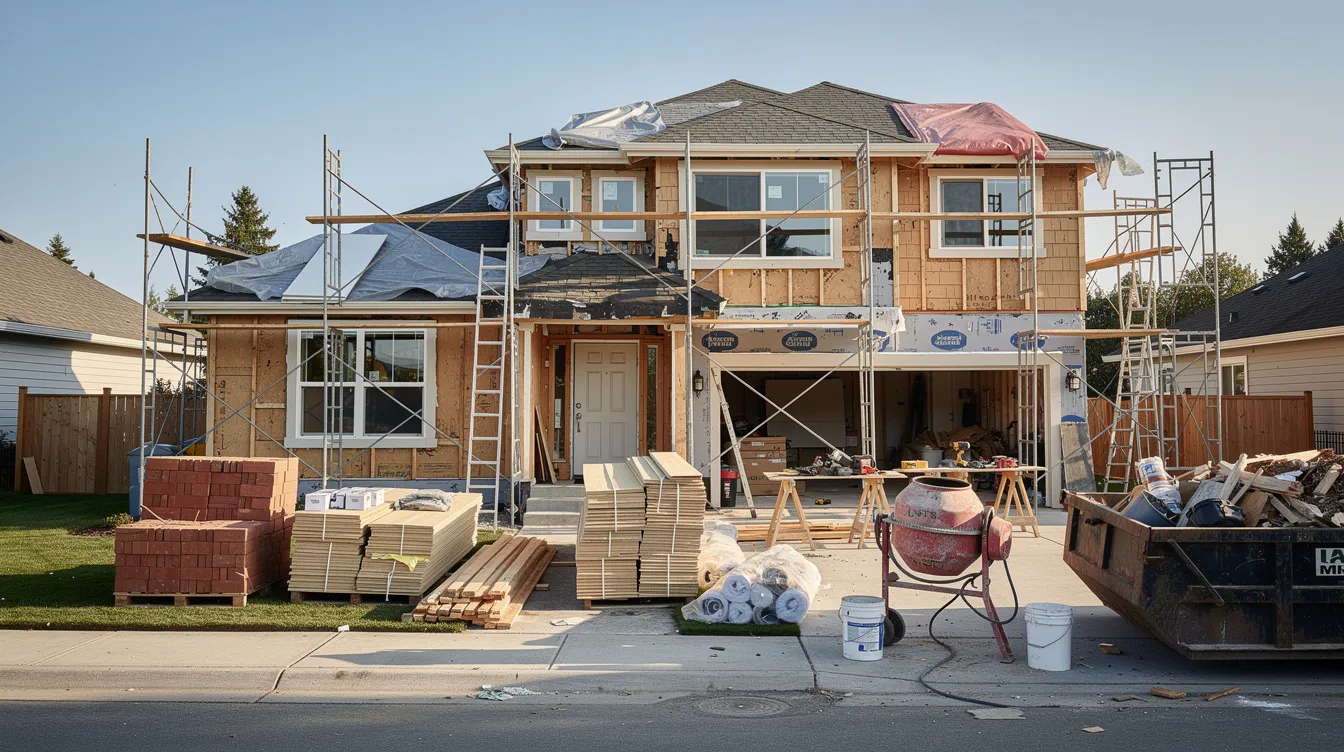
BRRRR strategy with DSCR takeout. The BRRRR strategy involves buying, renovating, renting, and refinancing properties. A property must be renovated and rented before refinancing in BRRRR. Once stabilized, investors use DSCR loans based on the newly renovated property value to do a cash out refinance, and investors can recover initial capital through that refi. BRRRR allows investors to scale without tying up cash in equity. For the initial acquisition, bridge financing or hard money handles the purchase, while Gap Funded covers earnest money deposits and short-term gaps.
Where the Real Funding Gap Is (and How Gap Funded Covers It)
The DSCR lender handles the loan amount-usually 75–80% of value. They won't solve the rest of your capital stack. There's nearly always a gap between what DSCR loans require and the cash you have on hand.
Typical funding gaps for real estate investors:
- Down payment on the DSCR loan
- Closing costs, origination points, and prepaids
- Rehab or value-add construction costs
- Required reserves and working capital
- Earnest money deposits to lock up deals quickly
Gap Funded's tools, in recommended order:
- Unsecured personal term loans for fast, lump-sum capital with no liens on the property
- 0% introductory APR business credit card stacking to cover materials, holding costs, and reserves while you preserve cash
- Asset-based options like HELOCs or tapping equity in an investment property when available
Realistic qualification: typical borrowers have a 650+ FICO, verifiable income or business revenue, and either personal credit capacity or equity in existing property. Gap Funded uses soft credit pulls to pre-qualify-no impact to credit to check options. We don't take equity in your deal and generally don't record a lien on the subject property, keeping the DSCR lender in first position.
Before you write offers, submit a quick application and funding review so your DSCR loan down payment is fully covered.
Example: Structuring a DSCR Loan Down Payment with Gap Funding
Here's a realistic 2026 scenario showing how the pieces fit together.
An investor identifies a $300,000 rental property. Monthly rent is $2,200, and the DSCR lender approves an 80% LTV maximum loan of $240,000 with a 1.20 DSCR. The loan estimate shows:
- Required 20% down payment: $60,000
- Estimated closing costs and prepaids: $9,000
- Reserve requirement (6 months PITIA at $1,600/month): $9,600
- Total liquidity needed: ~$78,600
The investor has $35,000 in own funds. That leaves a funding gap of roughly $43,600.
The capital stack:
| Source | Amount | Purpose |
|---|---|---|
| Own funds | $35,000 | Partial down payment + reserves |
| Seller concession (negotiated in purchase agreement) | $7,500 | Closing costs |
| Gap Funded unsecured term loan | $30,000 | Remaining down payment + liquidity gap |
| 0% business credit cards | $10,000 | Cosmetic rehab + initial vacancy buffer |
All borrowed payment funds are fully documented and disclosed to the DSCR lender, avoiding compliance issues. The investor closes with relatively low out of pocket cash-$35,000 instead of $78,600.
This structure lets a real estate investor acquire multiple rental properties in 12–18 months instead of waiting years to save every DSCR loan down payment in cash. That's the difference between owning one property and building a portfolio.
DSCR Loan Down Payment Checklist Before You Apply
Before submitting your DSCR loan application, gather these items to avoid surprises at the closing table.
Deal basics:
- Target purchase price range and property type (single-family, duplex, short term rental, distressed property)
- Estimated market rent (monthly rent from comps or AirDNA projections)
- Long-term vs. short-term rental strategy
DSCR lender prep:
- Expected maximum loan to value from your loan officer or mortgage broker
- Preliminary DSCR calculation using estimated taxes, insurance, and HOA
- Confirmed reserve requirement and payment requirements
Liquidity prep:
- Documented own funds for down payment, closing costs, and reserves across personal and business bank statements
- Gift letter and gift funds confirmation from any family member or eligible donor
- Seller concession amounts you'll request in purchase transactions
Gap Funded prep:
- Recent credit report or score estimate (650+ for most programs)
- Income or business revenue snapshot for unsecured and revenue-based programs
- Apply for a fast funding review and explore specific tools like gap funding or credit card stacking
Secure both a DSCR pre-approval from your lender and a gap funding approval from Gap Funded before you write offers. That way, every down payment requirement hurdle is already solved when the right deal hits the market.
Key Takeaways on DSCR Loan Down Payments and Next Steps
Here's what matters most:
- Most DSCR loans require 20% to 25% down in 2026. Lenders may allow lower down payments for strong profiles, down to 15%, but a legitimate 0% down DSCR purchase loan doesn't exist.
- Total cash needed goes beyond the down payment. Factor in closing costs, prepaids, and reserves to understand your real liquidity requirement.
- Real estate investors can stack own funds, gift funds with a gift letter, seller credits, cash out proceeds from an existing rental property, and HELOCs to build their capital without draining savings.
- Bridge financing, the BRRRR strategy, and creative deal structuring all reduce how much cash stays locked in any single deal.
Gap Funded specializes in filling the gap between what DSCR loans require and the cash you have-using unsecured term loans, 0% business credit card stacking, and other tools without taking equity in your deals.
Your next two steps:
- Talk with a DSCR lender or mortgage broker to understand your maximum loan to value and down payment requirement for your target property type.
- Submit a quick, no-obligation gap funding application to see how much of your DSCR loan down payment and closing costs we can cover.
Investors who master DSCR loan down payment strategy and stack Gap Funded capital alongside it don't wait for the next deal-they're already closing it.
Related Reading
This article is for educational purposes only and isn't financial, legal, tax, or investment advice. Credit and financing outcomes depend on your own situation. Talk to a licensed financial professional before making funding decisions for your business.