
DSCR Loan Guide for Real Estate Investors (and How Gap Funding Fills the Down Payment Gap)

DSCR Loan Guide for Real Estate Investors (and How Gap Funding Fills the Down Payment Gap)
Most real estate investors don't struggle to find a deal. They struggle to stack enough cash to close one. DSCR loans solve half of that problem by letting the property qualify itself. This guide covers exactly how they work, what you need, and how to fill the funding gap that sits between your loan approval and your closing date.
What Is a DSCR Loan?
A DSCR loan is a mortgage loan designed for investment properties where underwriting approval hinges on the property's cash flow rather than your personal income. No W-2s, no tax returns, no employment required. The lender's core question is simple: does this rental property generate income that comfortably covers the debt payment?
The key metric is the debt service coverage ratio, sometimes written as service coverage ratio DSCR. It measures whether monthly rental income covers the mortgage payment plus taxes, insurance, and any HOA dues. Because no personal income verification is required, these loans are classified as non-QM (non qualified mortgage) products, giving lenders flexible terms beyond what conventional financing options allow.
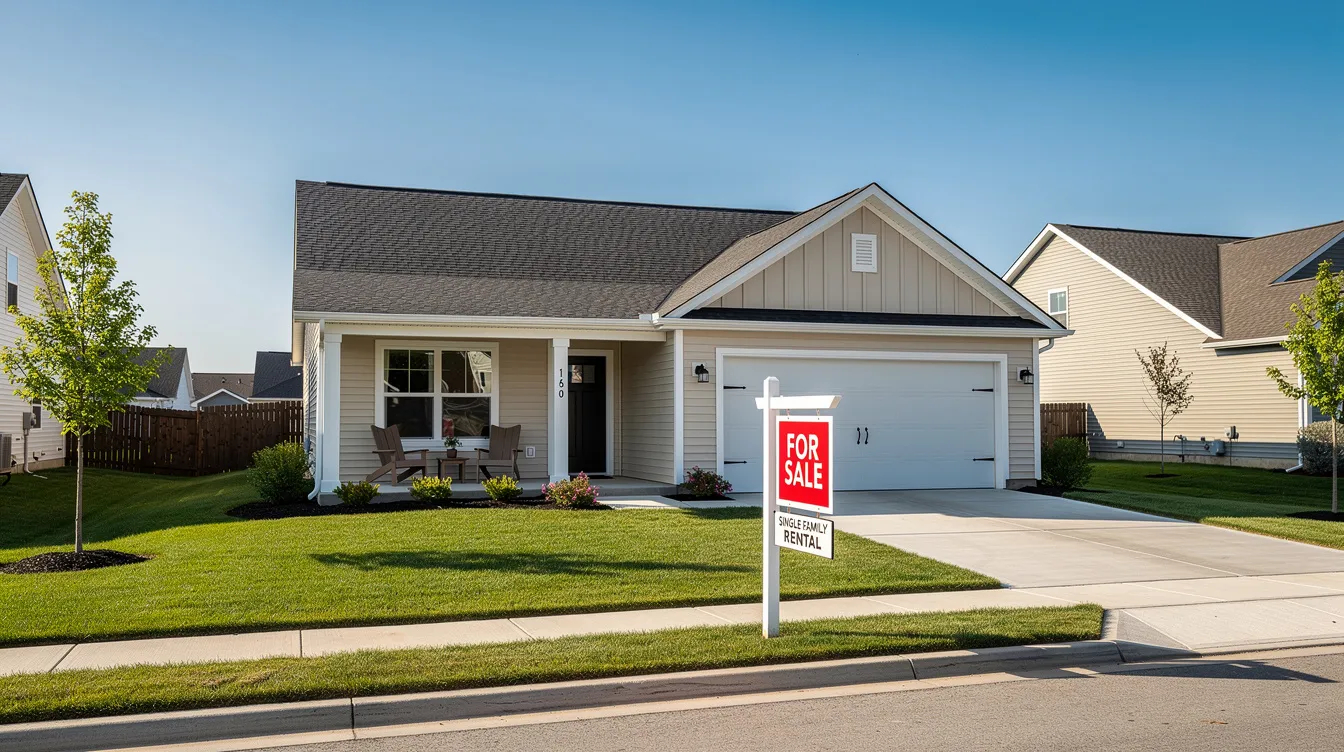
Typical allowed properties include single family rentals, 2 to 4 unit multifamilies, condos, townhomes, and short term rentals like Airbnb. Properties must meet specific cash flow requirements to qualify for DSCR loans. Worth noting: at Gap Funded, we are not the DSCR lender. We help real estate investors stack capital around a DSCR loan by providing gap funding for the down payment, closing costs, rehab, and reserves that the lender won't cover.
How Is Debt Service Coverage Ratio (DSCR) Calculated?
Lenders want to know one thing: can this property repay its debt obligations without the borrower's net operating income from a day job propping it up? The DSCR ratio answers that. Here is how DSCR is calculated:
DSCR = Net Operating Income (NOI) ÷ Total Debt Service
For residential rental property investors, most lenders use a simplified version: monthly rental income divided by PITIA (principal, interest, taxes, insurance, association dues). DSCR is calculated using expected rental income and mortgage debt, either from current leases or an appraiser's market rent schedule.
Concrete example: a property brings in $2,200 per month in rent and the PITIA is $1,800. That gives you a DSCR of 1.22, meaning the property's income generating potential exceeds its debt by 22%. A DSCR of 1.25 indicates that the property generates 25% more income than its debts, which is where most lenders start offering their best pricing.
How to read the number:
| DSCR | What It Means |
|---|---|
| Above 1.0 | Positive cash flow. A DSCR above 1.0 indicates sufficient rental income to cover the mortgage and then some. |
| Exactly 1.0 | A DSCR of 1.0 means break even cash flow. Nothing left for vacancy, repairs, or profit. |
| Below 1.0 | A DSCR less than 1.0 signifies that rental income does not cover mortgage payments. Expect larger down payment or reserves. |
Lenders prefer a DSCR of 1.0 or higher for loan approval, and most lenders prefer a DSCR between 1.20 and 1.25 or higher for approval with competitive rates. Some will go as low as 0.75 to 0.80, but only if you bring stronger credit, more equity, or heavier reserves to the table.
How Does a DSCR Loan Work in Real Life?
Here is a 2026 scenario. You find a single family rental listed at $400,000. To get a DSCR loan, the lender underwrites the deal around the property's expected cash flow, not your employment information or tax returns. That is why these loans can be a game changer for self employed borrowers, full time investors, and retirees whose taxable income on paper looks nothing like their actual wealth.
Typical borrower qualifications based on what I see across lenders today:
- DSCR loans typically require a minimum credit score of 660 (better pricing at 700+)
- DSCR loans typically require a down payment of 20% to 25%
- LTV is typically capped at 80% for DSCR loans
- Lenders often require cash reserves equivalent to 3 to 6 months of payments after closing
- Clean recent credit with limited late payments
The lender orders a property's rental analysis through the appraisal, pulling comparable market rents for long term rentals or historical booking data for short term rentals so they can determine ability to service the debt. DSCR loans can be structured under an LLC for liability protection, which is how most serious investors vest title. Common loan structures include 30 year fixed, 5/6 ARM, 7/6 ARM, interest only periods, plus purchase, rate and term refinance, and cash out refinances. Loan amounts generally run from $100,000 up to $2,000,000 to $3,000,000 depending on the lender and property type.
Who Are DSCR Loans For, and Which Property Types Qualify?
DSCR loans are built for real estate investors whose financial goals centre on building long term rental income, not purchasing a primary residence (this is not a first time home buyer programme). They are strictly for business purpose, non owner occupied real estate deals, not for primary residences.
These loans are ideal for first time investors who qualify based on strong credit but don't want their personal DTI ratio or employment history to cap how quickly they can scale. They are equally suited for experienced investors with a large rental portfolio who have already maxed out conventional Fannie and Freddie limits on financed properties and need additional non QM routes. Borrowers can qualify for multiple DSCR loans simultaneously, which is what makes them so effective for scaling.
DSCR loans can be used for single family and multi unit investment properties: 2 to 4 unit buildings, townhomes, condos (including some non warrantable condos), condo hotels, and even small apartment buildings with specialised lenders. They work for both long term rentals with 12 month leases and purchasing short term vacation rentals on Airbnb or VRBO, provided the projected or actual rental income supports the DSCR ratio. These loans are suitable for investors looking to scale their rental portfolios quickly, and DSCR loans can be used for properties with up to four units under standard residential programmes. DSCR loans can be used for multiple investment properties without the conventional loan caps getting in the way.
A BRRRR investor, for example, might renovate and lease a property, then refinance into a 30 year DSCR loan on the back end. They pull equity out, recycle that capital into the next acquisition, and repeat. The mortgage based qualification on the refi leg is purely about whether the property produces enough income to cover the debt, not whether the investor's C corp or personal return looks tidy.
Pros and Cons of DSCR Loans for Real Estate Investors
Every financing tool has trade offs, and DSCR loans are no different. Here is what I reckon matters most:
Pros:
- A DSCR loan qualifies based on rental income, not personal income, with less documentation than traditional loans
- No employment required or W-2 documentation needed to qualify
- Flexibility to finance multiple investment properties across varied property types
- Works across strategies: long term rentals, short term rentals, BRRRR, cash out refinances
- Ability to scale faster than with conventional mortgage restrictions and gift funds policies
Cons:
- Higher interest rates are common for DSCR loans compared to conventional mortgages (expect roughly 6.00% to 7.50%+ depending on profile)
- Larger required down payment, often 20% to 25%
- Strict attention to DSCR ratio, so marginal cash flow deals may not qualify
- Vacancies can negatively impact cash flow for DSCR loans, making the borrower cover shortfalls
- Many DSCR loans include prepayment penalties upon early sale or refinancing
Here is the thing most people miss: while DSCR loans open the door, many investors' real barrier is not qualifying. It is coming up with the down payment, closing costs, rehab budget, reserves, and working capital to get from accepted offer to stabilised rental. That capital stack gap is exactly where our funding tools complement a DSCR loan rather than replace it.
Using Gap Funded to Close the DSCR Funding Gap
You get the DSCR pre approval. The lender says yes. Then you look at your bank account and realise you still need a fair whack of cash: 20% to 25% down payment, closing costs, earnest money deposit, maybe some rehab, and 3 to 6 months of reserves. That is the gap we fill.
Our clients are typically real estate investors and small business owners with FICO in the 650+ range who are ready to buy or refinance an investment property but want to preserve cash and scale faster. We stack capital around your DSCR loan in a specific order, and the sequence matters:
- Unsecured gap funding first: Personal term loans and business credit card stacking at 0% APR for 6 to 21 months cover your down payment, closing costs, and initial rehab. No liens on the subject property, soft credit pull only. Gap funding moves fast, which is why we start here.
- Asset based capital second: HELOCs on your primary or investment property equity, or hard money for short term acquisition or rehab before the DSCR take out loan closes. These tap existing equity when timelines allow.
- Revenue based capital third: Business lines of credit or working capital loans for active operators with existing revenue who need to smooth cash flow during renovations or lease up.
Why that order? Unsecured term loans and 0% business credit cards can be obtained quickly with only a soft pull and no lien on the deal property, making them ideal for fast earnest money and down payment funding. HELOCs and hard money work when you have equity and a bit more runway. For investors consolidating older high interest debt before going into a DSCR loan, we can help restructure those obligations first so your DSCR options and profile look stronger.
Quick example: a first time investor in 2026 buying a $300,000 rental with a DSCR loan at 80% LTV uses Gap Funded to secure $60,000 in combined unsecured term loans and 0% business credit cards. That covers the 20% down payment, roughly $6,000 in closing costs, and $4,000 in light rehab. The property's rental income handles the repay on the DSCR loan. The gap funding gets paid down from cash flow and reserves over time.
How to Get a DSCR Loan and Build a Complete Capital Stack
Here is the practical roadmap from "interested" to "closed, cash flowing rental."
- Research DSCR lenders that work with rental property investors in your target market. Compare interest rates, minimum DSCR, and LTV caps.
- Run your numbers first. Estimate market rent, estimate PITIA using real local taxes and insurance, then compute the projected DSCR ratio before you ever apply. If the property cannot generate enough income at the loan terms available, walk away and find a deal that can.
- Check your credit. DSCR loans typically require a minimum of 660, but competitive pricing kicks in at 700+. Know your score before you start.
- Compare your DSCR options to conventional investment property loans, private money, and hard money. DSCR loans shine for buy and hold, BRRRR exit financing, portfolio refinances, and cash out refinances to fund more deals. Traditional loans might cost less but come with rigid DTI limits and documentation headaches.
- Apply for gap funding early. Ideally right after an accepted offer or even at the pre approval stage, so your down payment, rehab, and working capital plan is locked in before appraisal and closing. Many of our gap funding solutions work best when you apply before you need the cash, not the night before closing.
Realistic qualifications based on what we see: FICO around 650+, either verifiable income, business revenue, or existing home or investment equity. We can often structure options even for newer investors if their credit is solid.
If DSCR loans look like the right fit for growing your real estate portfolio but upfront capital is the bottleneck, we can help you sort that out, mate. Head to gapfunded.com/apply, complete the brief online form (soft pull only, no impact to your credit), and get a custom capital stack plan for your next rental or BRRRR project.
Related Reading
This article is for educational purposes only and isn't financial, legal, tax, or investment advice. Credit and financing outcomes depend on your own situation. Talk to a licensed financial professional before making funding decisions for your business.