
Collateral Loans on Property: How They Work for Real Estate Investors and Small Business Owners

Collateral Loans on Property: How They Work for Real Estate Investors and Small Business Owners
Introduction: What Is a Collateral Loan on Property?
A collateral loan on property is a secured loan where you pledge real estate as a guarantee that you'll repay the debt. If you don't, the lender enforces its claim. Simple as that. Collateral reduces lender risk, which is why these loans carry lower interest rates and larger loan amounts than unsecured alternatives.
This article is written for real estate investors doing fix-and-flip deals, BRRRR strategies, and short-term rentals, plus small business owners looking to acquire, grow, or consolidate debt. Common examples of collateral loans include mortgages, home equity loans, and home equity lines of credit (HELOCs). Using collateral can lower interest rates on loans because the lender has a physical asset backing the deal.
I run Gap Funded. We're a funding intermediary that helps investors and business owners stack capital around these collateral loans. We don't take equity in your deal, and we don't place liens on the property you're buying. We fill the gap between what the primary lender covers and what you actually need.
How Collateral Loans on Property Work
When a lender issues a collateral loan, they record a lien against the property title. That lien is their legal right to seize and sell the property if the borrower defaults. Collateral secures loans by backing them with physical assets, and the lien stays on title until you've repaid in full.
Here's how the process typically runs:
- You apply and submit financials, credit history, and property details.
- Lenders may require property appraisals before loan approval, establishing the market value.
- Underwriting assesses loan to value (LTV), your credit score, reserves, and property type.
- Loan approval; the lender drafts a loan agreement and records the lien.
- Funds disburse (loan proceeds go toward purchase, rehab, or cash out).
- You make monthly payments on the agreed repayment terms.
- Once the loan balance hits zero, the lender releases the lien.
Lenders typically require a clear title for the collateral property. Title defects, unresolved liens, or boundary disputes can kill a deal before underwriting finishes. Collateral loans often require upfront costs including appraisal and title fees, so budget for those early.
Loan-to-value ratios assess risk in secured loans. A 70% LTV on a $400,000 property means the maximum loan amount is $280,000. The remaining $120,000 is the borrower's equity or gap to fill. Investment property loans often cap LTV at 75% to 80%, compared to 95%+ for owner-occupied purchases. That gap between what the lender funds and what you need is where things get interesting.
Collateral reduces lender risk, increasing loan approval chances. But even with a strong financial standing, lenders still cap exposure based on collateral value and the property's risk profile.
Types of Property You Can Use as Collateral
Not all properties are treated equally. Lender appetite, allowable LTVs, and interest rates shift based on what you're pledging collateral with.
- Primary residences: best pricing, highest LTV caps (up to 95%+ on conforming loans). Lenders view these as lower risk because borrowers rarely walk away from their own home.
- Second homes: slightly stricter; rates typically run +0.40% to +0.50% above primary residence loans.
- Rental properties and small multifamily (2 to 4 units): accepted by DSCR and investment lenders, but LTVs drop to around 75% to 85% and rates run +0.75% to +1.25% higher than owner-occupied.
- Larger multifamily and mixed-use buildings: commercial underwriting territory; lower LTVs, stronger cash flow requirements, more paperwork.
- Commercial (retail, warehouse, office): commercial properties are also accepted as collateral for loans, though expect conservative LTVs and higher margins.
- Land and lots: open lands can serve as collateral if they are non-agricultural, but most lenders reduce LTV or refuse entirely because there's no income stream and valuations are volatile.
- Vehicles: while not property, vehicles are commonly used as collateral for auto loans and car loans, a separate asset class from real estate.
Residential properties can be used as collateral for loans across nearly every lending category. Properties with multiple owners can be pledged as collateral, though all parties typically need to sign off. Clear title, insurable condition, and a marketable location in an established neighbourhood with proper zoning all influence how much equity you can access.

Common Collateral Loans on Property: Mortgages, HELOCs, and Home Equity Loans
Three main loan types tie directly to real estate. Each works differently.
Mortgages use the property being purchased as collateral. Terms run 15 to 30 years, fixed or adjustable rate. Owner-occupied purchases allow LTVs of 80% to 96.5% depending on the programme. Investment property mortgages usually require 20% to 25% down, restricting LTV to 75% to 80%. Secured loans can include flexible repayment terms, often lasting many years, which is why a home loan remains the most common way Australians and Americans alike buy property.
Home equity loans use a borrower's home as collateral. Home equity is the difference between a home's market value and mortgage balance. These are fixed-rate, lump-sum products that allow borrowing against property value, typically up to a combined LTV cap of 80% to 85%. Home equity loans typically offer lower interest rates than unsecured loans. Home equity loans can provide funds for home improvements or education, but investors commonly use them for down payments on rentals or debt consolidation. As of September 2026, the average home equity loan rate sits at roughly 7.69% fixed.
Home equity lines of credit (HELOCs) work as revolving credit secured by home equity. Home equity lines of credit allow borrowers to draw funds as needed during a draw period, typically around 10 years, followed by a 15 to 20 year repayment period. Rates are variable; the average HELOC rate is around 7.53% as of September 2026. Home equity can be leveraged as collateral for loans in this way, giving investors ongoing access to capital. If you're exploring a HELOC for investing, we've built a HELOC calculator that can help model different scenarios.
Secured vs. Unsecured: Where Collateral Loans Fit in the Capital Stack
Secured loans are backed by collateral. Unsecured loans are not. Credit cards, unsecured personal loans, and most business lines of credit fall into the unsecured category. A secured personal loan or a home loan falls into the secured category.
Banks prefer collateral loans for large amounts and longer terms because collateral reduces lender risk, leading to lower interest rates and greater confidence in recovery if the borrower fails to repay. Unsecured loans offer speed and flexibility but come with higher rates, lower limits, and no risk of losing a physical asset.
For a real estate deal, the capital stack might look like this: a primary lender provides a mortgage at 70% to 80% LTV. That leaves 20% to 30% of the purchase price, plus closing costs, rehab, and reserves. Offering collateral through the mortgage gets you favourable loan terms on the big chunk. The remaining gap often gets filled with unsecured tools like 0% business credit card stacking or personal term loans, which is where gap funding enters the picture.
The trade-off is real. A secured loan creates lower risk for the lender but greater risk for you, because you risk losing the asset if you default. Unsecured options are more cost effective for short-term, smaller needs where pledging collateral would be a bad idea.
Credit Requirements for Property-Backed Collateral Loans
Even though collateral acts as a safety net for lenders, your credit score and credit reports still matter. A lot.
DSCR lenders in mid-2026 typically require a minimum FICO of 620 to 660, with the best pricing and LTVs reserved for scores above 700. Conventional mortgages follow similar floors. HELOCs and home equity loans on investment properties often demand 680+ for loan approval.
Underwriters review full credit reports: payment history, on time payments track record, credit utilisation, derogatories, and length of credit history. Severe events like a recent foreclosure or bankruptcy can disqualify borrowers from most programmes, or impose waiting periods of 24 to 36 months.
Collateral loans are easier to obtain for borrowers with lower credit scores if sufficient property equity exists; a hard money lender, for example, cares more about collateral value than your FICO. But even hard money has limits if your financial situation shows recent defaults.
Gap Funded typically works best with borrowers at 650+ FICO. Before starting any major loan application, pull your credit reports from all three bureaus and dispute errors. One corrected tradeline can shift your score enough to change your loan offer and loan eligibility.
What You Can Use a Collateral Loan on Property For
Collateral loans are flexible. Common uses for our audience include:
- Fix-and-flip projects and BRRRR acquisitions
- Short-term rental (Airbnb) launches
- Business acquisitions and startup working capital
- Major renovations and capital improvements
- Debt consolidation: replacing high-interest credit cards, auto loans, and personal loan balances with one lower-rate, property-backed loan repayment schedule
Some lenders restrict how funds can be used. You may not be able to tap primary home equity for business purposes, or certain insurance policies and property conditions may limit loan proceeds. Speculative land purchases are often excluded.
Pairing collateral loans with other valuable assets and tools is common. For example: use $100,000 in home equity to cover down payment and rehab on a $350,000 duplex, then use 0% credit card stacking for earnest money and supply purchases, and a business line of credit for holding costs and reserves. That way you're deploying more funds across the deal without pledging additional collateral or giving up equity.
Risks and Downsides of Collateral Loans on Property
I'm not going to pretend these are risk-free. They're not.
The primary risk of collateral loans is foreclosure if loan payments are missed. If the borrower defaults, the lender can seize and sell the property, which means defaulting on a secured loan can lead to asset repossession. Borrowers risk losing their home if they default on a home equity loan. That's a fair whack of downside.
Property values can decline, potentially leaving borrowers with negative equity, meaning you owe more than the property's market value. Variable-rate instruments like HELOCs can reset higher, straining cash flow. Balloon payments or interest-only structures create refinancing risk down the road.
Using property as collateral can limit future borrowing options. Once you've maxed out your home equity or have liens on multiple properties, your lending risk profile changes and lenders get cautious. And collateral loans often have longer approval processes than unsecured loans, which can cost you a deal in a competitive market.
Moving unsecured debt into a secured position (like consolidating credit card balances into a HELOC) lowers your rate per dollar, but converts debt you could walk away from into debt that threatens your home. That's not always a bad idea, but it demands honest cash-flow projections factoring in vacancy, rehab overruns, and rate resets.
Where the Funding Gap Appears in Collateral Loans on Property
Primary lenders rarely finance 100% of a project's true cost. The gap shows up in predictable places:
- Down payment (15% to 25% on investment properties)
- Earnest money deposit (EMD)
- Closing costs (typically 2% to 5% of purchase price)
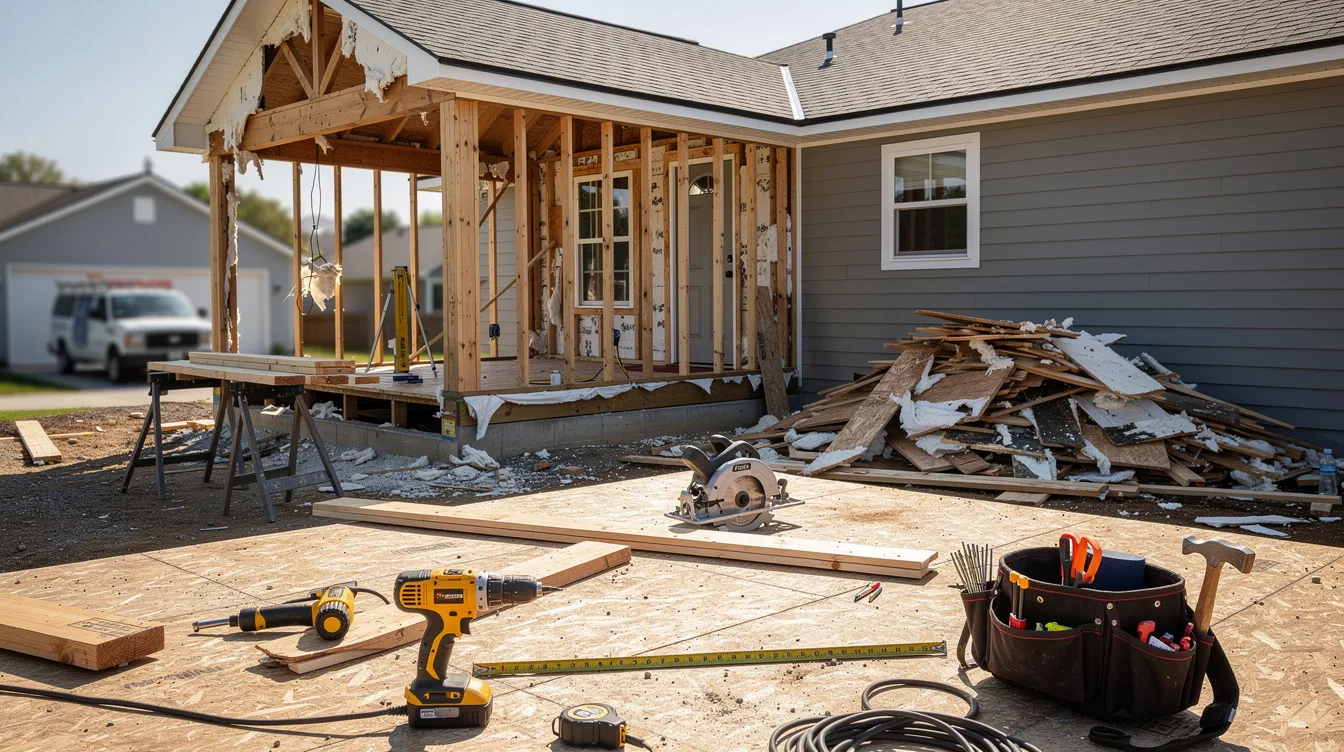
- Rehab and renovation budget
- Holding costs (taxes, insurance, utilities, vacancy)
- Reserves required by the lender
- Contingency funds
Here's a concrete scenario. You're buying a $300,000 fix-and-flip. The hard money lender covers 85% of purchase and 100% of rehab draws on schedule. That leaves $45,000 for down payment. Add $10,000 in closing costs, $5,000 in reserves, and $10,000 for holding costs. Your gap is roughly $70,000.
Even investors with strong equity and solid credit history often have their liquidity tied up in existing projects. Others have plenty of home equity but don't want another lien on their primary home, or can't close a HELOC fast enough to lock a competitive deal. A savings account with $70,000 sitting idle isn't something most active investors maintain.
How Gap Funded Complements Collateral Loans on Property
Gap Funded plugs the funding gap around collateral-based loans for investors and small businesses. We don't replace your mortgage or hard money lender. We sit beside them in the capital stack.
The tools, in the order we typically layer them:
- 0% business credit card stacking: fast, flexible capital for EMDs, supplies, and short-term needs. Works well for short-cycle flips. Learn more about credit card stacking here.
- Unsecured personal term loans: larger fixed sums for down payments, defined rehab budgets, or closing costs. Predictable monthly payments over a set term.
- Business lines of credit and working capital: ongoing access for repeat deal flow, operating expenses, and reserves.
Order matters because revolving 0% credit is cheapest for short cycles, term loans give predictability for defined budgets, and lines of credit support the ongoing business. Applying out of sequence can knock out later approvals.
Realistic qualification: credit score of 650+, verifiable income or business revenue, and ideally some property equity or rental portfolio history. We do soft credit pulls during the funding review, which means no impact to your credit just to see options. No liens on the deal property. No equity splits.
Collateral Loans vs. Using Gap Funding for Down Payments and Debt Consolidation
Use a collateral loan when you're holding property long-term, rents are stable, your exit plan is clear, and you have enough equity to qualify at a favourable loan to value ratio. A HELOC at 7.53% variable beats a personal loan at 10% to 12% if you're comfortable with the lien and the timeline.
Use unsecured or gap funding when speed matters (locking a deal in 3 to 7 days), when collateral loans won't cover the needed use (down payment, reserves, EMD), or when you want to avoid encumbering your primary residence. Short-term flips, high-velocity wholesaling, and gator lending deals often fit this profile.
Some clients use Gap Funded tools first to execute a deal, then refinance into a long-term DSCR mortgage or home equity loan once the property is stabilised. The unsecured capital bridges the timing gap; the collateral loan provides the permanent structure.
For debt consolidation, a mix of home equity (secured, lower rate) and unsecured term loans can roll high-interest credit cards and auto loans into a manageable structure without putting your entire financial situation on one property.
Hard money lenders, banks, and credit unions are the right first stop for large, low-rate collateral loans. Gap Funded is designed to sit beside those loans in the capital stack, not replace them.
How to Prepare and Apply: Collateral Loan Plus Gap Funding
Start preparing for both the collateral loan and gap funding at the same time. Waiting for one approval before starting the other costs you weeks.
For the collateral loan, gather: property title, purchase contract, rehab budget and schedule, rent rolls (if rental income exists), property insurance quotes, personal financials (tax returns, bank statements, credit reports), and any security deposit or reserve documentation the lender requires.
For Gap Funded's review, know your current credit score, list all existing credit limits and balances, estimate how much funding you need for down payment, rehab, reserves, and closing costs, and have a clear use-of-funds plan showing which dollars come from which source.
Our application is a soft pull with no impact to credit. You can submit your details here to see what non-dilutive capital you can stack around your existing or planned collateral loan.
Key Takeaways and Next Steps
- A collateral loan on property uses real estate as loan collateral, reducing the lender's risk and giving you access to larger loan amounts at lower interest rates. The trade-off: if the borrower fails to repay, the lender seizes the asset.
- Collateral loans almost never cover 100% of a project's true cost. The gap between what lenders fund and what you need is where deals stall or fall apart.
- Real estate investors and business owners should think in terms of a capital stack: primary collateral loan plus gap funding for down payment, rehab, reserves, and working capital.
- Gap Funded works best for borrowers with roughly 650+ credit score and a clear investment or business plan. No equity splits. No liens on the deal property. Soft credit pull only.
If you've got a deal in front of you and the numbers don't quite close, submit a quick application and we'll show you what's available. Soft pull, no obligation, and we move in days, not months.
Related Reading
This article is for educational purposes only and isn't financial, legal, tax, or investment advice. Credit and financing outcomes depend on your own situation. Talk to a licensed financial professional before making funding decisions for your business.