
Business Funding: How to Find, Stack, and Close the Right Capital for Your Small Business


How Business Funding Really Works in 2026
Most small business owners don't fund a deal with one product. They patch together two, three, sometimes four sources of capital and hope the timing works out. Business funding in 2026 falls into four main categories: self-funding (bootstrapping with personal savings, revenue, or credit cards), debt financing, equity financing, and grants. The trick is knowing which combination actually fits your deal, your timeline, and your risk tolerance.
The post-COVID lending environment has shifted. Interest rates climbed from 2023 onward, and while they've eased slightly, credit standards remain tight. According to the 2025 Small Business Credit Survey, only 41% of firms that applied for financing got everything they asked for. Another 36% received partial approvals, and 24% were denied outright. That means nearly six in ten applicants walked away with a funding gap.
Here's the short version of what this guide covers:
- Traditional bank and SBA loans, federal funds, and disaster loans
- Community development financial institutions and non profit lenders
- Alternative and online lenders, private capital, grants
- The funding gap most owners face and how gap funding and capital stacking can close it without equity splits
Core Business Funding Options You Should Understand First
Think of this as your funding map. Each option has a different speed, cost, and qualification bar. Most small business owners end up combining two or three of these rather than relying on one.
- Bank term loans: Equipment, real estate, expansion. Rates around 6% to 12% APR. Slow underwriting (weeks to months). Strong credit and collateral required.
- SBA loan programs (7(a), 504, Microloans): The Small Business Administration offers 7(a), CDC/504, and Microloans. Rates roughly 10% to 13.5%. Cheapest government backed debt, but SBA-backed loans can take 3 to 4 months for approval and extensive documentation is required.
- Business lines of credit: Revolving draw for cash flow swings, inventory, seasonal demand. Rates 8% to 15%+ depending on secured vs unsecured.
- Business credit cards: Short term spending, marketing, supplies. Promotional 0% intro periods (6 to 12 months). Standard rates afterward: 20% to 30%+.
- CDFIs and non profit lenders: Mission driven, more flexible underwriting, smaller loan amounts. Serve underserved communities and minority owned businesses.
- Online and fintech lenders: Fast (1 to 3 business days). Rates 8% to 30%+ APR. Online lenders can provide faster funding compared to traditional bank loans but usually carry higher interest rates.
- Angel investors and venture capital: Angel investors and venture capitalists provide capital in exchange for equity ownership. Large sums of money can be acquired through venture capital for scalable startups with high growth potential. Ignoring equity dilution risks might result in a loss of ownership you can't undo.
- Crowdfunding: Crowdfunding raises small amounts of money from the public via platforms like Kickstarter or Indiegogo. Alternative funding sources like these work for businesses without substantial revenue, but they won't close a real estate deal next Tuesday.
Government and SBA Funding Opportunities (7(a), 504, Microloans)
Federal funds and SBA backed loans are often the cheapest debt capital available, but they're the hardest to qualify for and the slowest to close. Lenders evaluate creditworthiness using the "Five C's of Credit": Character, Capacity, Capital, Collateral, and Conditions.
Eligibility in plain English:
- For-profit, U.S. based business meeting SBA size standards
- Acceptable personal credit and character (background checks, no recent bankruptcies)
- Sufficient equity injection or down payment (typically 10% to 20%)
- Demonstrated ability to repay from business cash flow
SBA 7(a):
- Flexible use: acquisitions, working capital, real estate, equipment
- Max loan size up to $5 million; terms up to 25 years for real estate
- Even with an SBA guarantee, the lender still wants your skin in the game. Expect a 10% to 20% down payment
- Part of the broader SBA guaranteed loan program that delivered $56 billion in capital in FY2025
SBA 504:
- Long term, fixed rate financing for owner occupied real estate and major equipment
- Requires a Certified Development Company participation and 10% to 20% down
Microloans:
- Up to $50,000 administered through non profit lenders
- Best for very small businesses, startups, childcare centres, and seasonal operations
Grants reality check: There are very few federal grants to start a business as free money. SBA offers competitive grant funding through SBIR and STTR programs for research and innovation, but most federal "funding opportunities" listed on Grants.gov are loans, contracts, or matching programs, not cheques in the post.
Federal Funds, Disaster Loans, and Government Contract Driven Capital
Beyond SBA loans, federal funds reach small businesses through disaster relief, USDA programs, and government contract support.
- SBA disaster loans: Activated when a declared disaster area is established by federal or state authorities. SBA provides disaster loans during times of crisis with terms up to 30 years and lower interest rates than commercial products. Funds cover business interruption, repairs, and payroll; they can't be used for speculative expansion. Direct loans from SBA go straight to eligible businesses in affected areas.
- USDA programs: USDA provides loans and grants for rural business development and growth. Their Business and Industry loan guarantees support working capital, equipment, and real estate for businesses located in rural communities where traditional banks often won't lend.
- Government contract financing: Companies that win federal or state contracts often need upfront capital for materials, payroll, and mobilisation before milestone payments arrive. Programs exist to help cover export related costs and contract performance, but they rarely fill all timing gaps. Payments from government contracts lag, sometimes by months.
In every case, strict eligibility requirements apply, and you'll likely still need additional funding to cover mobilisation costs, retainers, or the weeks between spending money and getting paid.
State, Local Support, and Community Development Financial Institutions (CDFIs)
State economic development agencies, local support organisations, and community development financial institutions expand funding opportunities well beyond what federal programs and traditional banks offer.
What CDFIs are: CDFIs are non-profit lenders specialising in community development. They focus on lending to disadvantaged businesses and provide easier access to loans for underserved communities. CDFIs offer low interest rates and mentoring services alongside their financial products, and they provide loans to underserved communities with favourable terms that fintech lenders can't match.
Typical CDFI products:
- Microloans and small working capital loans (under $50,000)
- Equipment funding and sometimes real estate loans
- Technical assistance and business development support alongside capital
- More flexible underwriting than banks, though still paperwork heavy
State and local examples:
- The Texas Small Business Credit Initiative allocated $472 million for small business loans, grants, and technical assistance. The Texas Workforce Commission also offers Skills for Small Business grants for workforce training.
- Empire State Development in New York runs loan programs and financial assistance for small manufacturers, tourism operators, and businesses in underserved communities.
- Invest Atlanta provides loans up to $5 million for minority owned businesses, and Invest Atlanta offers gap funding starting at $100,000 for qualifying projects.
The catch: while CDFI and local programs often beat fintech on rate, their processes run slowly. If you're chasing a deal that closes in two weeks, a CDFI application won't save you. That timing gap still needs filling.

Private, Corporate, and Diversity Grants: Where "Free Money" Really Fits
Most business funding comes as debt, not grants. But real grant programs exist, and they're worth knowing about, if you set expectations correctly.
Major grant categories:
- National corporate contests (FedEx Small Business Grant, Visa's Everywhere Initiative)
- Local foundation grants and city level competitions
- Industry specific awards (tech, food service, sustainability)
- Diversity focused small business grants for women owned, minority owned, and veteran owned businesses, supporting job creation and economic opportunities in underserved areas
Timing reality: Grant cycles run quarterly or annually with 60 to 120 day review windows. Grants.gov catalogues thousands of federal grants for small businesses, but the Governor's Office or state portal in your area will have local competitions too. Trade shows and industry conferences sometimes announce corporate grant rounds.
Where grants fit: R&D, innovation, marketing, workforce development. They reduce future borrowing and support long term business development. They do not close a real estate deal next month or cover this week's payroll. Treat them as supplemental funding opportunities, not your primary capital source. Many startups rely on personal funding or contributions from family and friends during early stages while waiting for grant outcomes; bootstrapping involves using personal savings, revenue, or credit cards to fund a business in the meantime.
The Funding Gap: Why Solid Businesses Still Come Up Short
The funding gap is the difference between what your primary lender approves and the total cash you actually need to close and operate. Down payment, closing costs, rehab, working capital, equipment, inventory, contingency reserves: these costs add up fast, and lenders rarely cover all of them.
Common scenarios:
- An SBA lender approves 80% of a business acquisition but requires a 20% equity injection. The buyer doesn't have $60,000 sitting in a savings account.
- A hard money lender funds 80% of a $200,000 fix and flip purchase ($160,000), but rehab costs $50,000, earnest money runs $5,000, closing costs hit $2,500, and you need $5,000 in reserves. Total gap: roughly $62,500.
- A bank declines a line of credit for a startup with under two years of trading history and less than $20,000 per month in revenue.
The Kansas City Fed's lending survey confirmed that while interest rates for new term loans decreased slightly in late 2025 vs 2024, credit quality requirements tightened. Lenders want stronger profiles, more collateral, and more equity. Cash flow is essential to ensure timely repayments of loans or debt financing, and lenders scrutinise it harder than ever.
This is where capital stacking and specialised gap funding solutions close the difference without giving up equity.
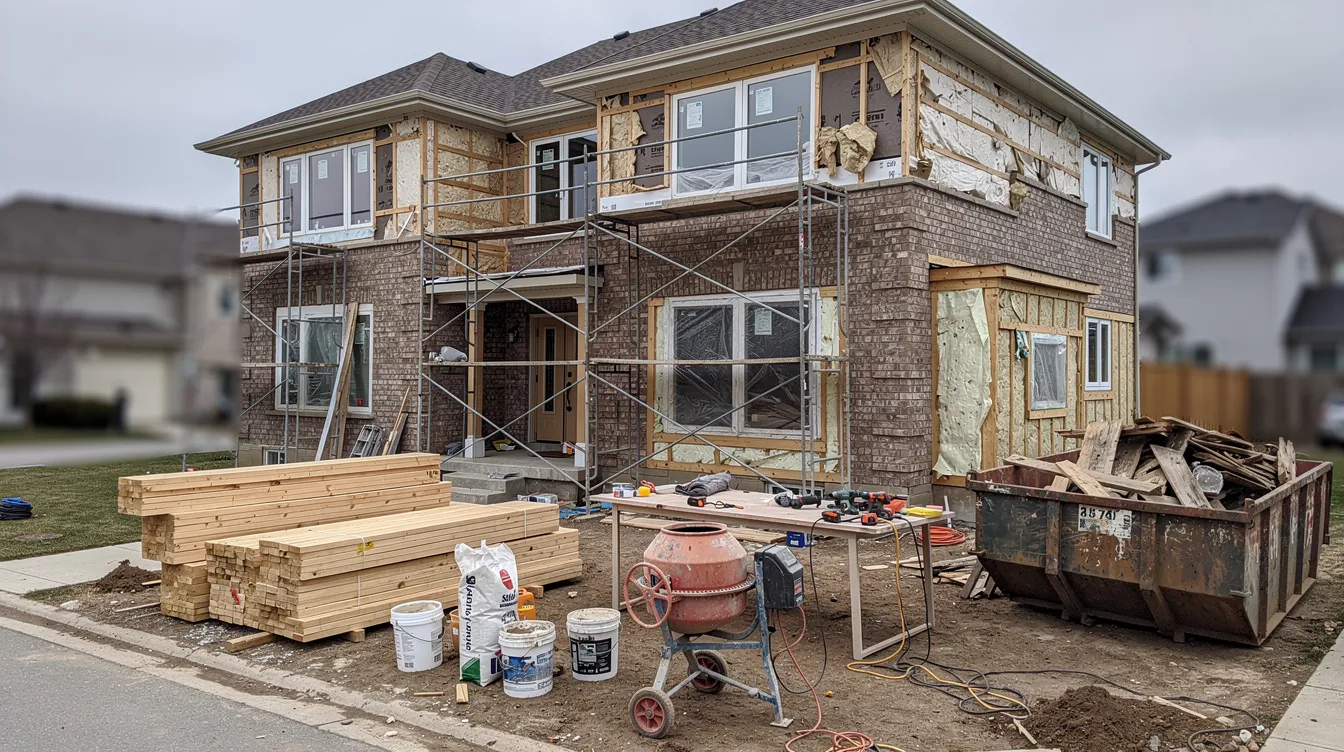
How Gap Funded Closes the Gap with Smart Capital Stacking
Gap Funded doesn't replace your primary lender. We fill the shortfall between what they fund and your real cost to close and grow your business. Debt financing allows businesses to retain 100% ownership while requiring repayments with interest; that's the core principle behind everything we do. No equity splits, no liens on your deal property.
Capital stacking means combining different funding tools around a core loan or mortgage. The order matters because each application affects your credit profile and approval odds for the next one.
Our tools, in the sequence we typically deploy them:
- Unsecured personal term loans: Fast lump sum capital for down payment, earnest money, or closing costs. Deployed first because they establish the base of the stack.
- 0% business credit card stacking: Promotional interest free periods (6 to 12 months) for flexible rehab, inventory, or marketing spend. Applied second because card approvals benefit from the term loan already being in place.
- Business lines of credit and working capital facilities: Revolving credit for ongoing cash flow swings, seasonal demand, or operational ramp ups.
- HELOC on investment property or primary residence: For investors with equity (typically 15% to 20% minimum, credit score 680+, DTI under 43%). Deployed last because it's secured against a separate asset and has the longest underwriting timeline.
Realistic qualifications: Typically 650+ FICO, verifiable income and/or business revenue, or accessible equity in a home or investment property. Compare that with SBA's demand for two years of financials, collateral, and months of processing.
Personal risk tolerance must be assessed when considering funding options that involve personal guarantees. Control and ownership refer to how much decision making power an entrepreneur is willing to give up for funding; with Gap Funded, the answer is none.
Ready to see what you qualify for? A soft credit pull at gapfunded.com/apply takes about two minutes with no impact to your credit.
Specific Funding Scenarios: Real Estate Investors, Startups, and Existing Businesses
Different business models hit the funding gap in different ways. Business stage and risk profile should match the funding source's requirements and expectations.
Real estate investors (fix and flip, BRRRR, short term rentals):
Hard money or DSCR lenders cover 80% to 90% of purchase price but rarely fund rehab overages, holding costs, furnishing, or contingency. Gap Funded's unsecured term loans and 0% card stacking fill that gap without touching the property with a lien. For Texas based investors, our guide on fix and flip loans in Texas breaks down the numbers further. Gap funding can cover down payments and closing costs, and gap funding is available for real estate investors and contractors.
Startups and business acquisitions:
SBA 7(a) or seller financing might cover most of the purchase, but banks still require 10% to 20% down and post close working capital. Gap funding can assist new businesses before they qualify for traditional loans, especially before they hit the two year, $20,000 per month revenue threshold most business lenders require. Effective preparation for investors includes having a solid business plan and financial statements ready before approaching any funder.
Existing small businesses looking to expand:
Opening a new location, scaling marketing, hiring staff. A bank loan covers leasehold improvements but not the working capital to ramp up inventory or payroll. Supplementing with Gap Funded's term loans and lines of credit covers that ramp up without equity dilution. Successful funding strategies depend on the business stage, capital needs, and willingness to exchange equity.
Merchant cash advances and revenue based financing offer speed (24 to 72 hours), but factor rates of 1.10x to 1.49x and daily or weekly repayment holdbacks can strain cash flow during slow months. They work for certain situations; they're expensive compared to structured term loans over the same dollar amount.
Comparing Cost: Interest Rate vs. Speed, Flexibility, and Risk
Chasing the lowest interest rate sounds smart until a 90 day SBA underwriting process costs you the deal. Cost of capital includes the total expense of funding, including interest rates, fees, and equity given up; APR alone doesn't tell the full story.
| Funding Type | Typical APR/Cost | Speed | Collateral Risk | Flexibility |
|---|---|---|---|---|
| Bank term loan | 6% to 12% | Weeks to months | High (secured) | Restricted use |
| SBA 7(a) | 10% to 13.5% | 30 to 90+ days | Moderate (guarantee) | Flexible |
| Gap Funded stack | Varies by tool | 1 to 14 days | None on deal property | High |
| Fintech/online | 8% to 30%+ | 1 to 3 days | Varies | Moderate |
| MCA | 1.10x to 1.49x factor | 24 to 72 hours | Revenue based | Low |
A "cheap" SBA loan requiring a large cash injection and three months of waiting can cost you more than a blended stack that closes the deal this week. Once you have multiple products outstanding, debt consolidation can clean up high cost balances and simplify payments.
Qualifying and Preparing: How to Improve Your Eligibility Fast
Improving your personal FICO, cleaning up credit utilisation, and organising documents can open more funding options within 30 to 90 days.
- Pull your credit reports (personal and business). Correct errors. Resolve small derogatory items.
- Lower credit card utilisation below 30%, ideally below 10%. This single move can shift your score enough to qualify for better terms.
- Compile documentation: Two years of tax returns (if available), recent bank statements, profit and loss statements. Clean books open doors.
- Know your thresholds: Many SBA, CDFI, and bank programs prefer two years in business and consistent monthly revenue. Many RBF and MCA providers require $10,000 to $15,000+ per month.
- If you don't meet traditional standards today, you can still qualify for startup capital through unsecured term loans and 0% card stacking with 650+ FICO and verifiable income. Gap Funded steps in earlier than most business lenders for newer entities.
- Plan a capital roadmap: Start with fast, flexible tools to launch or close a deal. Graduate into lower rate, longer term funding or consolidation as the business matures.
Public bodies, entrepreneurs, companies that operate across industries, and applicants at every stage benefit from this same preparation sequence.
Putting It All Together: Next Steps to Fund and Grow Your Business
Effective business funding isn't about finding one perfect loan. It's about understanding all your funding options, identifying your specific gap, and building a capital stack that gets you to closing day with reserves intact.
Your action plan:
- Clarify your total project cost and exact shortfall: down payment, closing costs, rehab, working capital, inventory, contingency
- Map your existing offers (bank, SBA, hard money, CDFI, grants) and their timelines
- Decide which mix of Gap Funded tools (term loans, 0% card stacking, HELOC, lines of credit) fills the gap
- Prepare documentation and improve eligibility using the checklist above
- Execute now, then plan for later refinancing or debt consolidation as income and revenue stabilise
Government programs, CDFIs, and grants fit your long term growth strategy. For the deal that needs to close this month, fast, non-dilutive capital from Gap Funded is the bridge that lets you actually close and operate.
I reckon the best funding stack is the one that gets you across the line with cash left over. If you want to see what your stack looks like, run a quick pre-check at gapfunded.com/apply. Soft pull only, no impact to your credit, and no equity required. Takes about two minutes, mate.
Related Reading
This article is for educational purposes only and isn't financial, legal, tax, or investment advice. Credit and financing outcomes depend on your own situation. Talk to a licensed financial professional before making funding decisions for your business.