
100 Percent Hard Money Lender: How to Get True 100% Fix and Flip Financing with Gap Funded

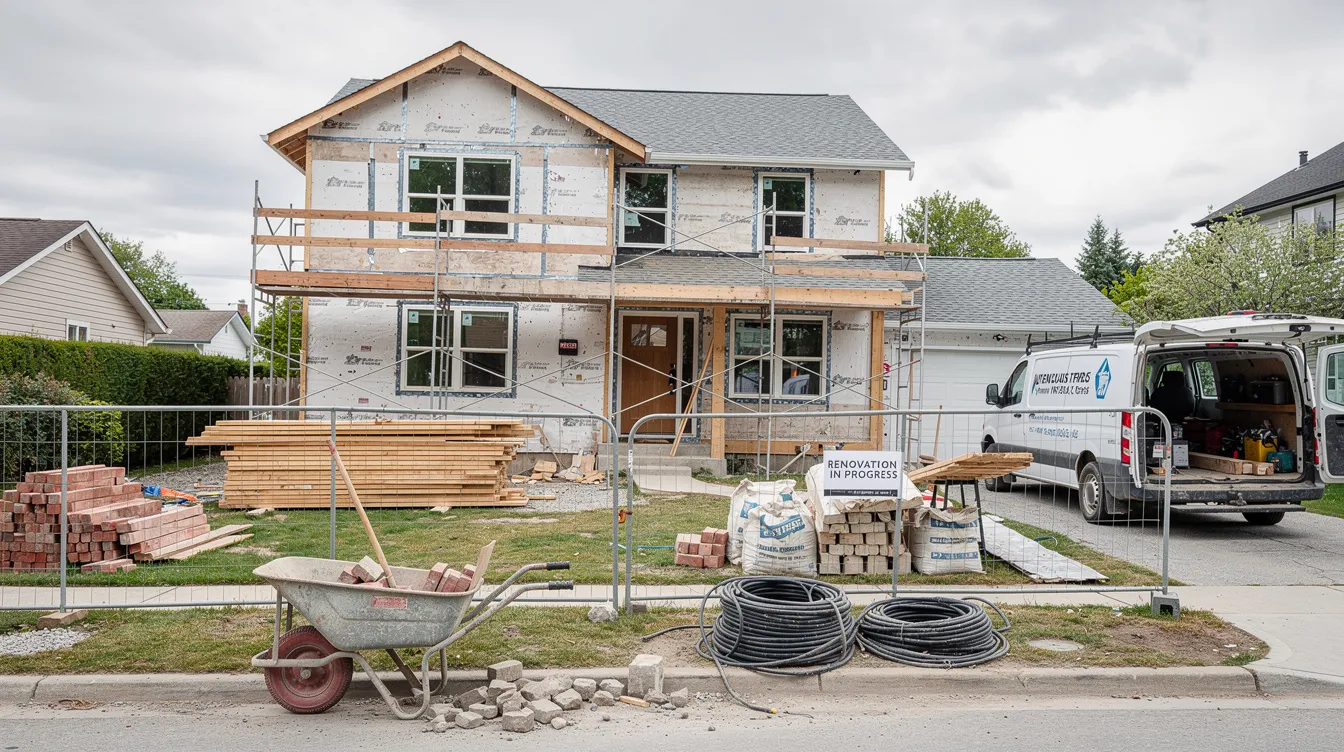
Finding a single 100 percent hard money lender willing to cover every dollar of your fix and flip deal is the holy grail of real estate investing. This guide is for real estate investors seeking to maximize leverage on fix and flip projects. Understanding how to achieve true 100% financing can help investors close more deals with less personal capital at risk. The reality is that most lenders won't do it alone. But that doesn't mean 100 financing is off the table. When you pair a primary hard money loan with Gap Funded's capital stack, you can cover purchase, rehab, closing costs, and reserves without pulling large amounts of cash from your own pocket.
Fast Answer: Can You Really Get 100% Hard Money Fix and Flip Financing?
Yes, but not from one lender alone. Fix and flip loans cover 100% of purchase price in many cases, and lenders may fund 100% of the rehab budget. However, lenders typically cap loans at 70% to 75% of ARV, which means that even with generous terms, cash gaps remain. The solution is stacking a primary hard money loan with gap funding from Gap Funded, which fills those gaps using unsecured term loans, 0% business credit card stacking, HELOCs, and business lines of credit.
Here is how the math works. Suppose you find an investment property with a purchase price of $250,000, a rehab budget of $75,000, and an ARV of $450,000. A hard money lender offering a 75% ARV cap could lend up to $337,500, which easily covers the $325,000 total cost of purchase plus rehab. But closing costs, origination points, insurance, and interest reserves could add another $25,000 to $40,000. That is where Gap Funded steps in with term loans and stacked business credit cards to cover those soft costs, bringing your effective out-of-pocket to near zero.
What do you need to make this work? A credit score of 650 or higher, verifiable income or business revenue, a solid and documented exit strategy, a viable ARV supported by comparable sales, and acceptable loan to value and LTC ratios that fit within your lender's guidelines.
Gap Funded can review your funding options with a soft credit pull and no obligation, so you can see exactly what capital stack is available before committing to anything, and their institutional gap financing solutions are specifically structured to close these kinds of funding shortfalls quickly.
What "100 Percent Hard Money" Really Means in Real Estate Investing
A 100% hard money lender is one that provides financing covering the entire purchase price of a property, and in some cases, 100% loan-to-cost financing. However, the ARV cap for 100% financing typically limits the loan amount to 65% to 75% of the property's after-repair value. When many investors search for a 100 percent hard money lender, they mean a single funding source that covers the entire purchase price, the full rehab budget, and all closing costs and reserves on their flip loans. In reality, that is three different line items that rarely get bundled under one roof.
The confusion starts with terminology. A lender advertising "100% loan-to-cost" means they will finance the purchase and rehab. But that loan amount is still capped by the after repair value, usually at 70% to 75% of ARV. So 100% LTC does not mean 100% of everything. It means 100% of eligible costs, subject to an ARV ceiling. Meanwhile, loan to value compares the loan to the property value at acquisition, and most hard money lenders keep that conservative to protect their position.
In 2024 and into 2026, most lenders promote terms like "up to 90% of purchase and 100% of rehab" or "up to 75% ARV." Both leave down payment amounts, closing costs, and holding costs uncovered. According to FCTD, which has closed over 3,100 loans, they have funded exactly zero deals at 100% LTV. That tells you how rare true no-money-down deals are from a single lender. 100% financing is also less common after the global financial crisis, when lenders tightened standards across the board.
True 100 financing usually requires either deep purchase discounts, cross-collateralization of other assets, or supplemental capital like Gap Funded's systematic gap funding methodology using unsecured loans, 0% business credit cards, HELOCs, and lines of credit.
How Standard Hard Money Loans Work (And Why They Rarely Hit 100% Alone)
Loan Structure and Terms
A typical hard money loan for fix and flip projects is structured as a short term, interest only loan with a term of six months to one year. These loans are typically short-term, lasting from a few months to a couple of years. The borrower pays interest only payments during the hold period, plus origination points (usually 2% to 5%) at closing. Rehab funds are released in stages called draws after inspections confirm work completion.
Funding Timeline
Fix and flip loans can close in as little as 48 hours, and hard money loans can be approved in as little as three business days, which gives active investors a serious edge in competitive markets.
Capital Stack Example
Here is a numeric example. You find a single family property for $200,000 with $60,000 in renovation costs. Your hard money lender offers 85% of purchase price ($170,000) plus 100% of rehab ($60,000), for a total loan of $230,000. But the ARV is $375,000, and the lender caps at 70% ARV ($262,500). The loan fits under the cap, but you still owe roughly $30,000 in cash for the down payment and closing costs. Hard money loans typically have a loan-to-value cap of 70% to 75%, and that cap is what limits borrowing power on every deal.
Hard money lenders focus on the property's value, not the borrower's credit, which is why they can move fast. But they are generally more expensive than a conventional mortgage. Private money lenders operate similarly but may offer more flexible or regional terms. DSCR loans serve a different purpose entirely, designed for rental income properties with longer repayment terms. Each has its place in real estate investment, but none consistently delivers 100% of total cost without supplemental capital, which is why it is critical to understand what gap funding in real estate actually is and common misconceptions around it.
100% Fix and Flip Financing by Stacking Hard Money with Gap Funding
Capital Stack Example
The concept behind a capital stack is straightforward. Your primary hard money loan covers the bulk of the acquisition and rehab costs. Gap Funded's gap funding products then cover everything the hard money lender does not: down payment shortfalls, closing costs, interest reserves, and rehab overages. Together, they create 100 financing of the deal. Hard money loans can offer 100% loan-to-cost financing when paired with the right supplemental capital.
Walk through this scenario. You find a property at $300,000 with $80,000 in rehab costs and an expected ARV of $500,000. Your hard money lender offers a 70% ARV cap, so the maximum loan is $350,000. That covers the $300,000 purchase and most of the $80,000 rehab, but falls $30,000 short of total cost. Add in closing costs, points, insurance, and interest carry, and you need another $25,000 to $40,000. Your total cash gap is roughly $55,000 to $70,000.
Gap Funded can structure this with a $30,000 unsecured term loan for the immediate closing shortfall, $20,000 in stacked business credit cards for rehab draw floats and holding costs, and a $15,000 HELOC specifically tailored for real estate investors or business line of credit as a reserve buffer. Combined with the hard money loan, your stack covers the deal from acquisition through completion. 100% financing allows for quicker funding compared to traditional financing methods, and it allows investors to preserve cash for emergencies or additional opportunities.
Gap Funded does not replace hard money lenders. It sits beside them so real estate investors can close more deals without draining personal cash flow.
Key Deal Metrics: ARV, LTC, and LTV for 100% Financing
Understanding Key Metrics
Loan to value is the loan amount divided by the current property value. Most hard money lenders base LTV on the as-is value at purchase, not the future value after rehab. LTV ratios for hard money loans are often capped at 70% to 75%.
After repair value is the estimated market value of the property after all renovations are complete. This number drives everything. Lenders use it to set their maximum exposure, and investors use it to calculate profit margins. Underwriting includes an ARV analysis and review of borrower reserves to confirm the deal is viable. The ARV cap for 100% financing typically limits the loan amount to 65% to 75% of the property's after-repair value.
Loan-to-cost measures the total loan amount against total project cost (purchase plus rehab). When LTC hits 90% to 100%, lenders consider it high leverage and will demand a strong exit strategy and a solid borrower profile.
Here is a practical example. If ARV equals $500,000 and your total cost is $375,000, then 100% LTC means $375,000 in loans. Your LTV against ARV is $375,000 divided by $500,000, which equals 75%. A lender with a 75% ARV cap accepts this. But if the cap is 70%, your max loan drops to $350,000, leaving a $25,000 gap. That gap is exactly where Gap Funded steps in.
Where the Cash Gaps Really Are: Down Payments, Closing Costs, and Rehab Overruns
Common Cash Gaps
Even when a hard money loan advertises 100% of purchase and rehab, several line items remain unfunded. The most common cash gaps include the down payment on the hard money loan, origination points, title and escrow fees, insurance and tax prepayments, interest reserves during the hold period, permits, inspection fees, and a contingency buffer for rehab overruns.
According to data from Axiant Partners, a typical $250,000 total cost flip still requires $20,000 to $50,000 in cash at closing, even under a 100% LTC structure. It may still require showing liquid cash reserves for initial payments or unexpected costs.
Typical Cost Breakdown
Here is a sample breakdown for a $300,000 all-in project:
- Origination points at 3%: $9,000
- Title and closing costs: $6,000
- Insurance and tax prepayments: $2,500
- Interest reserves for three months at a 12% interest rate: $9,000
- Permits and inspections: $3,500
That is $30,000 in cash gaps before counting any rehab overruns. Interest rates for 100% hard money loans often range from 10% to 18% or higher, which directly impacts how much carry cost you need to cover.
Gap Funded's Approach
Gap Funded's unsecured personal term loans handle the immediate closing shortfall. Stacked 0% business credit cards cover rehab draw floats and monthly payments during the hold period. HELOCs provide a lower-cost reserve pool for larger or unexpected costs.
Together, these tools are designed specifically to bridge the gap between what traditional lenders fund and what the deal actually requires. Investors can study advanced versions of these tactics through Gap Funded's funding strategy and market analysis blog.

Gap Funded's Capital Stack Solutions for Real Estate Investors
Gap Funded's Approach
Gap Funded is a funding intermediary that specializes in gap funding and capital stacking for fix and flip, BRRRR, short-term rentals, and small business acquisitions. It is not a hard money lender. It is the layer that makes hard money work for investors who want to keep their cash in their pocket, and it is deliberately structured as an alternative to the slow, restrictive traditional private gap funding requirements many investors struggle to meet.
Capital Stack Tools
The primary tools Gap Funded deploys include unsecured term loans (both personal and business, typically mid-five to low-six figures), 0% APR business credit card stacking with promotional periods ranging from 9 to 21 months, HELOCs based on home equity in a primary residence or investment property, business lines of credit for investors or business owners with established revenue, and working capital solutions. Specialist lenders may offer 100% financing for strong borrowers, and 100% financing options often require additional security or assets, but Gap Funded's approach avoids liens on the deal property entirely.
Approval Process
Gap Funded's approval process starts with a soft credit check for initial review, meaning no impact to your credit score just to explore options. There are no equity splits and no profit sharing. You keep 100% of your upside. The speed matters too. Term loans can fund within 24 to 72 hours, which means your capital stack can be ready before your hard money lender finishes underwriting.
Gap Funded's capital stack is designed to pair with primary hard money loans, DSCR loans, and other institutional financing to reach 100% project funding without diluting your financial position.
Using Business Credit Card Stacking and Unsecured Term Loans for 100% Financing
Business credit card stacking is the strategy of securing multiple business credit cards, each with a 0% introductory APR, to create a flexible pool of working capital. These cards typically offer promotional periods of 9 to 18 months at 0%, giving you interest-free money to cover rehab costs, holding expenses, and short term cash needs. When set up through a business entity, many of these cards do not report to personal credit bureaus, which helps preserve your buying power for future deals.
Gap Funded helps investors build and optimize these stacks as part of the broader capital strategy. Cards can be used for materials, permits, contractor payments where accepted, or through payment platforms for vendors that do not take cards directly.
Unsecured personal term loans fill a different role. They provide a lump sum with fixed repayment terms, matched to the expected fix and flip timeline. Because they are unsecured, no lien goes on the property, which keeps your hard money lender comfortable with the structure.
Consider this example. An investor uses a $50,000 unsecured term loan to cover the down payment and closing costs, then stacks $60,000 in business credit lines for rehab draws and carrying expenses. The primary hard money lender funds the deal at 75% ARV. The investor closes the deal without personal cash, and 100% financing allows them to preserve cash for emergencies or additional opportunities like their next deal.
A word of caution: managing multiple accounts requires discipline. Track billing cycles, repayment schedules, and promotional rate expiration dates carefully.
Tapping Home Equity and Business Lines of Credit to Boost Leverage
A home equity line of credit is one of the lowest-cost tools in the capital stack. If you have significant equity in a primary residence or rental property, a HELOC can provide $50,000 to $200,000 or more in revolving credit at rates well below unsecured alternatives. This money can fund down payments, closing costs, and reserves across multiple fix and flip projects.
Gap Funded helps investors integrate HELOCs into their broader capital stack while keeping the hard money lender comfortable. Because the HELOC is secured by a different property, it does not create a lien conflict on the deal property.
Business lines of credit serve experienced investors or business owners with at least $20,000 per month in revenue and two or more years in business. These revolving tools are flexible enough to fund carrying costs, bridge rehab draws before reimbursement from the hard money lender, or support multiple flips running simultaneously, while targeted earnest money deposit financing for real estate investors can secure contracts without tying up your own cash.
Here is a concise scenario. An investor with a $75,000 HELOC and a $40,000 business line of credit uses those tools to support three concurrent fix and flip projects, each financed by different hard money lenders. The HELOC covers down payments, and the business line handles rehab draw floats and holding costs. Private lenders may offer more favorable terms than hard money lenders in certain situations, and seller financing allows buyers to avoid cash deposits on some acquisitions. Assumable mortgages can also lower interest rates and closing costs when available, and deal-specific Gator Lending structures for real estate investors can inject short-term capital for double closings or urgent opportunities.
The risk of overleveraging is real. If rental income or flip proceeds stall, secured debt on your home is at stake. Disciplined exit strategy planning is non-negotiable.

Designing a Solid Exit Strategy for High-Leverage 100% Hard Money Deals
An exit strategy is your plan for repaying the hard money loan and all gap funding layers. For fix and flip deals, the exit is selling the property within 3 to 9 months. For BRRRR deals, the exit is refinancing into a DSCR loan or conventional mortgage after the property is stabilized with rental income. Lenders often require proof of a clear exit strategy before funding a project, and Gap Funded cares about it just as much.
The hard money loan process includes six steps from application to payoff: application, underwriting, approval, closing, rehab execution, and exit. When leverage approaches 100%, every step needs tighter execution because there is less margin for error.
Here is a numeric exit example. Total cost is $380,000 (purchase plus rehab plus soft costs). ARV is $500,000. Hard money loan is $350,000. Gap funding layers total $80,000. After six months, the property sells for $500,000. Hard money interest and fees cost approximately $20,000. Gap funding carrying costs run $6,000. Selling costs including agent commissions and transfer taxes total $30,000. Net proceeds after repaying all debt: roughly $64,000 in profit. If the maturity date arrives and the property has not sold, or if the ARV drops, that profit evaporates quickly.
A realistic, documented exit strategy with conservative projections increases credit approval chances for both hard money and Gap Funded capital. Always stress-test your numbers against a scenario where the property sells for 10% below ARV.
Who Qualifies for 100% Fix and Flip Financing with a Capital Stack?
The typical borrower profile for this approach includes real estate investors and small business owners with credit scores of 650 or higher, verifiable income or business revenue, and at least one stable funding source. Qualifying for 100% hard money financing can be more stringent compared to standard loans subject to conventional lending guidelines, because the lender takes on more risk when the borrower has no equity cushion. High risks are associated with 100% financing due to the lack of an equity cushion.
First time investors can still qualify when deal metrics are strong, the property type is straightforward, and credit and income criteria are met. However, the borrower may be required to have experience or a solid track record for 100% financing, and experienced investors with documented flips may access larger capital stacks more easily. Hard money lenders may provide 100% financing based on property value when the borrower's financial profile is strong.
Additional factors that matter include realistic rehab budgets, conservative ARV assumptions backed by comparable sales, sufficient home equity for HELOCs, and willingness to provide documentation like bank statements, tax returns, and entity documents. Gap Funded performs soft credit pulls for initial review and does not require equity splits or placing liens on the project property. Many investors find this appealing because they retain full control and upside on every deal.
Step-by-Step: From Deal Submission to Fully Funded 100% Capital StackStep-by-Step: From Deal Submission to Fully Funded 100% Capital Stack
- You locate a deal and estimate the purchase price, rehab scope, and ARV. You collect comps and property details.
- You secure a hard money term sheet from your lender, confirming the loan terms, interest rate, ARV cap, draw schedule, and any prepayment penalty or reserve requirements.
- You apply with Gap Funded, submitting your borrower profile (credit score, income or revenue, home equity if applicable) and deal information. Gap Funded runs a soft pull with no impact to credit.
- Gap Funded reviews the gap between what the hard money lender covers and what you need at closing. They propose a mix of unsecured term loans, business credit cards, HELOCs, and lines of credit.
- The capital stack is structured and all layers are funded or made available. Hard money approvals often happen within days. Gap Funded funding reviews and unsecured approvals frequently move on a similar timeline, enabling competitive 7 to 10 day closings. Hard money loans can close in as little as one week. These loans can be approved in as little as three business days.
- You close on the property. Hard money funds quickly through the primary loan. Gap funding tools cover down payment, closing costs, and reserves.
- You execute the rehab, manage the budget, and exit via sale or refinance. All debts are repaid from proceeds.
The entire process can be initiated online with a quick application. Lenders typically cap financing at 70% to 75% of ARV, and Gap Funded fills everything above that line.
Risks, Best Practices, and When 100% Financing Might Not Be Right
100% hard money financing through capital stacking increases leverage, which magnifies both profits and losses. It is not suitable for every investor or every market cycle. The cost of capital across multiple products (hard money interest, term loan rates, credit card rates after promotional periods, HELOC variable rates) can eat into margins if the project drags. Market downturns affecting property value, rehab delays, and underestimating closing costs or monthly payments are all real threats.
Best practices include buying well below ARV to create a built-in equity cushion, building conservative rehab budgets with a 10% to 20% contingency, keeping cash reserves even when using 100 financing, and stress-testing the exit strategy against pessimistic scenarios. Conventional lending may be safer for deals where margins are thin or the market is cooling. Many lenders will tell you that carrying more risk on a slim deal is not worth the leverage.
Sometimes a smaller leverage deal with a modest down payment is the right call. Gap Funded can still be used for partial gap funding, covering just closing costs or rehab overages rather than the full stack. The product is flexible, and responsible use means knowing when to deploy maximum leverage and when to hold back. Gap Funded positions itself as a responsible partner, not a firm that pushes every investor to maximum exposure regardless of deal quality.

How to Apply with Gap Funded and Start Structuring Your 100% Financing
Getting started is straightforward. Submit a quick online funding application with Gap Funded with no impact to your credit. The initial review uses a soft pull so you can explore available options for hard money and gap funding combinations without commitment.
Have the following ready before you apply: your estimated credit score, current income or business revenue, home equity details if you plan to use a HELOC, an outline of your fix and flip or BRRRR project including purchase price, rehab scope, and projected ARV, and any existing hard money term sheet or loan terms you have received.
Gap Funded reviews options across unsecured term loans, business credit card stacking, HELOCs, and business lines of credit to create a tailored capital stack that wraps around your primary hard money loan. The process is designed for speed, with term loan layers often funding within 24 to 72 hours.
There are no equity splits. No liens on the deal property from Gap Funded. No profit sharing. The goal is simple: help real estate investors close more deals, faster, with as close to 100 percent financing as their risk profile allows. 100% financing covers the entire purchase price when the capital stack is properly structured, and it gives you the cash flow flexibility to pursue your next deal without waiting to rebuild reserves.
100 percent hard money style financing is achievable today when you combine strong deal fundamentals, the right hard money lenders, and Gap Funded's capital stacking expertise. The money is out there. The question is whether your deal and your profile are ready for it.
Related Reading
This article is for educational purposes only and isn't financial, legal, tax, or investment advice. Credit and financing outcomes depend on your own situation. Talk to a licensed financial professional before making funding decisions for your business.